
Illustrating local life stories: NSYSU students compose picture books about Cijin, Gushan, and Yancheng districts
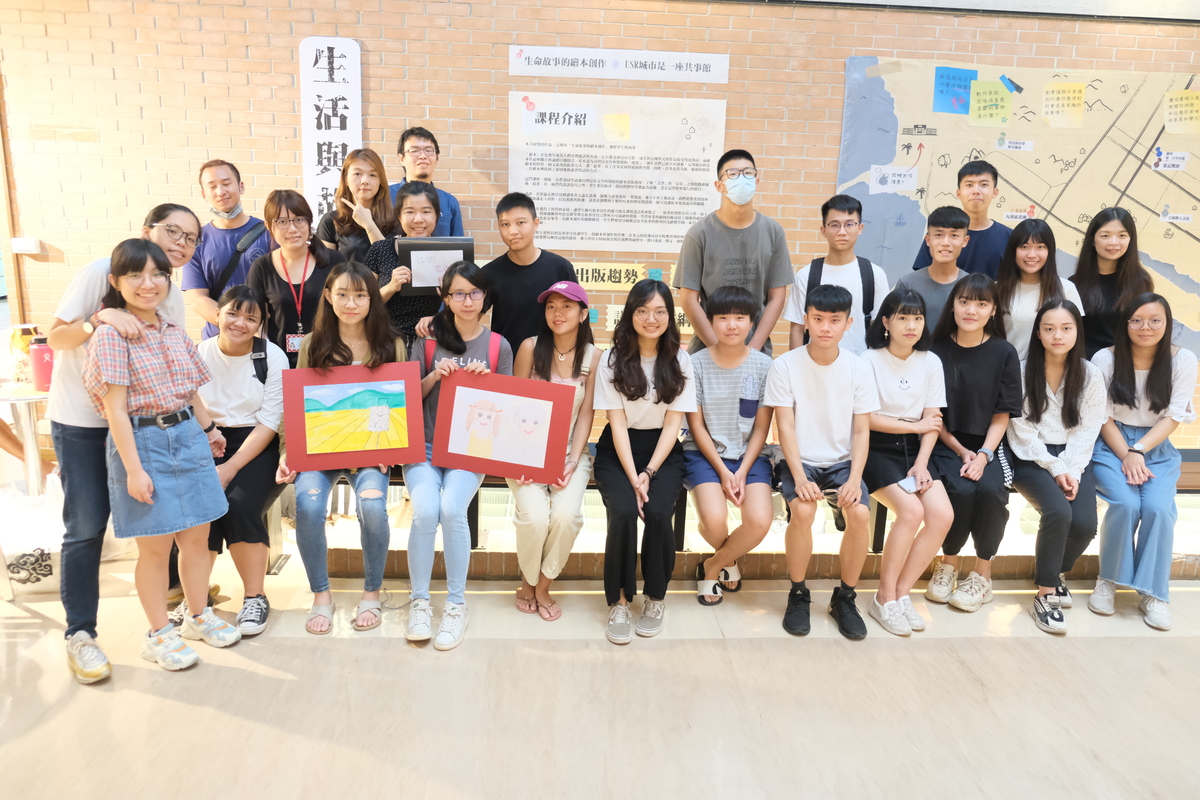
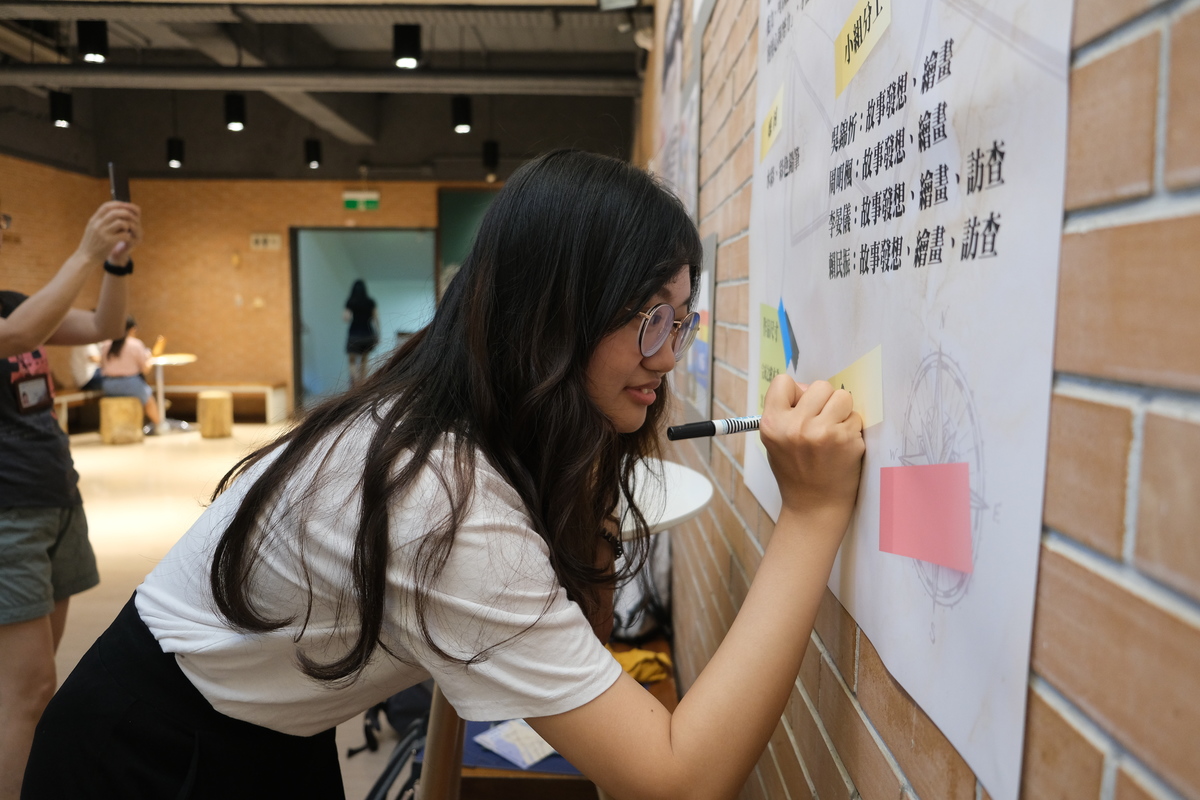
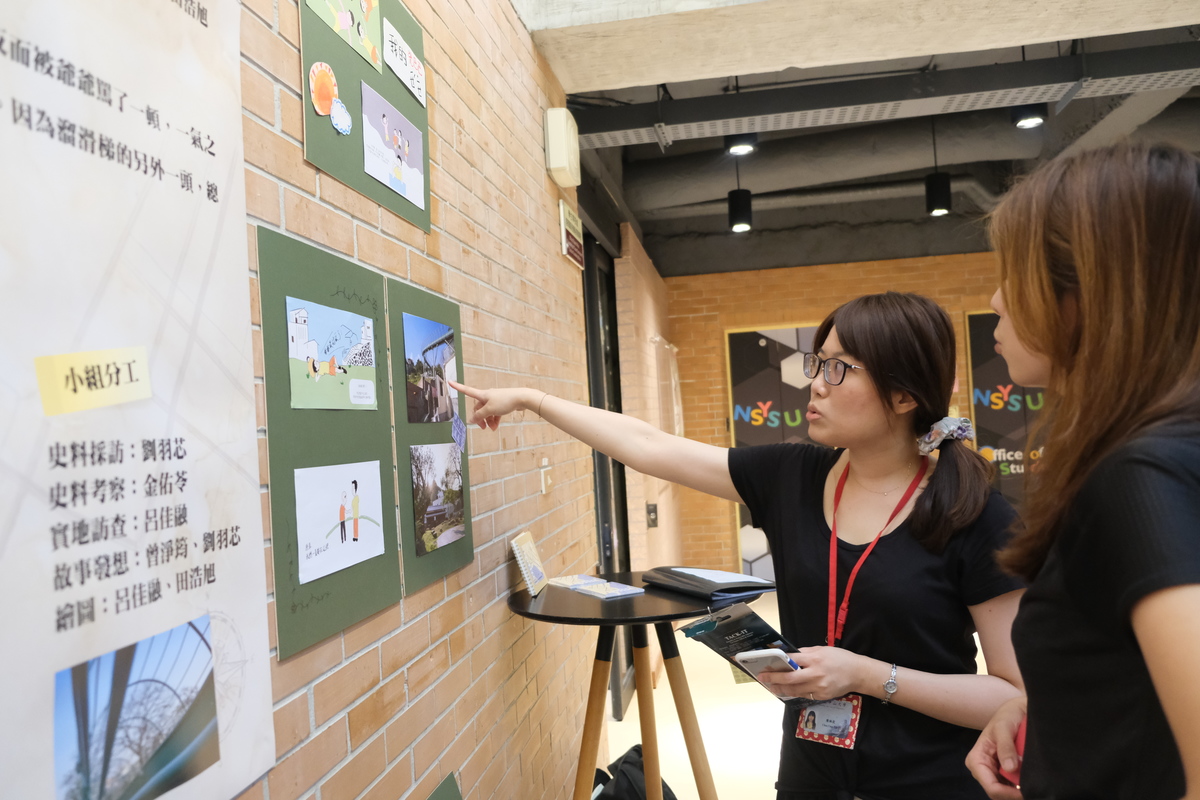
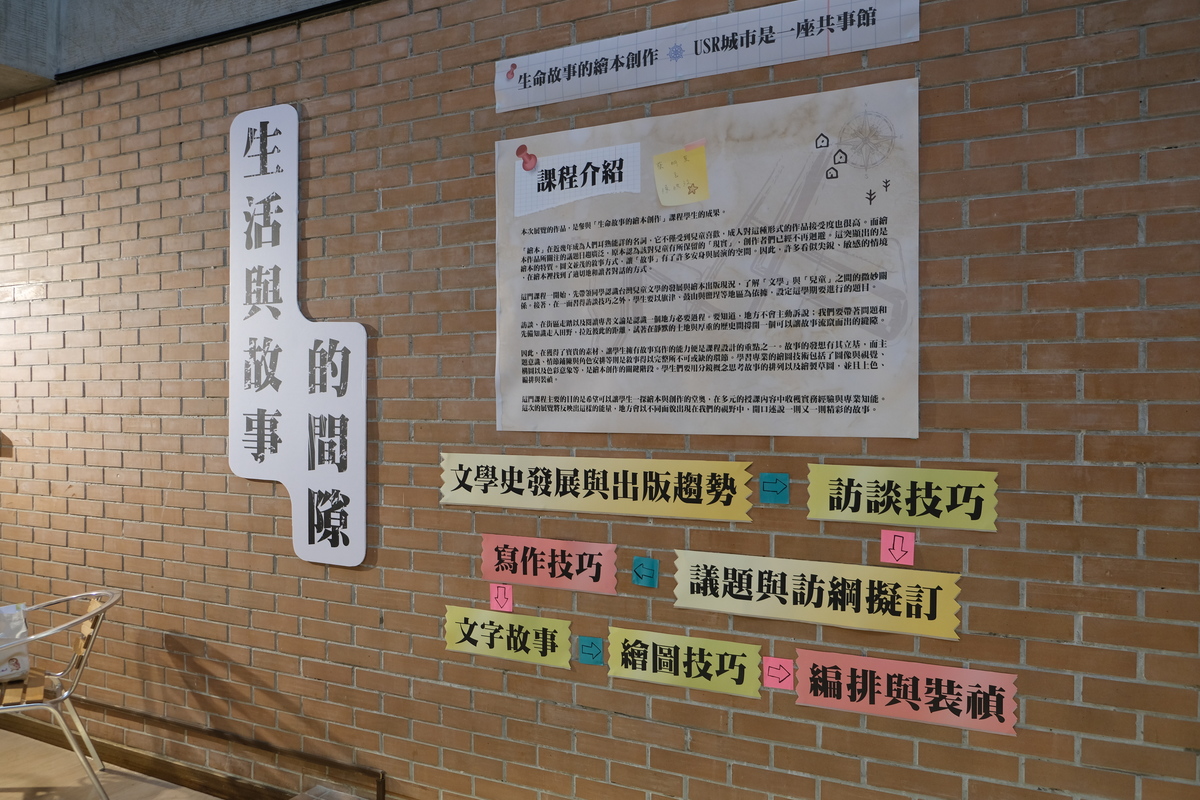
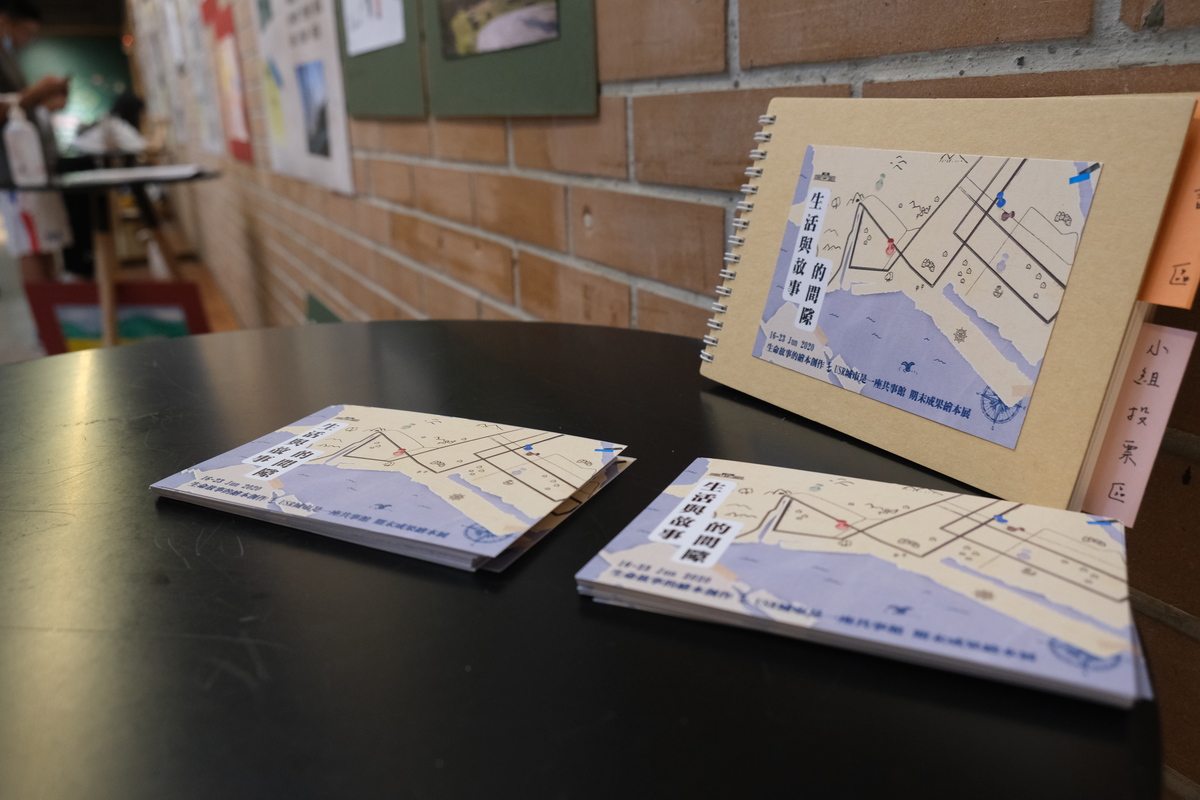
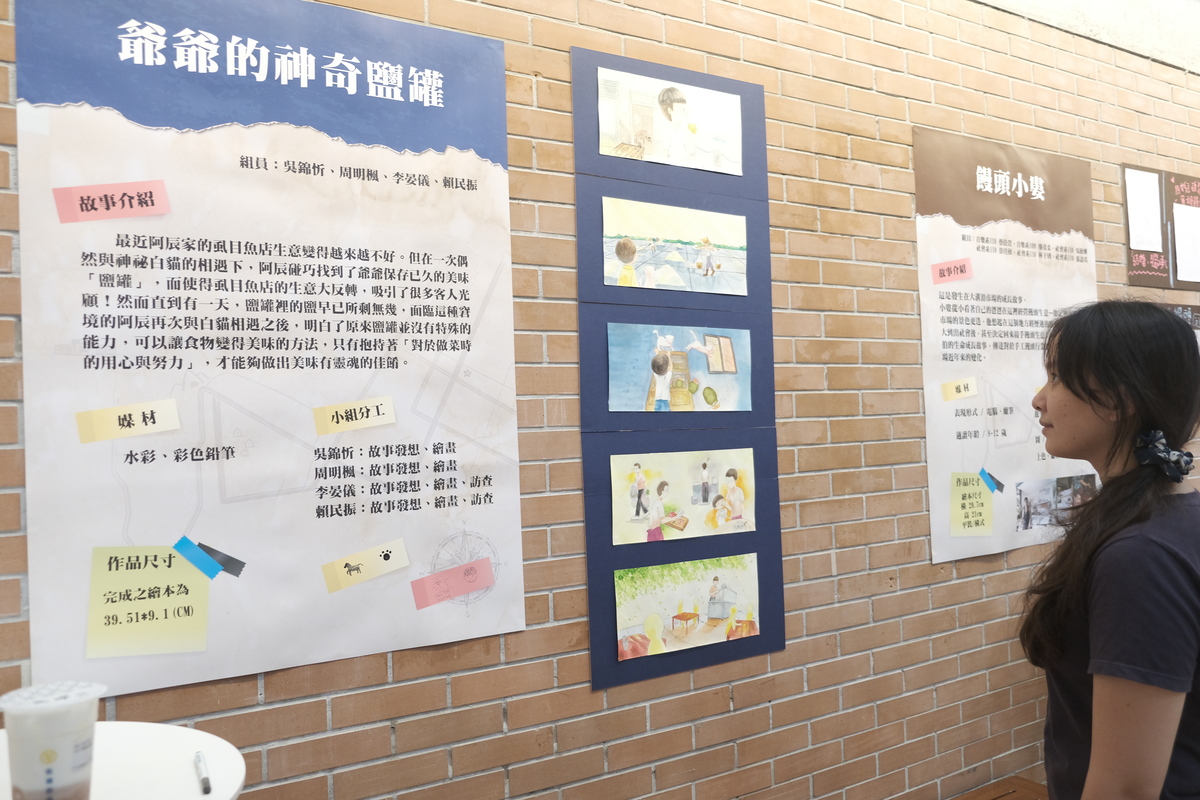
(Report by student journalist) The students of the “Illustrating with life stories: picture book composition” course at NSYSU Department of Sociology conducted field studies and collected stories of Cijin, Gushan, and Yancheng districts, and used their creativity to re-narrate local stories in the form of picture books, and present the historical background.
Members of the team in charge of the USR Project “The City as a Commuseum-Socially Embedded Community Engagement” and postdoctoral researchers Ming-Yuan Tsai and Ying-Tze Chen took the students into the community and approached the history from different angles: food, landscape, traditional crafts and art, to reinterpret people’s emotional bond with the local environment. Students’ book entitled “I want an ice cream” (我想要一支冰淇淋) is based on the true story of Maru Hama, an ice-cream shop in Gushan District. The main character returns to his hometown as a grown-up man and cannot find the ice-cream shop his grandmother would take him to as a boy. He then makes up his mind to open his own ice-cream shop, not only to recreate the taste of his childhood but also to find the key to the memories of the time spent with his grandmother and to pass on her warmth. “Memories and emotions can bring happiness to people,” said Ching-Yuan Hung, one of the authors and a student of the Department of Chinese Literature; she explained that everyone may seek the special comfort food coming to their minds when they feel distressed and that food is not just the sensation of the tongue but also a spiritual feeling interconnected with the sensorial memory. The authors hope that the story can recall childhood tastes and precious memories in both young and older readers.
Another picture book entitled “The Mark of Courage” (勇敢的記號), concentrates on the interaction between grandfather and grandchild, and narrates the rise and fall of hardware stores and shipbreaking industry in Kaohsiung, with the industrial development of the city as background. At the beginning of the story, the main character was looked after by his grandfather, who runs a hardware store, while his parents were busy with work. Spending time with grandfather, the main character noticed his grandfather’s scar, which was left by an accident, and started exploring an unknown chapter of his grandfather’s past. One of the authors, a student of the Department of Sociology, Cheng-Ying Wu said that everyone may have an accident at work, and that he hopes this story can give readers the courage to carry on, regardless of any misfortunes, just like the character in the book, who bravely faces adversities and struggles in life.
Lecturer Ming-Yuan Tsai said that picture books, with easy and readable stories and pictures that convey a clear message, can be a great supplementary material to the historical materials for academic research, which can be a heavy read. He hopes that the readers, after having read the story, can grasp a sense of the local history and imagine a broader view of places they passed by every day. Tsai admitted that before teaching this course, he was worried that the students might find it difficult to compose their first picture book, but in the end, he was surprised to discover that every group of students collected stories deeply connected to their own life experiences, and was startled to see the great quality of students’ works. “I believe that this is what’s important in a composition: to make it fun, interesting, and attractive to the readers” Tsai explained.
(Edited by Public Affairs Division)
Members of the team in charge of the USR Project “The City as a Commuseum-Socially Embedded Community Engagement” and postdoctoral researchers Ming-Yuan Tsai and Ying-Tze Chen took the students into the community and approached the history from different angles: food, landscape, traditional crafts and art, to reinterpret people’s emotional bond with the local environment. Students’ book entitled “I want an ice cream” (我想要一支冰淇淋) is based on the true story of Maru Hama, an ice-cream shop in Gushan District. The main character returns to his hometown as a grown-up man and cannot find the ice-cream shop his grandmother would take him to as a boy. He then makes up his mind to open his own ice-cream shop, not only to recreate the taste of his childhood but also to find the key to the memories of the time spent with his grandmother and to pass on her warmth. “Memories and emotions can bring happiness to people,” said Ching-Yuan Hung, one of the authors and a student of the Department of Chinese Literature; she explained that everyone may seek the special comfort food coming to their minds when they feel distressed and that food is not just the sensation of the tongue but also a spiritual feeling interconnected with the sensorial memory. The authors hope that the story can recall childhood tastes and precious memories in both young and older readers.
Another picture book entitled “The Mark of Courage” (勇敢的記號), concentrates on the interaction between grandfather and grandchild, and narrates the rise and fall of hardware stores and shipbreaking industry in Kaohsiung, with the industrial development of the city as background. At the beginning of the story, the main character was looked after by his grandfather, who runs a hardware store, while his parents were busy with work. Spending time with grandfather, the main character noticed his grandfather’s scar, which was left by an accident, and started exploring an unknown chapter of his grandfather’s past. One of the authors, a student of the Department of Sociology, Cheng-Ying Wu said that everyone may have an accident at work, and that he hopes this story can give readers the courage to carry on, regardless of any misfortunes, just like the character in the book, who bravely faces adversities and struggles in life.
Lecturer Ming-Yuan Tsai said that picture books, with easy and readable stories and pictures that convey a clear message, can be a great supplementary material to the historical materials for academic research, which can be a heavy read. He hopes that the readers, after having read the story, can grasp a sense of the local history and imagine a broader view of places they passed by every day. Tsai admitted that before teaching this course, he was worried that the students might find it difficult to compose their first picture book, but in the end, he was surprised to discover that every group of students collected stories deeply connected to their own life experiences, and was startled to see the great quality of students’ works. “I believe that this is what’s important in a composition: to make it fun, interesting, and attractive to the readers” Tsai explained.
(Edited by Public Affairs Division)
Click Num:
Share