
Sinologists discuss pluralistic symbiosis of calligraphy and painting in Taiwan at College of Liberal Arts
2021-12-17
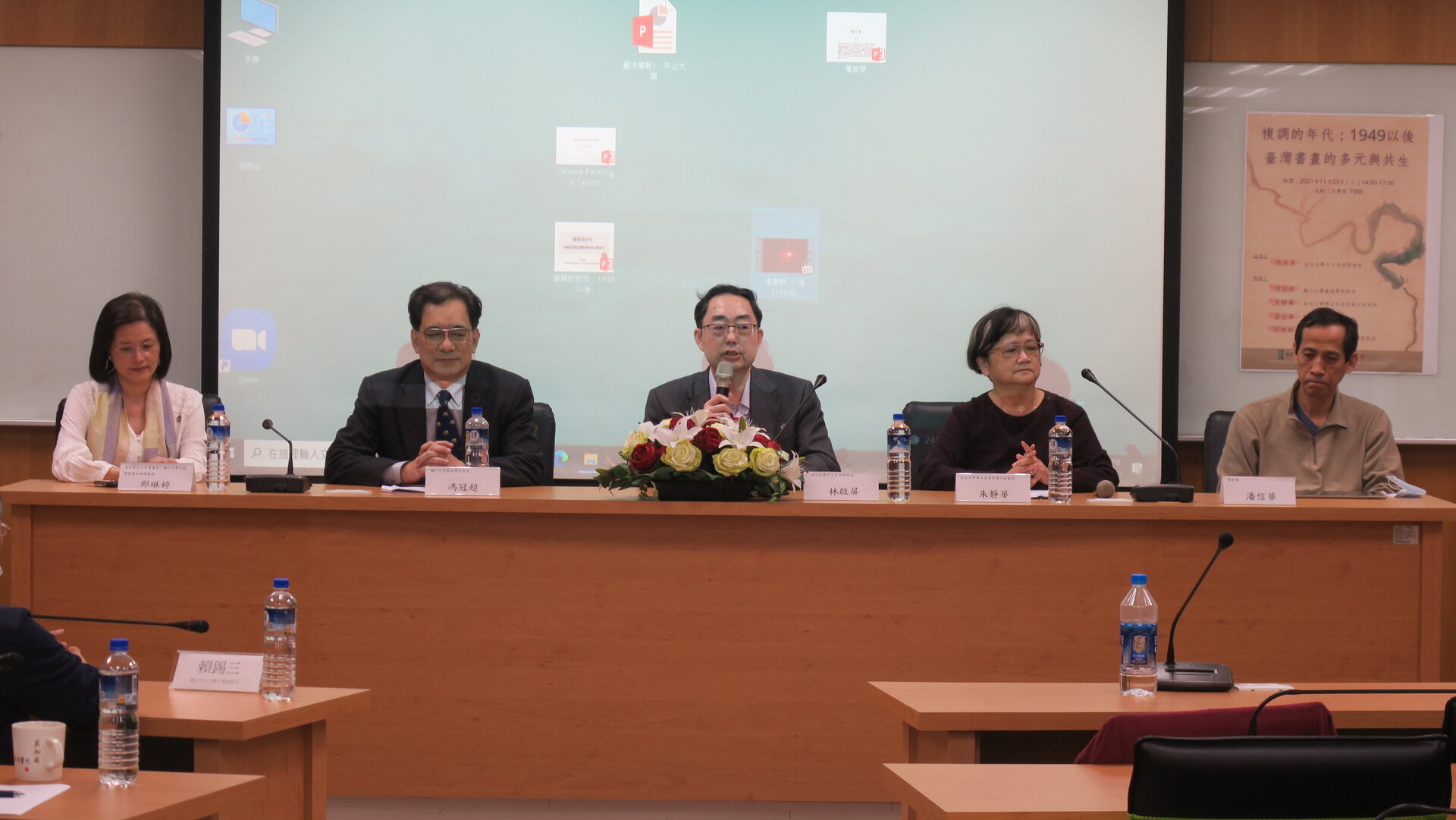
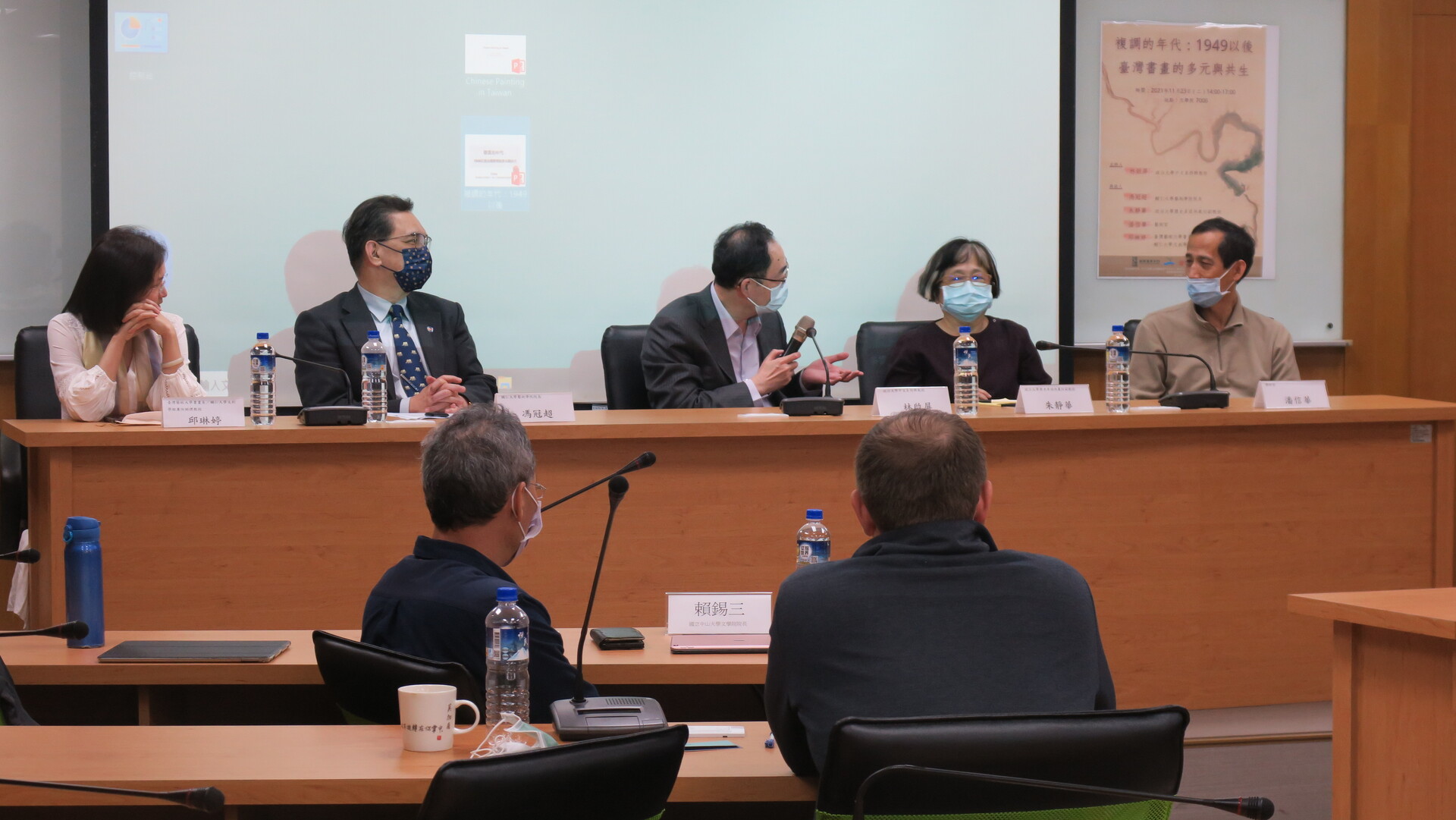
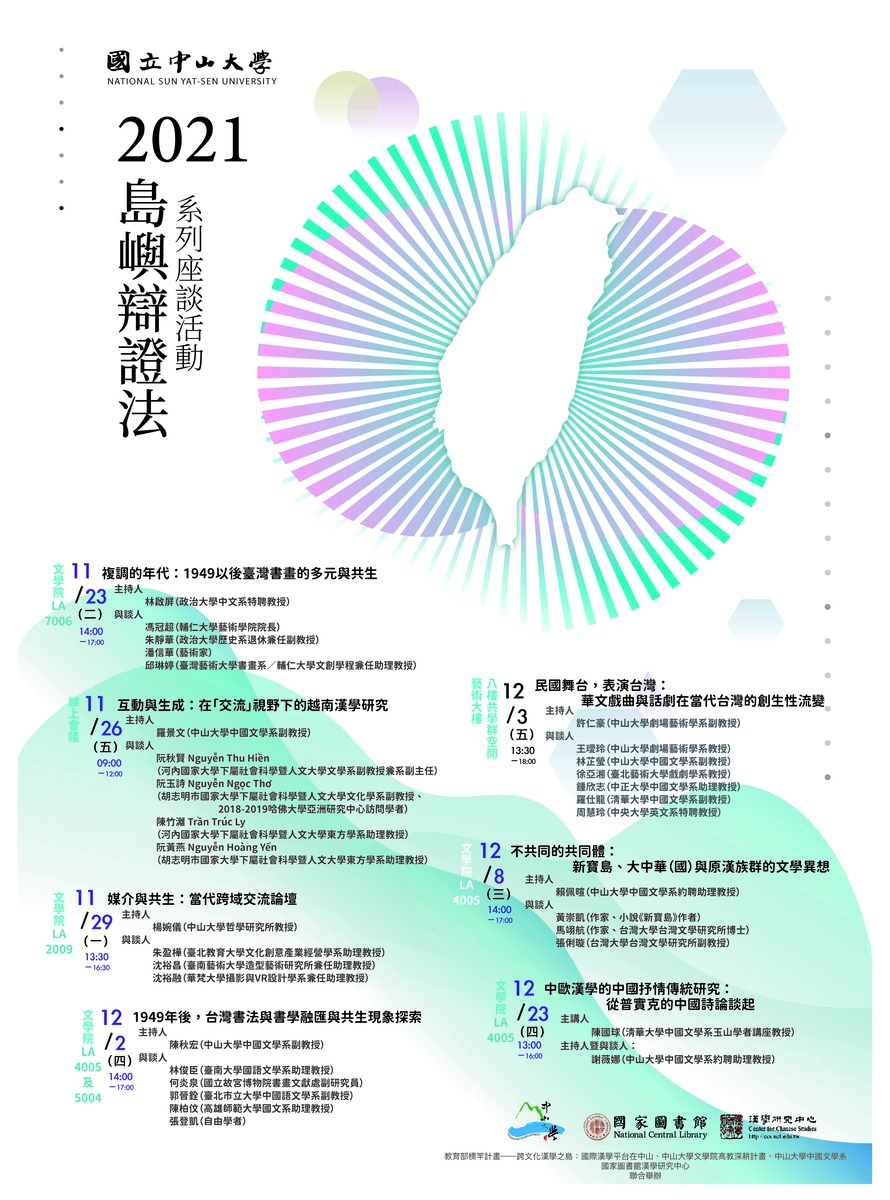
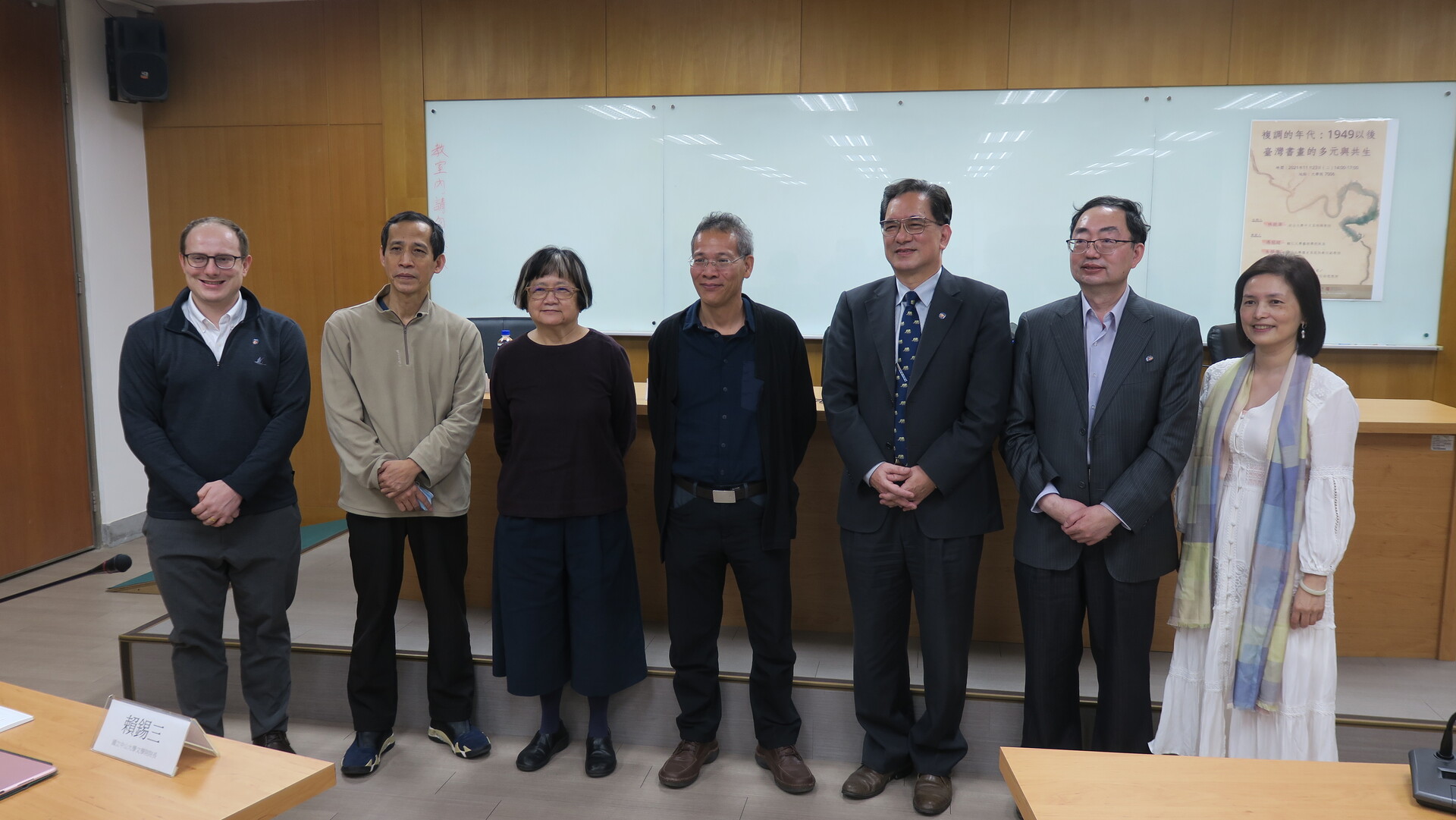
(Provided by College of Liberal Arts) Dean of the College of Liberal Arts Hsi-San Lai and Assistant Professor Mark Frederick McConaghy of the Department of Chinese Literature are currently directing The Transcultural Sino-Island: The Global Sinology Forum at NSYSU, a benchmark project of the Ministry of Education. Besides strengthening the exchange between sinologists at NSYSU, other universities in Taiwan and abroad, the project aims at gathering the intercultural community of sinologists around the Taiwanese culture and local experience. Dean Lai pointed out that one of the project elements is a series of symposia “Island Dialectics”, which will start with a discussion on “The Age of Polyphony: Diversity and Symbiosis in Taiwan's Painting and Calligraphy after 1949”. Through painting and calligraphy, the participants will examine the complex Western, Chinese, and Taiwanese elements in calligraphic practice and its related discourses, exploring their fusion and symbiosis.
"When resources from the Chinese tradition were brought to this island, they were not singularly copied in exact replica form,”Dean Lai said that “Island Dialectics” is a series of symposia aiming at reflecting on the variety of mixed coexistence in cultural nondualism and borderlessness through different perspectives of academic thinking, cultural experiences, and art: literature, drama, calligraphy, and painting, to provide us with the opportunity to reflect on the necessity and complex meaning of coexistence in the world. The scaled-down diversity and symbiosis and polyphonic chronology undoubtedly demonstrate dialectical features in the development of Taiwanese painting and calligraphy since 1949.
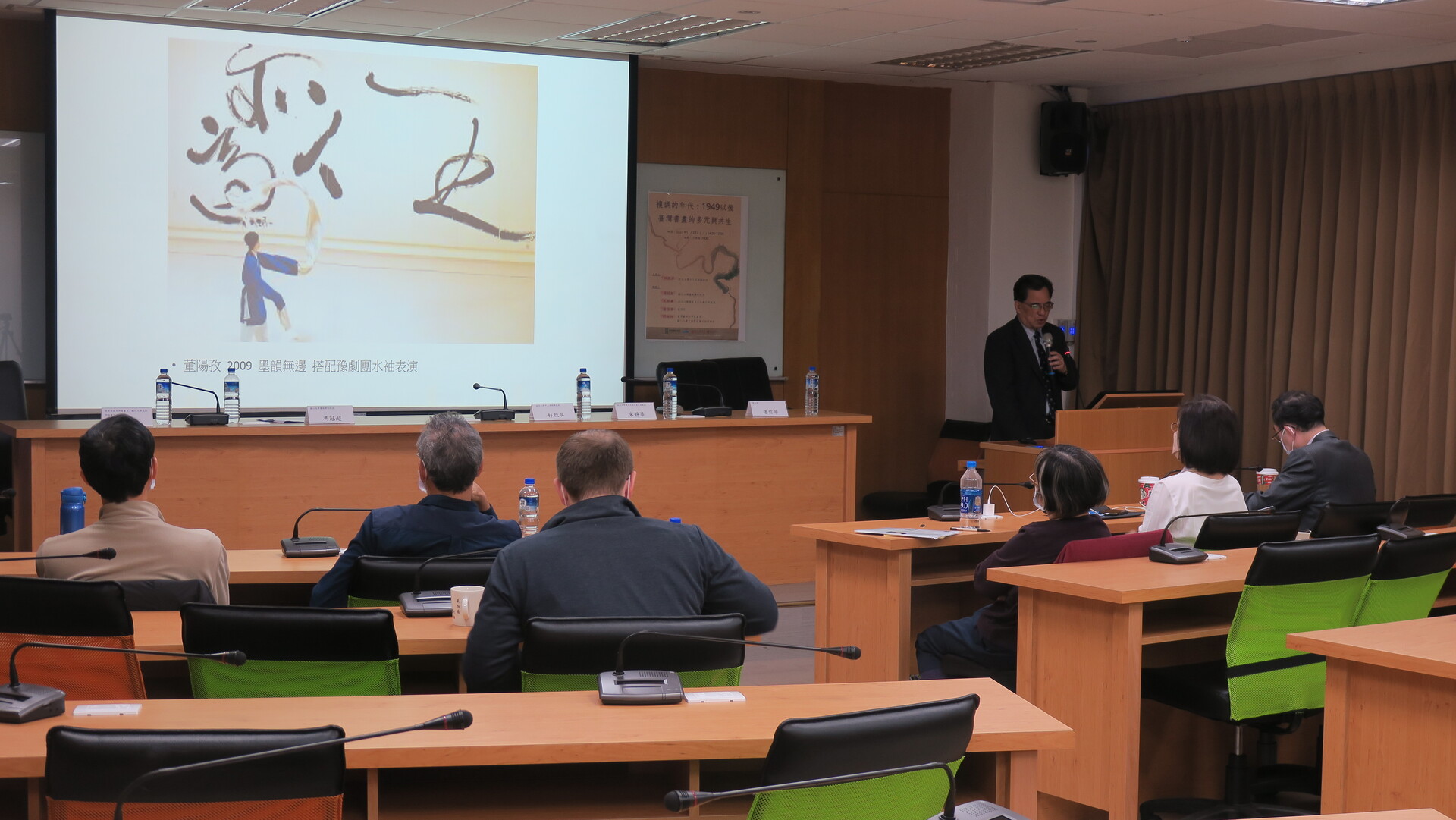
"The history of calligraphy is constantly evolving, so let's keep going!” Dean of the College of Arts at Fu Jen Catholic University Professor Guan-Chao Feng introduced his work, "Sending the God of Plague", an original work of calligraphy that combines the Five Phases, current events, and poetry, and, through three periods: Modernism, Post-Modernism and Soft Modernism, shows the beauty of mechanical aesthetics and the contradiction of the duality of structuralism, and the special expression of various techniques used in the last decade. In more than a hundred pieces of Chinese calligraphy, Dean Feng showed the traces of interaction between Western art theory, Eastern aesthetics, and Zen.
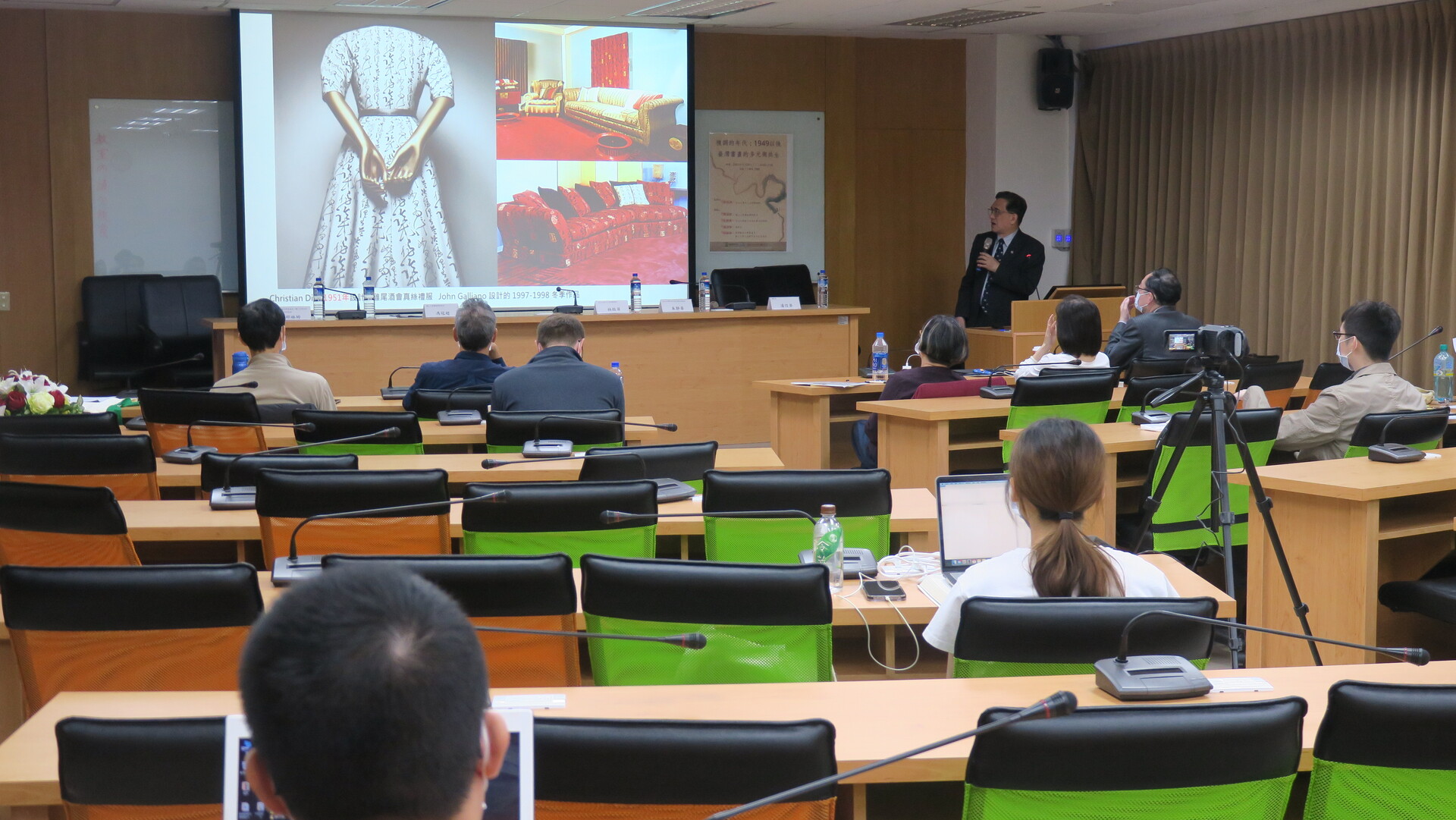
Part-time Associate Professor Jane-Chuang Ju of the Department of History at National Chengchi University analyzed Chinese art in Taiwan with a penetrating historical perspective, discussing the interpretation of the positioning of Chinese paintings in National Palace Museum, National Women's League of the R.O.C., and universities. Finally, she concluded with a reflective question: how should Chinese painting, as a regional artistic creation, be redefined and viewed in the age of globalization when its own regional cultural identity is at stake?
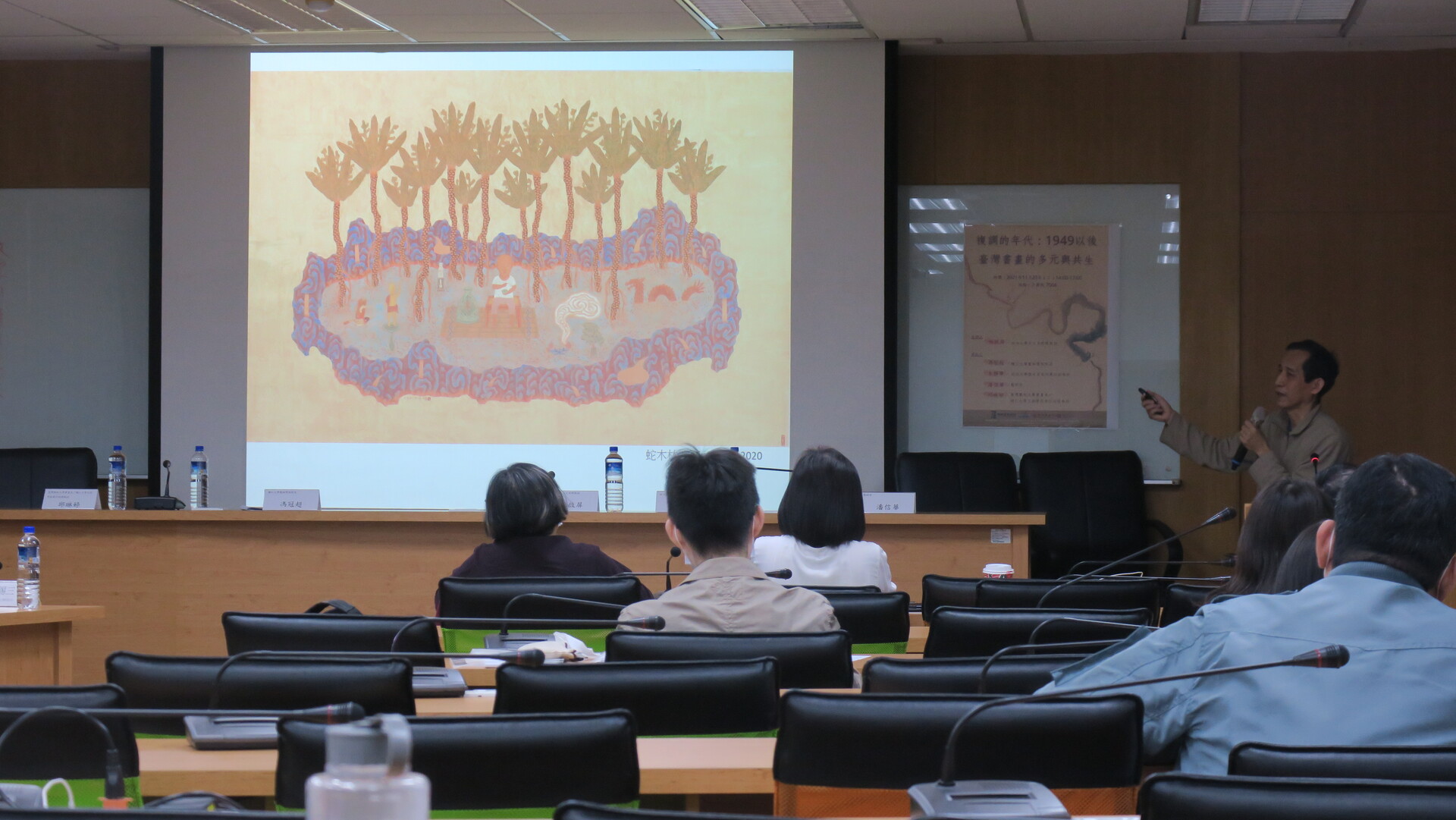
"The life of an artist is like a wave, with ups and downs.” Artist Pan Hsinhua spoke from his own creative experience and the many artistic trends he has experienced during this period, looking at the changes in art in Taiwan over the past decades. He grew up surrounded by nature in Taitung County and after graduating from high school, he moved to Taipei to study and after graduating, he went through twists and turns: he taught at a junior high school, then quit his job, went back to painting, worked part-time. He finally organized an exhibition in 2008, realizing the career of an artist. During the lecture, Pan Hsinhua presented a variety of his paintings painted with ink and glue paints, and scroll paintings that implement innovative techniques such as abandonment of Western perspective and the narrative nature of Chinese scroll paintings, presenting an image fusing tradition with modernity and striving to break through creator’s visualization.
Part-time Assistant Professor Lin-Ting Chiu of the Department of Painting and Calligraphy Arts at National Taiwan University of Arts pointed out that the inward expansion and outward extension in post-1949 painting and calligraphy in Taiwan meant that Taiwanese painting and calligraphy had the potential to expand inwards towards Chinese culture and outwards to the West. Assistant Professor Mark Frederick McConaghy asked, “How do we find a balance in the dialogue between ontological stability and ontological change?” Artist Lin-Ting Chiu replied: “Art has its subjectivity, and we can see the art in Taiwan absorbing different cultures and interacting with them in different periods to form the island’s own style.” Distinguished Professor National Chengchi University Chi-Ping Lin expressed his hope that in the future, the event can be expanded to a full day of academic and artistic exchange, with a full exchange of tastes in intellectual and affective beauty.
(Edited by Public Affairs Division)
(Provided by College of Liberal Arts) Dean of the College of Liberal Arts Hsi-San Lai and Assistant Professor Mark Frederick McConaghy of the Department of Chinese Literature are currently directing The Transcultural Sino-Island: The Global Sinology Forum at NSYSU, a benchmark project of the Ministry of Education. Besides strengthening the exchange between sinologists at NSYSU, other universities in Taiwan and abroad, the project aims at gathering the intercultural community of sinologists around the Taiwanese culture and local experience. Dean Lai pointed out that one of the project elements is a series of symposia “Island Dialectics”, which will start with a discussion on “The Age of Polyphony: Diversity and Symbiosis in Taiwan's Painting and Calligraphy after 1949”. Through painting and calligraphy, the participants will examine the complex Western, Chinese, and Taiwanese elements in calligraphic practice and its related discourses, exploring their fusion and symbiosis.
"When resources from the Chinese tradition were brought to this island, they were not singularly copied in exact replica form,”Dean Lai said that “Island Dialectics” is a series of symposia aiming at reflecting on the variety of mixed coexistence in cultural nondualism and borderlessness through different perspectives of academic thinking, cultural experiences, and art: literature, drama, calligraphy, and painting, to provide us with the opportunity to reflect on the necessity and complex meaning of coexistence in the world. The scaled-down diversity and symbiosis and polyphonic chronology undoubtedly demonstrate dialectical features in the development of Taiwanese painting and calligraphy since 1949.
"The history of calligraphy is constantly evolving, so let's keep going!” Dean of the College of Arts at Fu Jen Catholic University Professor Guan-Chao Feng introduced his work, "Sending the God of Plague", an original work of calligraphy that combines the Five Phases, current events, and poetry, and, through three periods: Modernism, Post-Modernism and Soft Modernism, shows the beauty of mechanical aesthetics and the contradiction of the duality of structuralism, and the special expression of various techniques used in the last decade. In more than a hundred pieces of Chinese calligraphy, Dean Feng showed the traces of interaction between Western art theory, Eastern aesthetics, and Zen.
Part-time Associate Professor Jane-Chuang Ju of the Department of History at National Chengchi University analyzed Chinese art in Taiwan with a penetrating historical perspective, discussing the interpretation of the positioning of Chinese paintings in National Palace Museum, National Women's League of the R.O.C., and universities. Finally, she concluded with a reflective question: how should Chinese painting, as a regional artistic creation, be redefined and viewed in the age of globalization when its own regional cultural identity is at stake?
"The life of an artist is like a wave, with ups and downs.” Artist Pan Hsinhua spoke from his own creative experience and the many artistic trends he has experienced during this period, looking at the changes in art in Taiwan over the past decades. He grew up surrounded by nature in Taitung County and after graduating from high school, he moved to Taipei to study and after graduating, he went through twists and turns: he taught at a junior high school, then quit his job, went back to painting, worked part-time. He finally organized an exhibition in 2008, realizing the career of an artist. During the lecture, Pan Hsinhua presented a variety of his paintings painted with ink and glue paints, and scroll paintings that implement innovative techniques such as abandonment of Western perspective and the narrative nature of Chinese scroll paintings, presenting an image fusing tradition with modernity and striving to break through creator’s visualization.
Part-time Assistant Professor Lin-Ting Chiu of the Department of Painting and Calligraphy Arts at National Taiwan University of Arts pointed out that the inward expansion and outward extension in post-1949 painting and calligraphy in Taiwan meant that Taiwanese painting and calligraphy had the potential to expand inwards towards Chinese culture and outwards to the West. Assistant Professor Mark Frederick McConaghy asked, “How do we find a balance in the dialogue between ontological stability and ontological change?” Artist Lin-Ting Chiu replied: “Art has its subjectivity, and we can see the art in Taiwan absorbing different cultures and interacting with them in different periods to form the island’s own style.” Distinguished Professor National Chengchi University Chi-Ping Lin expressed his hope that in the future, the event can be expanded to a full day of academic and artistic exchange, with a full exchange of tastes in intellectual and affective beauty.
(Edited by Public Affairs Division)
Click Num:
Share