
Workshop to help promote bilingual education in fundamental required courses of science in the freshmen year
2022-03-08
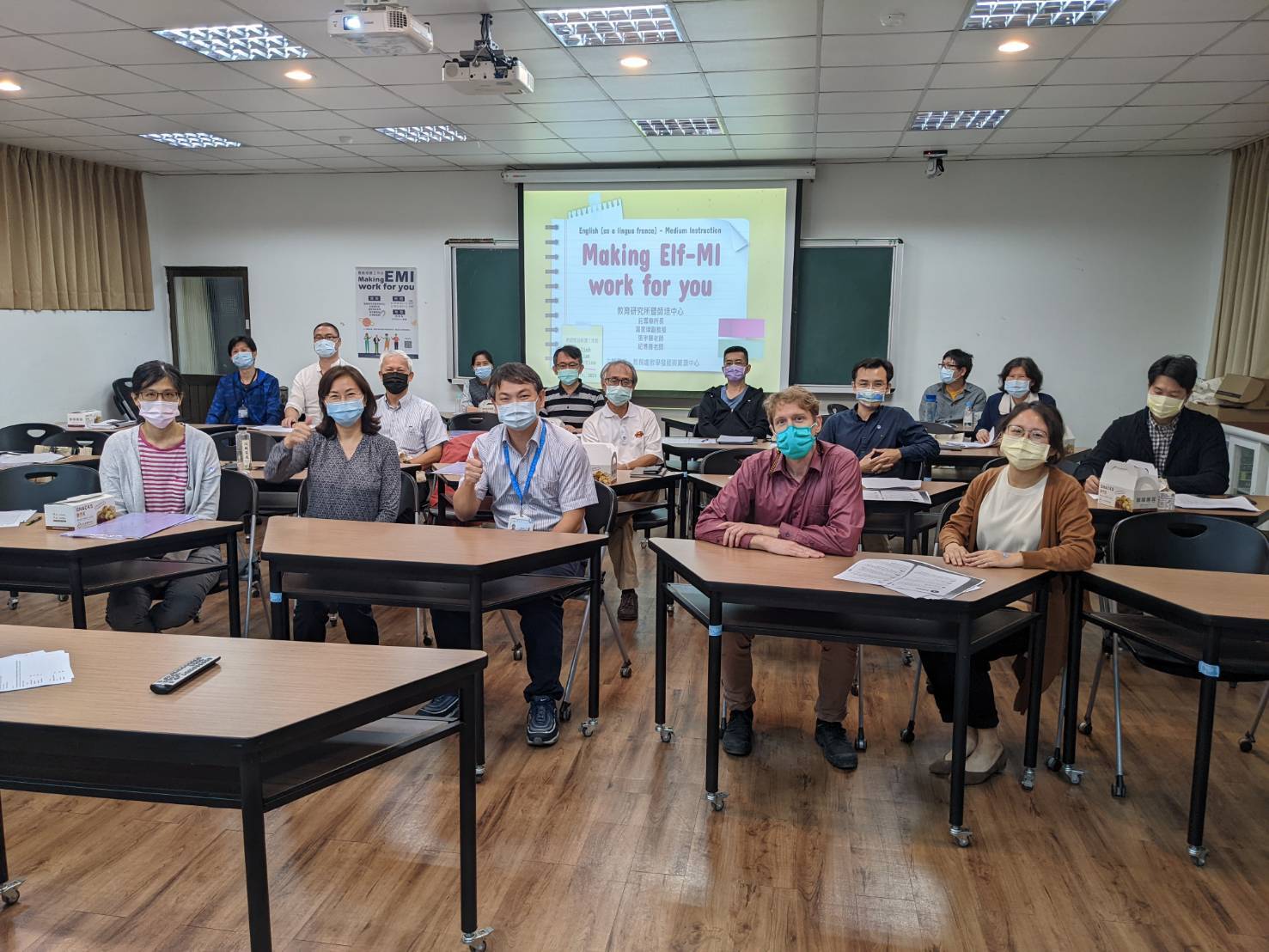
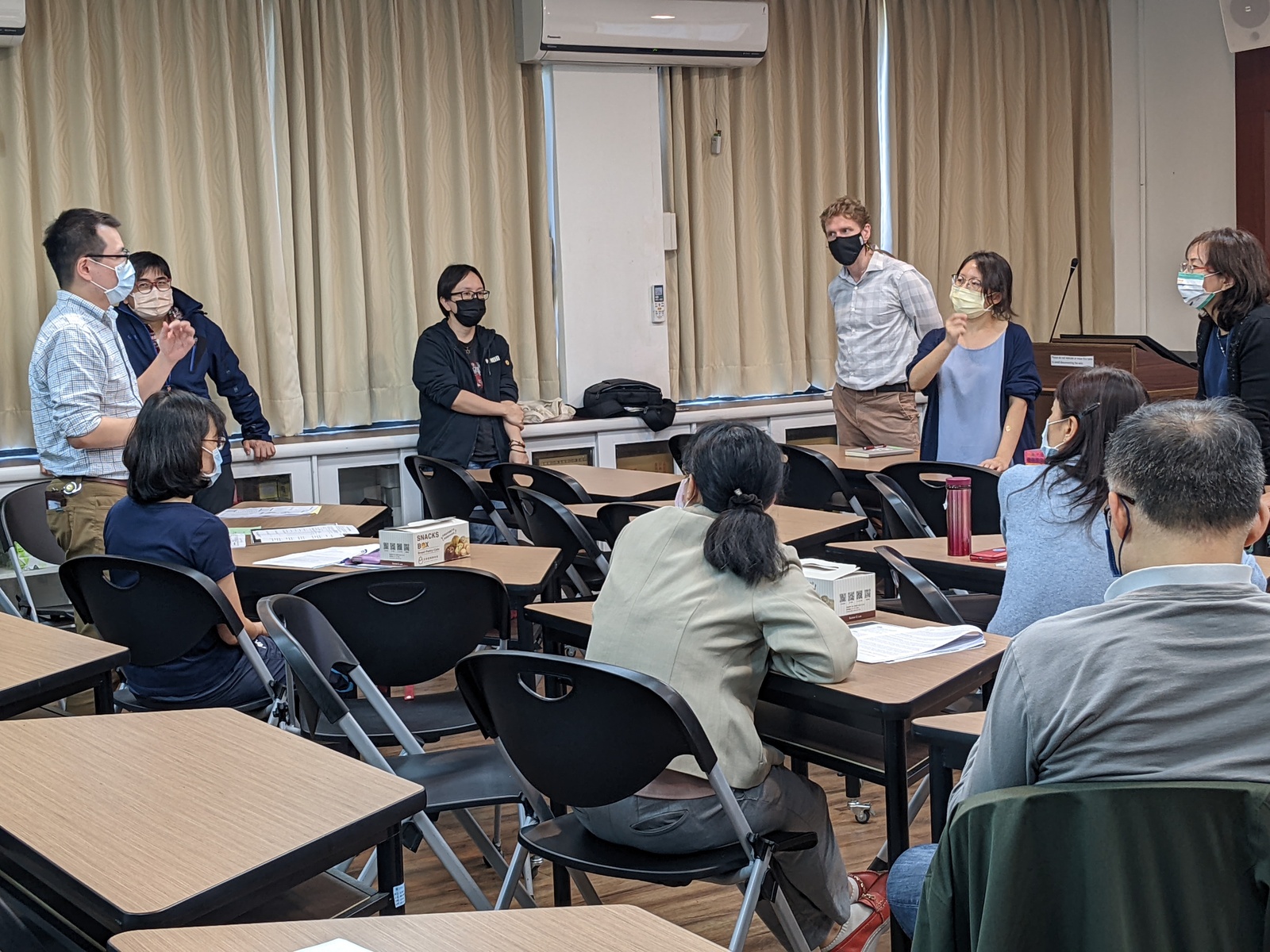
Provided by Teaching and Learning Development and Resources Center) To promote bilingual education at the University, the Teaching and Learning Development and Resources Center collaborated together with the Institute of Education and the Center for Teacher Education to organize three workshops on bilingual education for teachers of the College of Science. NSYSU Vice President for Academic Affairs Po-Chiao Lin pointed out that this workshop focused on the possibilities of teaching the fundamental required courses of science bilingually in the freshmen year, hoping to gradually familiarize new students with the English-language teaching environment. Dean of NSYSU College of Science Ming-Jung Wu emphasized that the faculty of the College of Science play an important role in building good foundations in mathematics and science in students by teaching their fundamental required courses of science. The workshops are expected to successfully integrate bilingual elements into professional subjects.
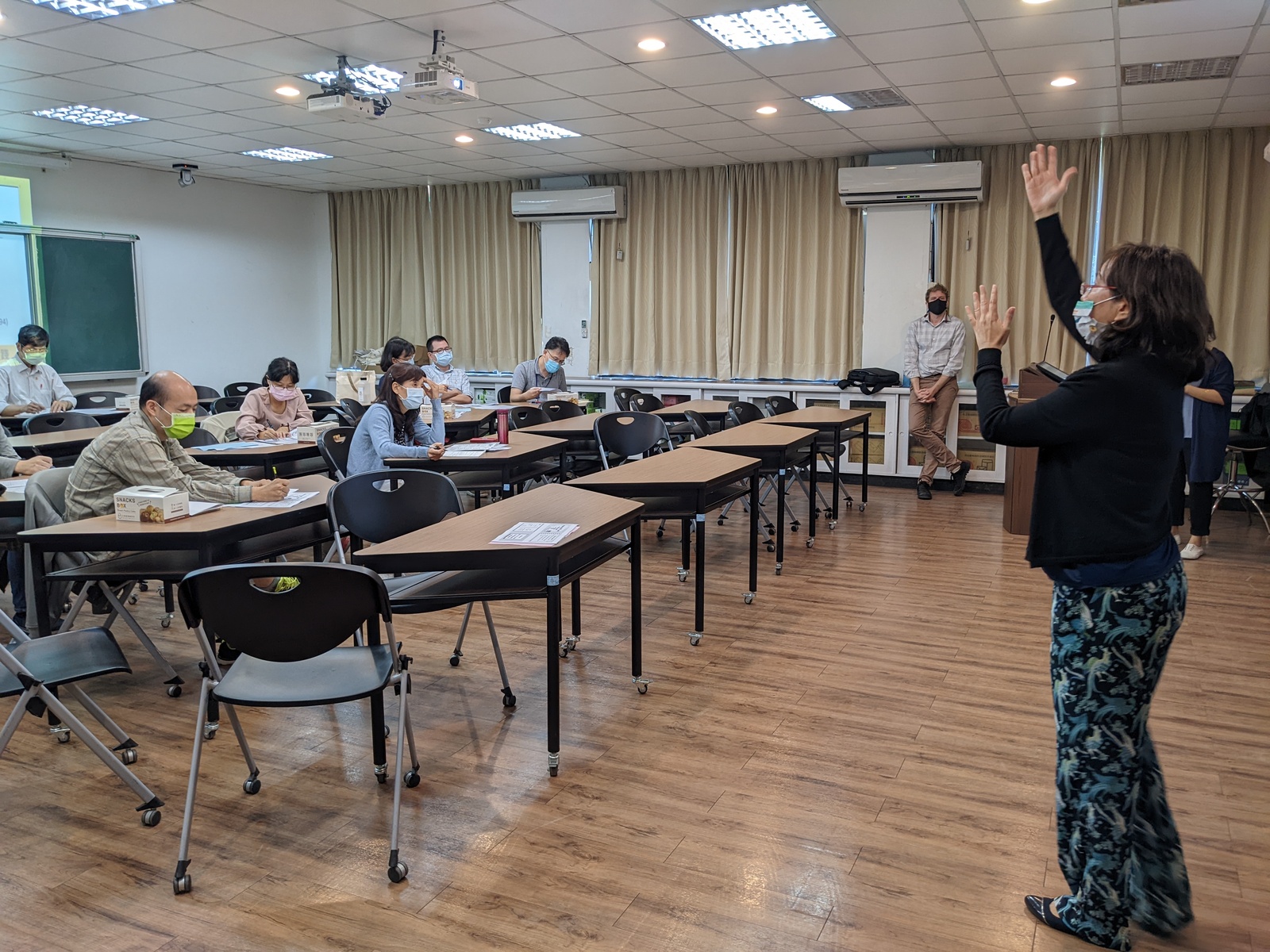
The three workshops in bilingual education for teachers were conducted by Director of Institute of Education Hsueh-Hua Chuang, Assistant Professor Yu-Hui Chang, and Assistant Professor Dale Albanese. They introduced various possible forms of bilingual education in professional subjects to the teachers of the College of Science. Director Chuang explained that bilingual teaching of professional subjects does not have to be conducted entirely in English, but instead, the teachers need to adopt the translanguaging strategy. She gave an example: using Chinese briefly for group discussions can facilitate creative thinking and brainstorming, and using English to present the discussion results on stage. She pointed out that while students are allowed to use their native language, they should be encouraged to use English more often in classroom discussions as their English proficiency improves or as they choose to take more EMI courses.
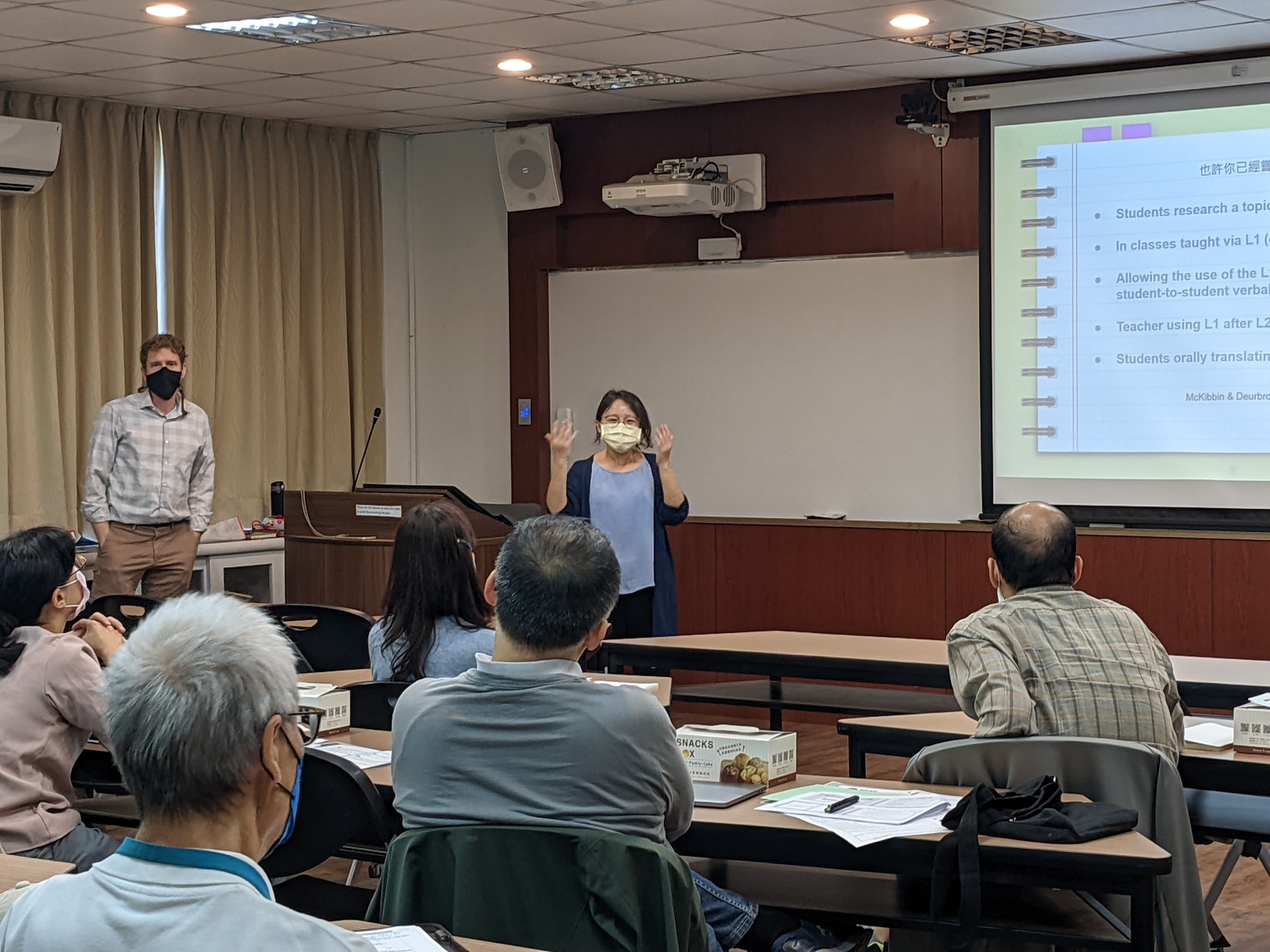
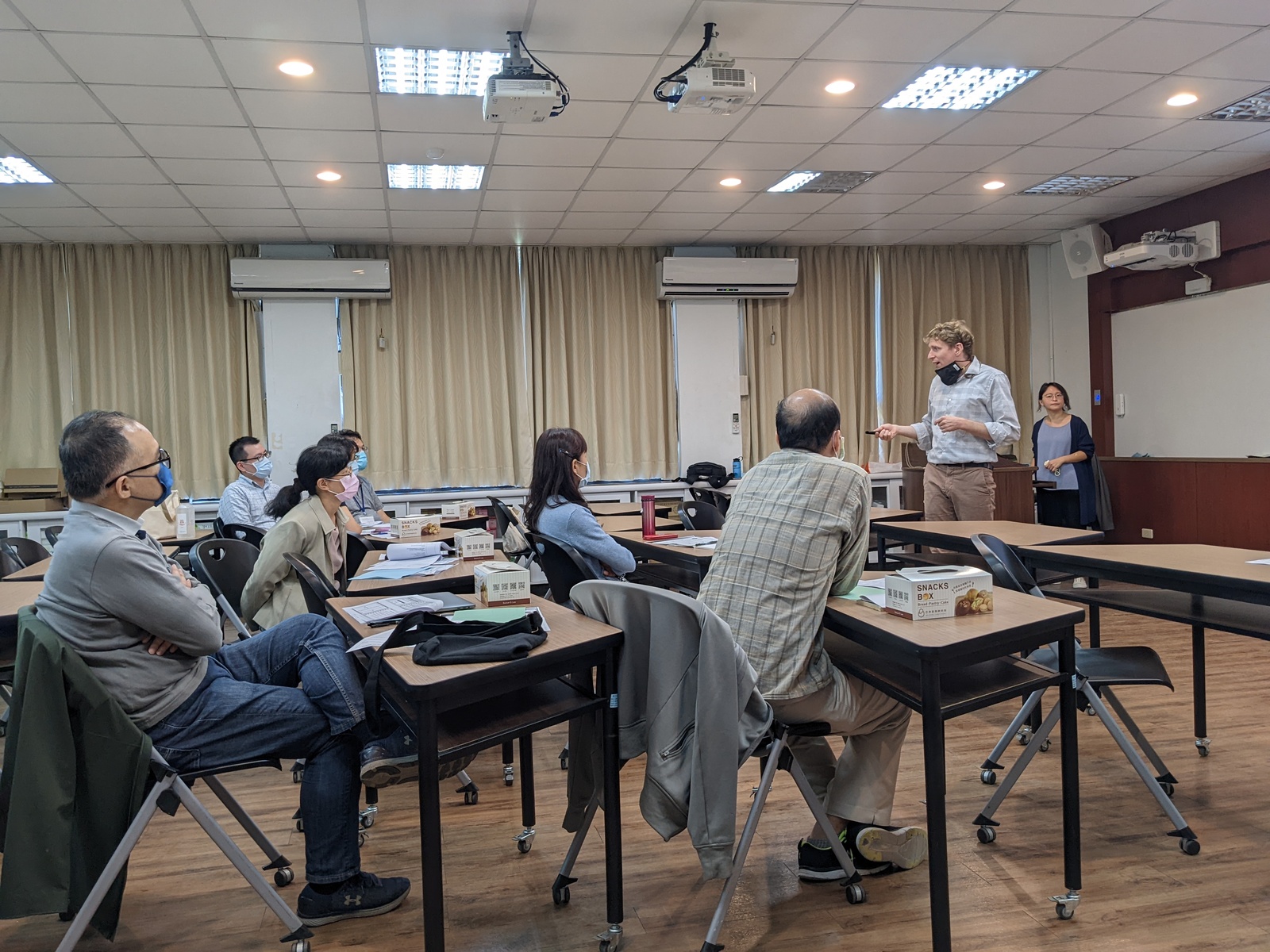
Professors Yu-Hui Chang and Dale Albanese introduced the translanguaging strategy, which consists of composing four quadrants of the instructional language and knowledge dimensions. The dimensions of instructional language are divided into Chinese and English, while the knowledge dimensions are divided by the level of complexity, with the most complex being the metacognition and the most basic being factual knowledge. Professor Dale Albanese shared that teachers can divide the course content into four quadrants: factual knowledge, procedural knowledge, conceptual knowledge, and metacognitive skills, and use Chinese and English alternately so that students can express what they have learned in English while mastering the subject knowledge.
As an education model, translanguaging communication has many advantages. Professors Yu-Hui Chang said that the flexibility in using both languages not only reduces the teacher’s anxiety, but also allows students to build on prior knowledge acquired in their native language. She believes that the transition to bilingual education should be done without sacrificing the absorption of knowledge in specialized subjects, and that the translanguaging strategy can effectively integrate the language learning and subject knowledge, creating a win-win situation for both teachers and students and a positive learning environment.
(Edited by Public Affairs Division)
Provided by Teaching and Learning Development and Resources Center) To promote bilingual education at the University, the Teaching and Learning Development and Resources Center collaborated together with the Institute of Education and the Center for Teacher Education to organize three workshops on bilingual education for teachers of the College of Science. NSYSU Vice President for Academic Affairs Po-Chiao Lin pointed out that this workshop focused on the possibilities of teaching the fundamental required courses of science bilingually in the freshmen year, hoping to gradually familiarize new students with the English-language teaching environment. Dean of NSYSU College of Science Ming-Jung Wu emphasized that the faculty of the College of Science play an important role in building good foundations in mathematics and science in students by teaching their fundamental required courses of science. The workshops are expected to successfully integrate bilingual elements into professional subjects.
The three workshops in bilingual education for teachers were conducted by Director of Institute of Education Hsueh-Hua Chuang, Assistant Professor Yu-Hui Chang, and Assistant Professor Dale Albanese. They introduced various possible forms of bilingual education in professional subjects to the teachers of the College of Science. Director Chuang explained that bilingual teaching of professional subjects does not have to be conducted entirely in English, but instead, the teachers need to adopt the translanguaging strategy. She gave an example: using Chinese briefly for group discussions can facilitate creative thinking and brainstorming, and using English to present the discussion results on stage. She pointed out that while students are allowed to use their native language, they should be encouraged to use English more often in classroom discussions as their English proficiency improves or as they choose to take more EMI courses.
Professors Yu-Hui Chang and Dale Albanese introduced the translanguaging strategy, which consists of composing four quadrants of the instructional language and knowledge dimensions. The dimensions of instructional language are divided into Chinese and English, while the knowledge dimensions are divided by the level of complexity, with the most complex being the metacognition and the most basic being factual knowledge. Professor Dale Albanese shared that teachers can divide the course content into four quadrants: factual knowledge, procedural knowledge, conceptual knowledge, and metacognitive skills, and use Chinese and English alternately so that students can express what they have learned in English while mastering the subject knowledge.
As an education model, translanguaging communication has many advantages. Professors Yu-Hui Chang said that the flexibility in using both languages not only reduces the teacher’s anxiety, but also allows students to build on prior knowledge acquired in their native language. She believes that the transition to bilingual education should be done without sacrificing the absorption of knowledge in specialized subjects, and that the translanguaging strategy can effectively integrate the language learning and subject knowledge, creating a win-win situation for both teachers and students and a positive learning environment.
(Edited by Public Affairs Division)
Click Num:
Share