
The "Proper 3rd Person" does not seek marital status: NSYSU study reveals gender dilemmas in extramarital intimacies
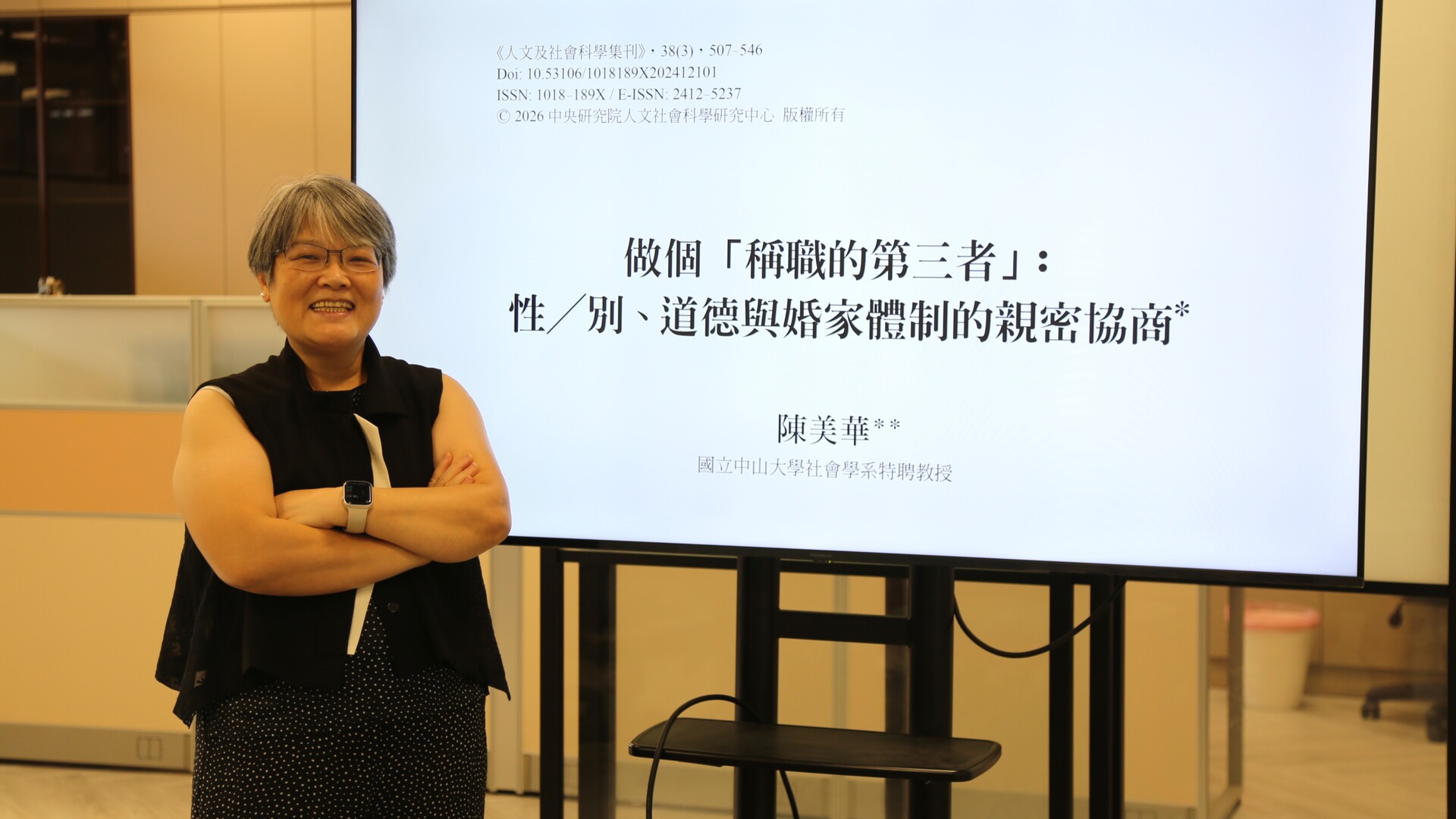
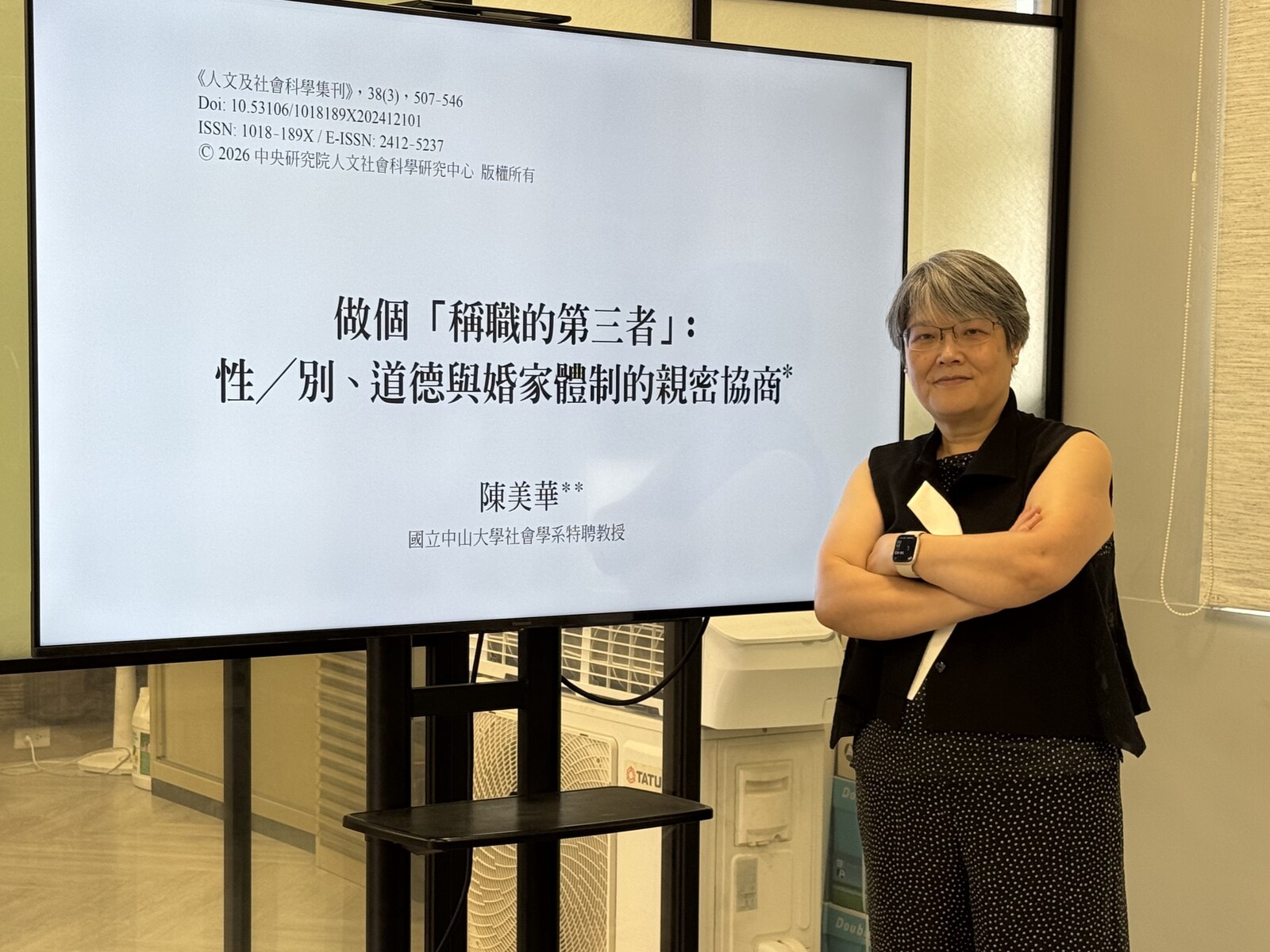


The notion of a "proper 3rd person" (i.e. the other woman) may appear contradictory and paradoxical at first glance. Distinguished Professor Mei-Hua Chen of the Department of Sociology at National Sun Yat-sen University (NSYSU) notes that "the 3rd person" has long been subject to moral stigma. In her study, Chen interviewed 24 women who had experienced extramarital intimacies (EMI) and was surprised to find that they generally did not quarrel, cause conflicts, or demand marital status. Instead, they inadvertently helped sustain the institution of marriage. Some women turned to extramarital relationships to fulfill emotional and sexual needs that had long gone unmet in their marriages, while some women who chose not to marry became involved with married men, enjoying intimate relationships while retaining their freedom and independence.
Using in-depth interviews, Chen interviewed 24 women involved in EMI relationships, including both married and unwed young women. Their extramarital relationships had lasted from at least one year to as long as 20 years. The study found that the contexts in which the two groups entered EMI differed considerably. Narratives from married women were largely concerned with gender roles and intimate dilemmas within the marriage, while those of unwed young women more often emphasized freedom, independence, and maintaining personal autonomy within intimate relationships.
The study found that although modern women have attained higher levels of education and greater economic independence, entering a gendered marital regime often means taking on imposed female identities such as wives, mothers, and daughters-in-law, constraining women's sense of self. After experiencing long-term "sexual and intimate deficits" in marriage, some married women began seeking EMI relationships. This does not necessarily mean that their marriages had "failed"; rather, they may remain viable marriages that nevertheless fail to fulfill emotional and sexual needs. Some interviewees described how a couple could continue living together, sharing household chores, and caring for each other, while having no sex life. Divorce was not the only option; EMI could instead fulfill unmet emotional and sexual needs. This suggests that contemporary women are increasingly decoupling marriage, sex, and intimate relationships.
Among unwed women, the study found that some young women developed intimate relationships with older married men, not because they had been deceived or hoped the relationships would eventually lead to marriage. Some interviewees said that being involved with a married man meant that neither party needed to intervene in the other's life constantly. Instead, they could enjoy companionship, romance, and sex while maintaining space for their own lives and careers. Some even stated that the greatest risk of dating an unwed man was "he might ask you to get married." These accounts suggest that relationships with married men may serve as a way for some women to resist the gendered marital regime.
The study also found that some EMI relationships involving unwed women developed on campus or in the workplace, with older men, such as professors or supervisors, as their partners. These relationships were therefore shaped by unequal power relations in terms of age, social status, class, and access to resources. Some women admired the abilities, knowledge, and life experience of older men, while others experienced a sense of personal growth and accomplishment through the relationships. Chen points out that such relationships cannot be explained simply in terms of an "Oedipus complex" or material exchange; they must instead be understood in the context of women's own gender identities, class, and life circumstances.
Regardless of whether they were married or unwed, however, these women had to contend with the moral stigma attached to being "the 3rd person." The study found that the image commonly portrayed in films and television dramas—of a "third person" who causes confrontations and pressures the spouse to leave—does not represent most interviewees. Instead, most women deliberately "knew their place," refraining from intervening in their partners' families, demanding a divorce, or leaving traces of the relationship. Some women who did not want to divorce even chose married partners. Both parties sought to avoid exposing the relationship, which could lead to family breakdown and social stigma, and therefore maintained a "balance of terror" by keeping the relationship secret together.
Chen emphasizes that the significance of the study is not to defend extramarital relationships, but to understand "infidelity" not simply as an individual moral issue, but within the contexts of social structures and gender relations. Although EMI is not uncommon in history, culture, or social representations, sociological research on the subject remains relatively limited. Previous studies have focused largely on psychology and counseling, emphasizing individuals' emotions, psychological adjustment, and counseling methods, while leaving a significant theoretical gap in understanding how individual circumstances intersect with sexual morality norms and social structures. This study helps bridge the knowledge gap between "individual psychological adjustment" and "social structures and sexual morality norms," while bringing to light women's subjective experiences of EMI that have received comparatively little attention.
Chen notes that a common theme among the interviewees is married women's reluctance to continue taking on imposed identities as wives and mothers. In addition to declining birth rates, sexual and intimate deficits are also prevalent in marital relationships. For single women, the prospect of a relationship that allows them to come and go relatively freely while retaining their independence is an important consideration. In a context where women face structurally low wages, dating older married men who have greater resources and do not pressure them to marry or have children may also become an attractive option. Chen points out that addressing declining birth rates and falling willingness to marry requires policymakers to look beyond the question of "how to encourage women to marry and have children." Greater attention should instead be paid to gender divisions of labor in marriage and child-rearing. In addition to providing institutional support for childcare and parenting, policies should encourage men to take substantive responsibility for child-rearing and family care. Only when men genuinely become equal partners in parenting can women have greater autonomy within marriage and family life, allowing society to rethink the relationship among marriage, intimacy, and childbearing.
Journal information: The article Be a "Proper 3rd Person": Negotiating Gender, Sexual Morality and Marriage in Extramarital Intimacies was published in Volume 38, Issue 3 of the Journal of Social Sciences and Philosophy.