
Taiwan Strait Conflict Would Disrupt Global Finance and Semiconductor Supply Chains, Former UK Defence Secretary Sir Gavin Williamson Addresses Peace and Stability at NSYSU
2026-09-24
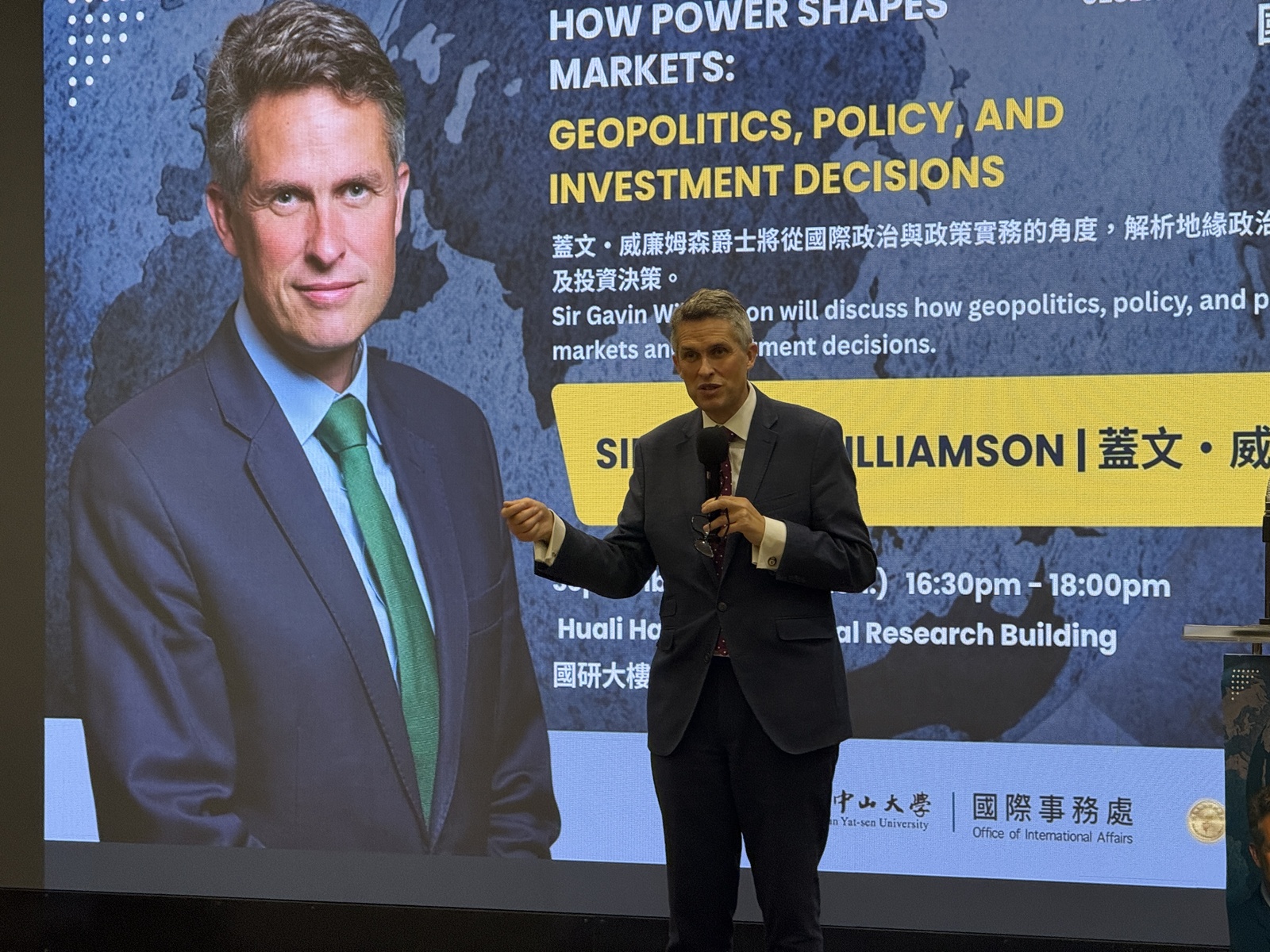
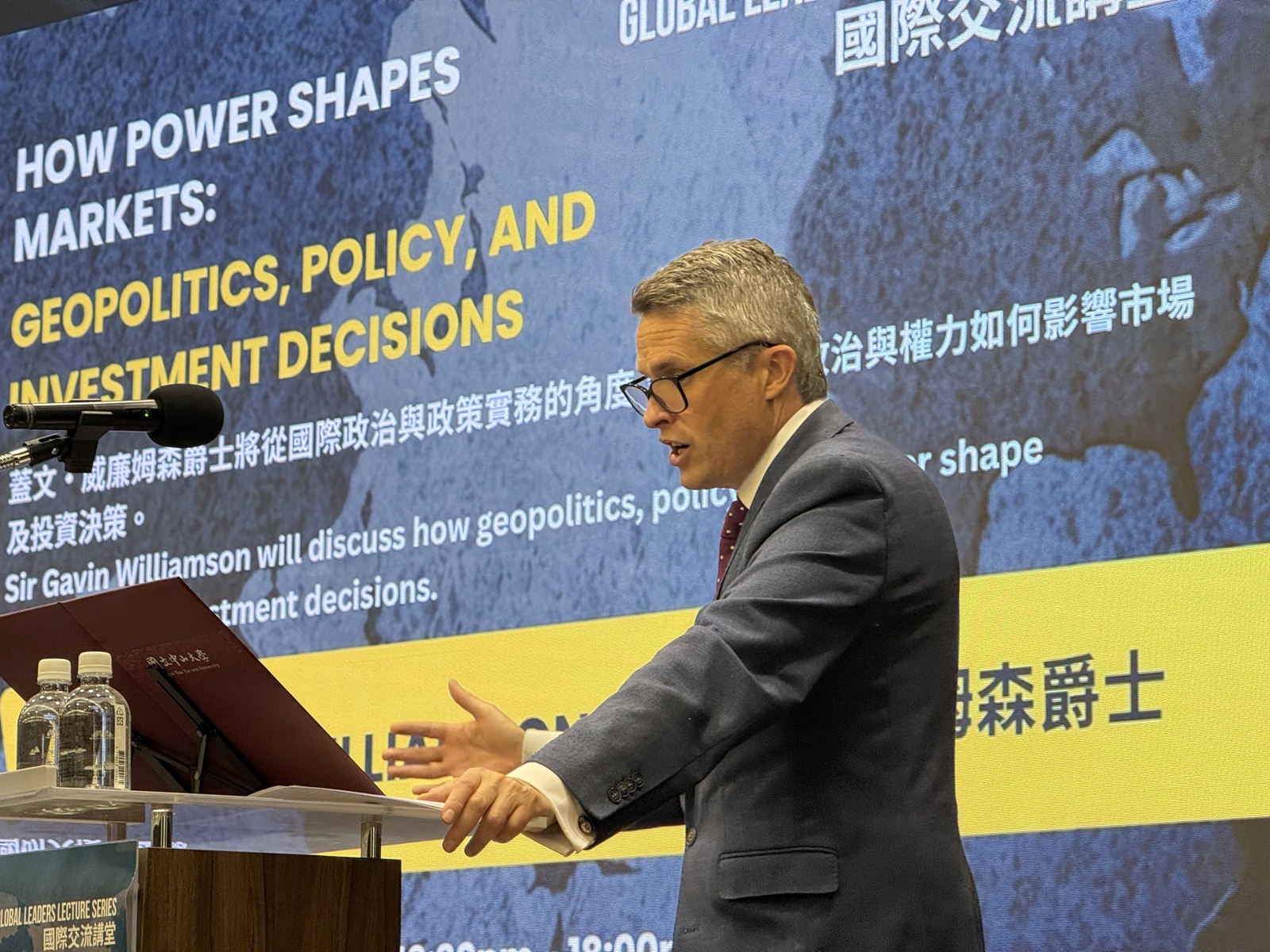
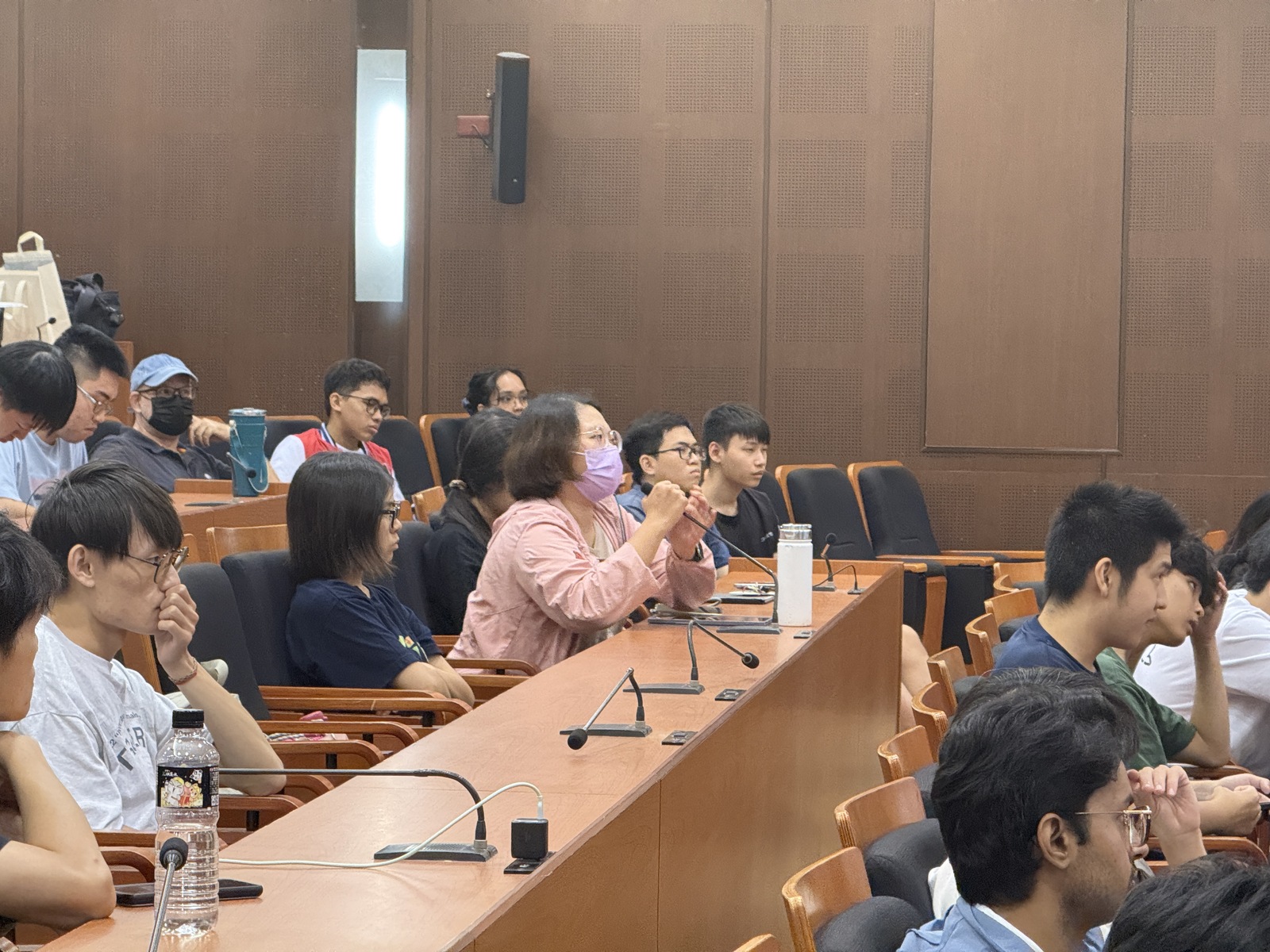
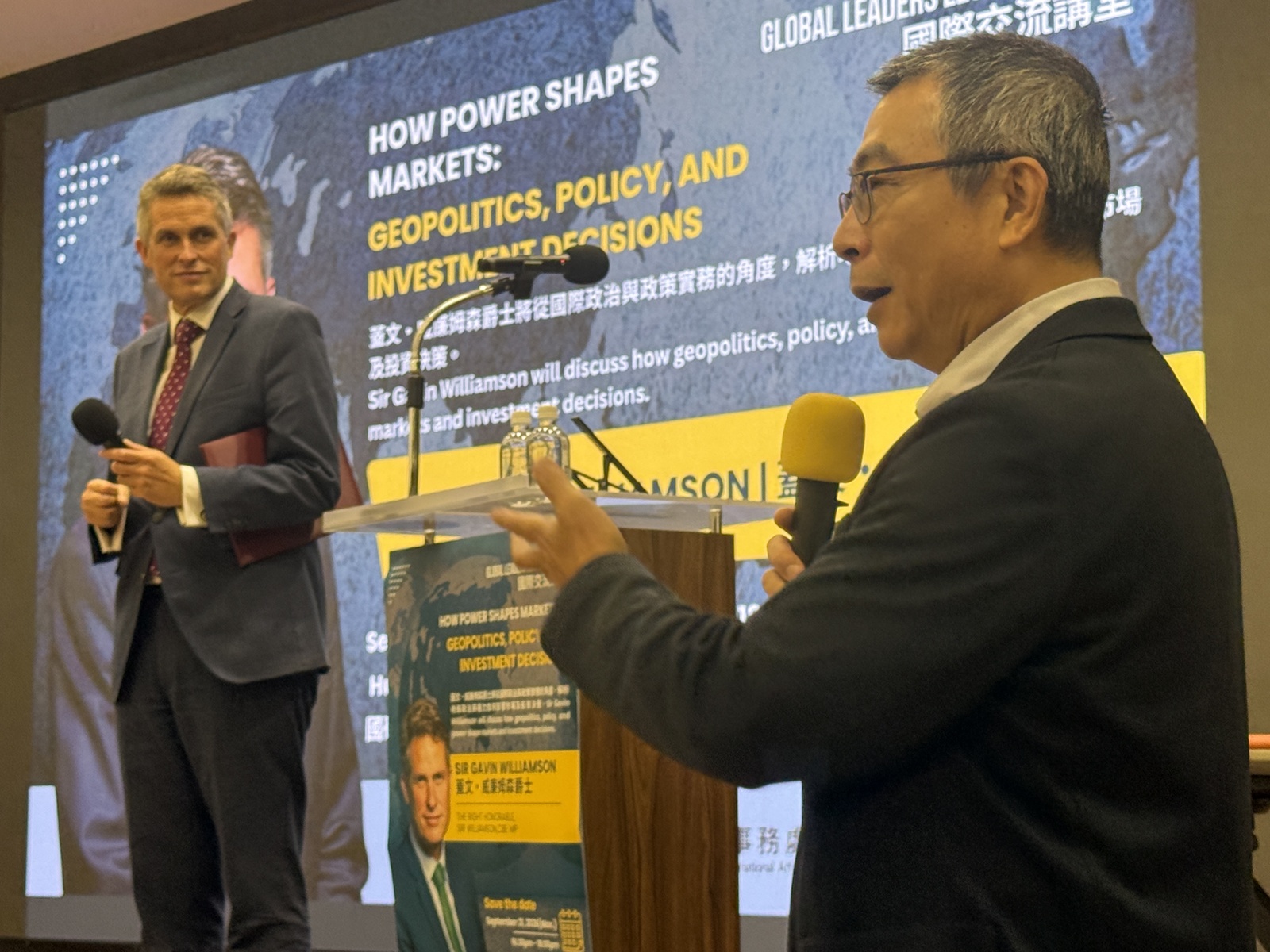
“Peace in the Taiwan Strait cannot be sustained simply by seeking to avoid conflict. It also requires defence preparedness, credible deterrence, and international cooperation,” said Sir Gavin Williamson, former UK Secretary of State for Defence, during a lecture at the Global Leaders Lecture Series hosted by the School of Banking and Finance (SBF) at National Sun Yat-sen University (NSYSU). He warned that a conflict in the Taiwan Strait would have consequences extending far beyond regional security, potentially disrupting global financial markets, semiconductor supply chains, and the wider international economy. Taiwan, he argued, should strengthen the asymmetric defence capabilities and overall resilience to raise the cost for any actor attempting to change the status quo by force.
Sir Gavin delivered a lecture entitled “What Today’s Conflicts Can Teach Us About Peace in the Taiwan Strait Amid Rising World Tensions.” Drawing on recent international conflicts, including the war in Ukraine and attacks on commercial shipping in the Red Sea, he examined the security and economic challenges facing peace and stability in the Taiwan Strait. Sir Gavin served as UK Secretary of State for Defence in 2018. During his tenure, Royal Navy vessels sailed through the South China Sea, demonstrating the United Kingdom’s commitment to security in the Indo-Pacific and to a rules-based international order.
Discussing the war in Ukraine, Sir Gavin cited developments in the Black Sea to illustrate the strategic importance of denial rather than command. Although Ukraine lacked a conventional navy capable of confronting Russia’s fleet directly, it used land-based anti-ship missiles, uncrewed vessels, and precision strikes to restrict the operations of Russia’s Black Sea Fleet. The example showed that an effective defence does not necessarily require the complete defeat of an adversary; denial capabilities can instead constrain its freedom of action and significantly increase the cost of aggression.
He also referred to drone and missile attacks on commercial shipping in the Red Sea, noting that even a relatively small armed force can disrupt global trade routes, compel vessels to take lengthy diversions, and increase both transit times and shipping costs. The experiences of the Black Sea and the Red Sea demonstrate that the impact of modern warfare is not determined solely by the size of a military force. The cost, precision, mobility, and tactical deployment of weapon systems can also reshape the battlefield.
Turning to Taiwan’s defence strategy, Sir Gavin argued that Taiwan does not need to make a full-scale confrontation with the People’s Liberation Army Navy its sole objective. More importantly, Taiwan must develop the ability to deny the sea and air superiority required to launch a cross- strait invasion. Taiwan’s recent investment in drones, asymmetric warfare capabilities, and layered defence systems reflects several of the strategic trends demonstrated in contemporary conflicts. These capabilities should be integrated with technology, intelligence, logistics, civil defence, and international cooperation to establish a resilient defence system capable of sustaining its operations under pressure.
Sir Gavin emphasized that Taiwan should convey a clear message to the international community: “Taiwan does not seek war, but it is prepared to defend itself.” Demonstrating the determination and capacity to defend the island is not intended to provoke conflict. The purpose is to ensure that any party considering the use of force to change the status quo fully understands the costs it would face, thereby strengthening deterrence and preserving peace in the Taiwan Strait.
Beyond security considerations, Sir Gavin also examined the potential consequences of a Taiwan Strait conflict for global finance and industry. He noted that economic modelling estimates that a full-scale conflict over Taiwan could result in approximately US$10.6 trillion in economic losses during the first year alone—nearly 10% of global gross domestic product. Given Taiwan’s critical role in advanced semiconductor manufacturing, any disruption to its supply chains could affect finance, automobiles, telecommunications, artificial intelligence, and other high-technology industries, with further consequences for businesses, employment, and financial markets worldwide.
Sir Gavin argued that peace in the Taiwan Strait should therefore be understood not only as a matter of national defence and diplomacy but also as an issue of global economic security. Taiwan could present country-specific data on semiconductor dependence, industrial exposure, employment, and GDP to help finance ministries, central banks, financial institutions, and businesses around the world better understand the risks of instability in the Strait. Taiwan could also use international platforms such as the World Economic Forum, the Group of Seven (G7), and Asia-Pacific Economic Cooperation (APEC) to frame semiconductor supply-chain resilience as a shared global economic-security concern.
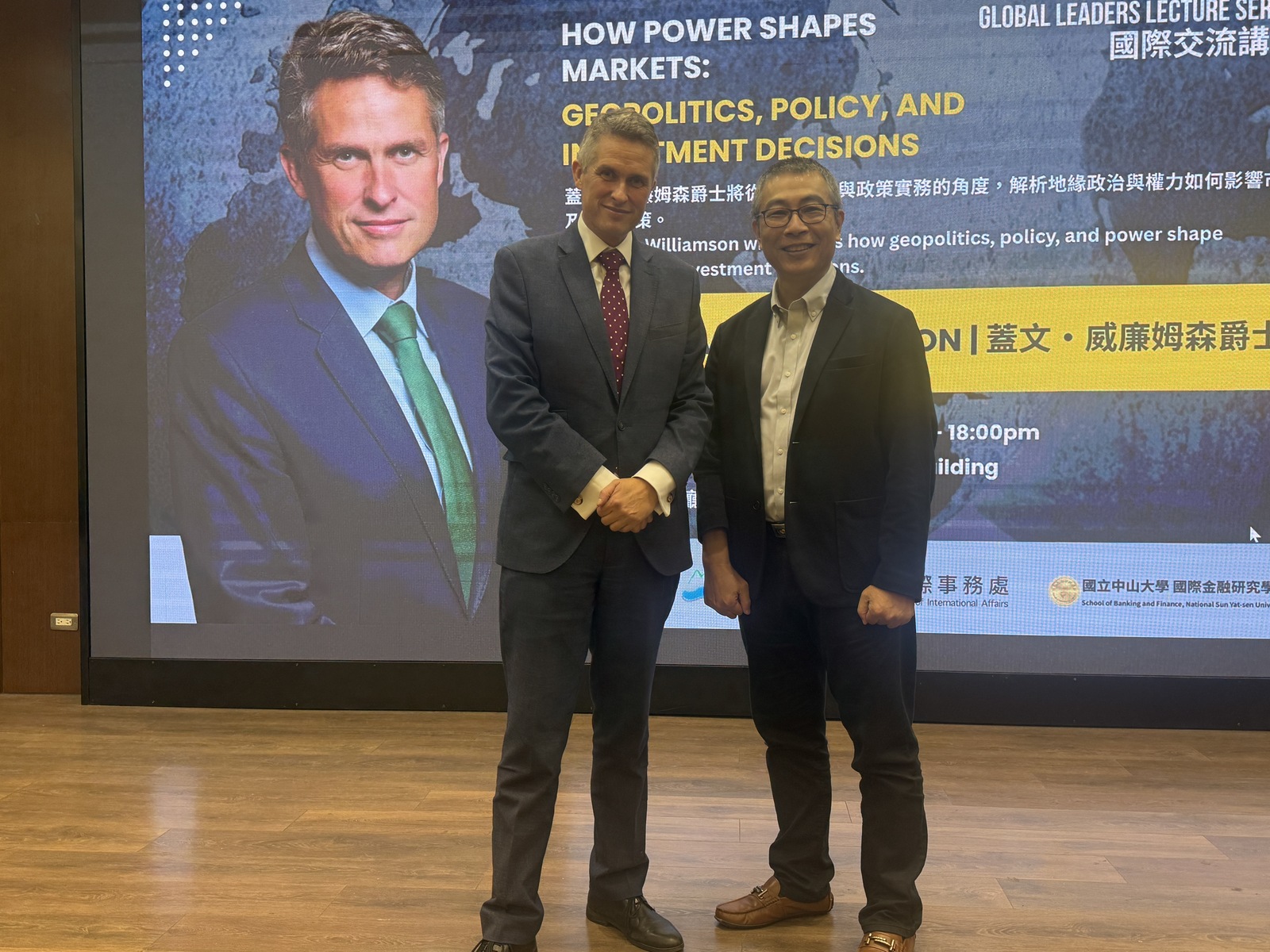
NSYSU Vice President and SBF Dean Chih-Wen Kuo said that the Global Leaders Lecture Series explored how geopolitical developments, defence strategy, global finance, and semiconductor supply chains influence financial markets and investment decisions. By encouraging students to examine international affairs through the lens of finance, the event demonstrated SBF’s interdisciplinary approach to integrating global developments, financial expertise, and industry practice into its teaching.
“Peace in the Taiwan Strait cannot be sustained simply by seeking to avoid conflict. It also requires defence preparedness, credible deterrence, and international cooperation,” said Sir Gavin Williamson, former UK Secretary of State for Defence, during a lecture at the Global Leaders Lecture Series hosted by the School of Banking and Finance (SBF) at National Sun Yat-sen University (NSYSU). He warned that a conflict in the Taiwan Strait would have consequences extending far beyond regional security, potentially disrupting global financial markets, semiconductor supply chains, and the wider international economy. Taiwan, he argued, should strengthen the asymmetric defence capabilities and overall resilience to raise the cost for any actor attempting to change the status quo by force.
Sir Gavin delivered a lecture entitled “What Today’s Conflicts Can Teach Us About Peace in the Taiwan Strait Amid Rising World Tensions.” Drawing on recent international conflicts, including the war in Ukraine and attacks on commercial shipping in the Red Sea, he examined the security and economic challenges facing peace and stability in the Taiwan Strait. Sir Gavin served as UK Secretary of State for Defence in 2018. During his tenure, Royal Navy vessels sailed through the South China Sea, demonstrating the United Kingdom’s commitment to security in the Indo-Pacific and to a rules-based international order.
Discussing the war in Ukraine, Sir Gavin cited developments in the Black Sea to illustrate the strategic importance of denial rather than command. Although Ukraine lacked a conventional navy capable of confronting Russia’s fleet directly, it used land-based anti-ship missiles, uncrewed vessels, and precision strikes to restrict the operations of Russia’s Black Sea Fleet. The example showed that an effective defence does not necessarily require the complete defeat of an adversary; denial capabilities can instead constrain its freedom of action and significantly increase the cost of aggression.
He also referred to drone and missile attacks on commercial shipping in the Red Sea, noting that even a relatively small armed force can disrupt global trade routes, compel vessels to take lengthy diversions, and increase both transit times and shipping costs. The experiences of the Black Sea and the Red Sea demonstrate that the impact of modern warfare is not determined solely by the size of a military force. The cost, precision, mobility, and tactical deployment of weapon systems can also reshape the battlefield.
Turning to Taiwan’s defence strategy, Sir Gavin argued that Taiwan does not need to make a full-scale confrontation with the People’s Liberation Army Navy its sole objective. More importantly, Taiwan must develop the ability to deny the sea and air superiority required to launch a cross- strait invasion. Taiwan’s recent investment in drones, asymmetric warfare capabilities, and layered defence systems reflects several of the strategic trends demonstrated in contemporary conflicts. These capabilities should be integrated with technology, intelligence, logistics, civil defence, and international cooperation to establish a resilient defence system capable of sustaining its operations under pressure.
Sir Gavin emphasized that Taiwan should convey a clear message to the international community: “Taiwan does not seek war, but it is prepared to defend itself.” Demonstrating the determination and capacity to defend the island is not intended to provoke conflict. The purpose is to ensure that any party considering the use of force to change the status quo fully understands the costs it would face, thereby strengthening deterrence and preserving peace in the Taiwan Strait.
Beyond security considerations, Sir Gavin also examined the potential consequences of a Taiwan Strait conflict for global finance and industry. He noted that economic modelling estimates that a full-scale conflict over Taiwan could result in approximately US$10.6 trillion in economic losses during the first year alone—nearly 10% of global gross domestic product. Given Taiwan’s critical role in advanced semiconductor manufacturing, any disruption to its supply chains could affect finance, automobiles, telecommunications, artificial intelligence, and other high-technology industries, with further consequences for businesses, employment, and financial markets worldwide.
Sir Gavin argued that peace in the Taiwan Strait should therefore be understood not only as a matter of national defence and diplomacy but also as an issue of global economic security. Taiwan could present country-specific data on semiconductor dependence, industrial exposure, employment, and GDP to help finance ministries, central banks, financial institutions, and businesses around the world better understand the risks of instability in the Strait. Taiwan could also use international platforms such as the World Economic Forum, the Group of Seven (G7), and Asia-Pacific Economic Cooperation (APEC) to frame semiconductor supply-chain resilience as a shared global economic-security concern.
NSYSU Vice President and SBF Dean Chih-Wen Kuo said that the Global Leaders Lecture Series explored how geopolitical developments, defence strategy, global finance, and semiconductor supply chains influence financial markets and investment decisions. By encouraging students to examine international affairs through the lens of finance, the event demonstrated SBF’s interdisciplinary approach to integrating global developments, financial expertise, and industry practice into its teaching.
Click Num:
Share