
Revealing the "bubble tea effect" in the Kuroshio Current: NSYSU study uncovers nutrient transport mechanism
2025-12-01
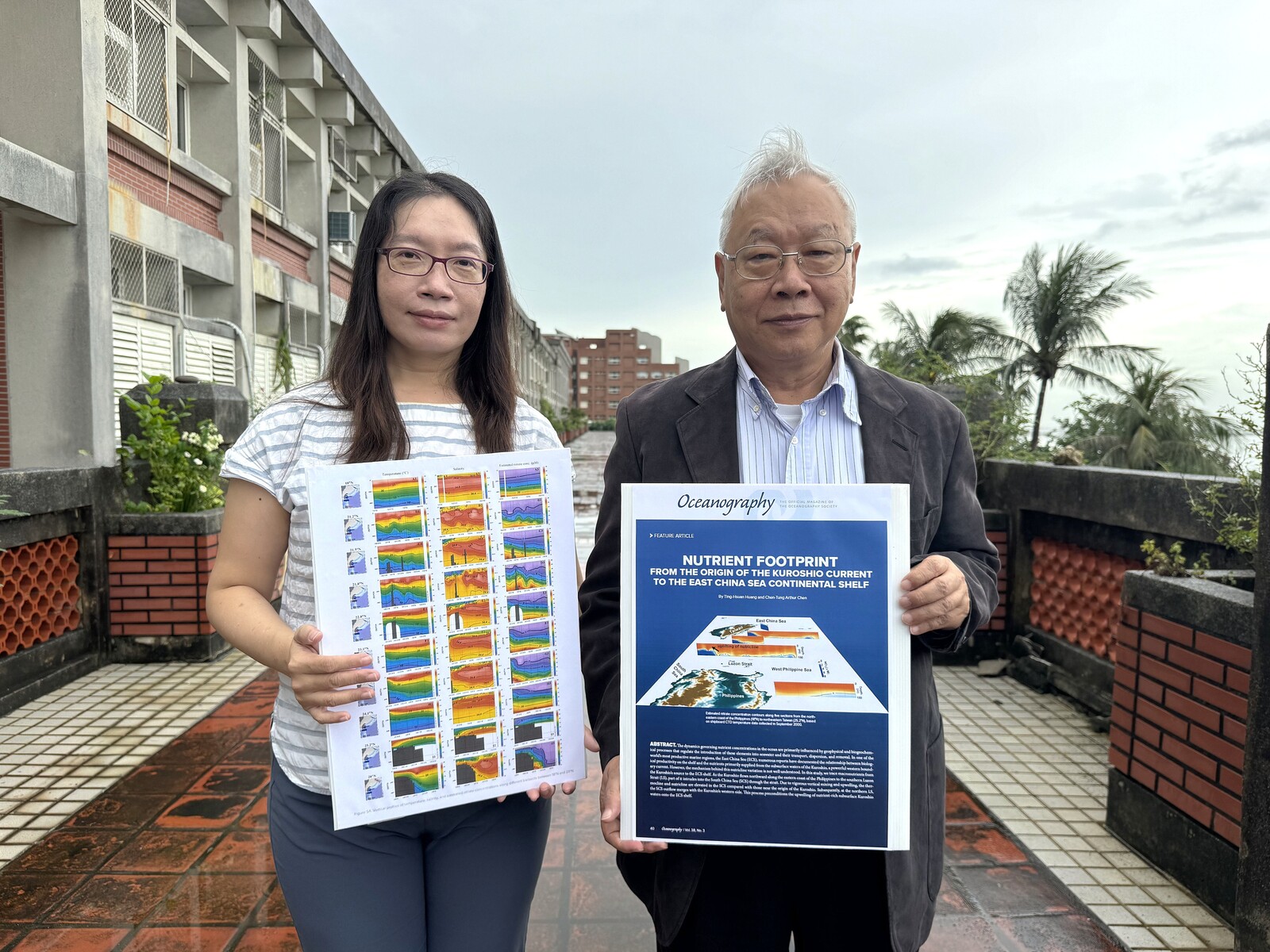
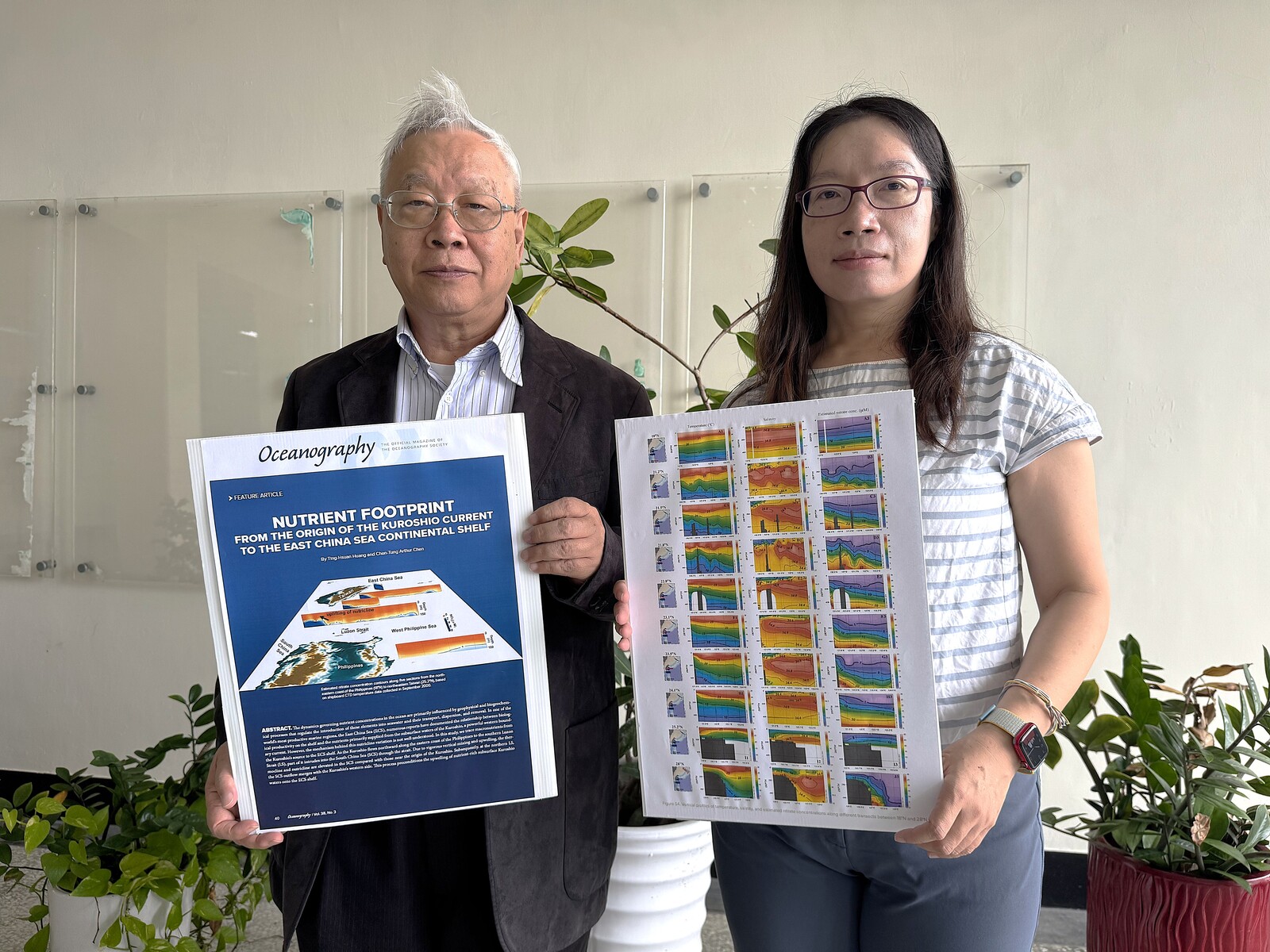
A recent study by National Sun Yat-sen University (NSYSU) has revealed the so-called "bubble tea effect" in the Kuroshio Current. A research team led by Academician of Academia Sinica Chen-Tung Arthur Chen, Chair Research Fellow at NSYSU's Department of Oceanography, used this vivid analogy to explain a new oceanographic finding. The team discovered that mixing processes in the South China Sea lift nutrient-rich deeper layer waters toward the surface layer, much like pearls rising from the bottom of a bubble tea cup when stirred and becoming easier to suck up with a straw, making them more accessible for marine life and significantly increasing the food source for fish. This dual nutrient-uplifting mechanism—"preconditioning in the South China Sea followed by upwelling in the Kuroshio Current"—not only fills a long-standing scientific gap but also provides a vital scientific basis for fisheries resource management and ecological prediction. The findings were published in the international journal Oceanography.
"The East China Sea is one of the world's most productive fishing grounds, and its abundance depends on the continuous supply of nutrients carried by the Kuroshio Current," said Chen. He explained that marine phytoplankton, like terrestrial plants, require a constant supply of "fertilizer" to thrive, and the Kuroshio acts as a nutrient "highway." Waters from the South China Sea enter the Kuroshio through the Luzon Strait, boosting the productivity of the East China Sea's fishing grounds. However, until now, the mechanism explaining why this water is particularly nutrient-rich and how it is efficiently transported onto the continental shelf has remained unclear.
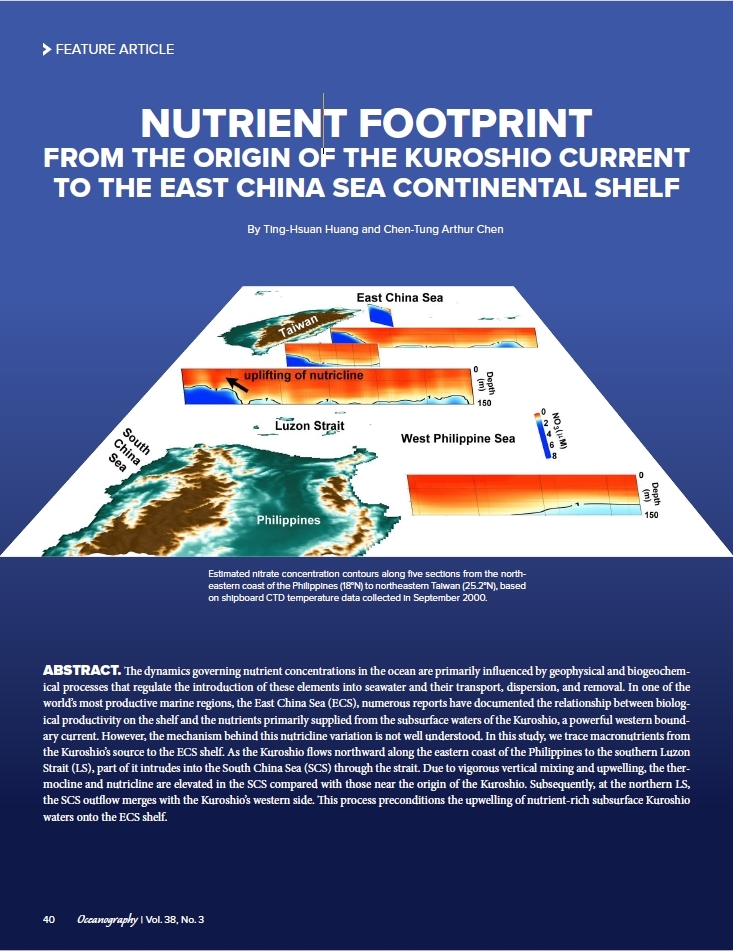
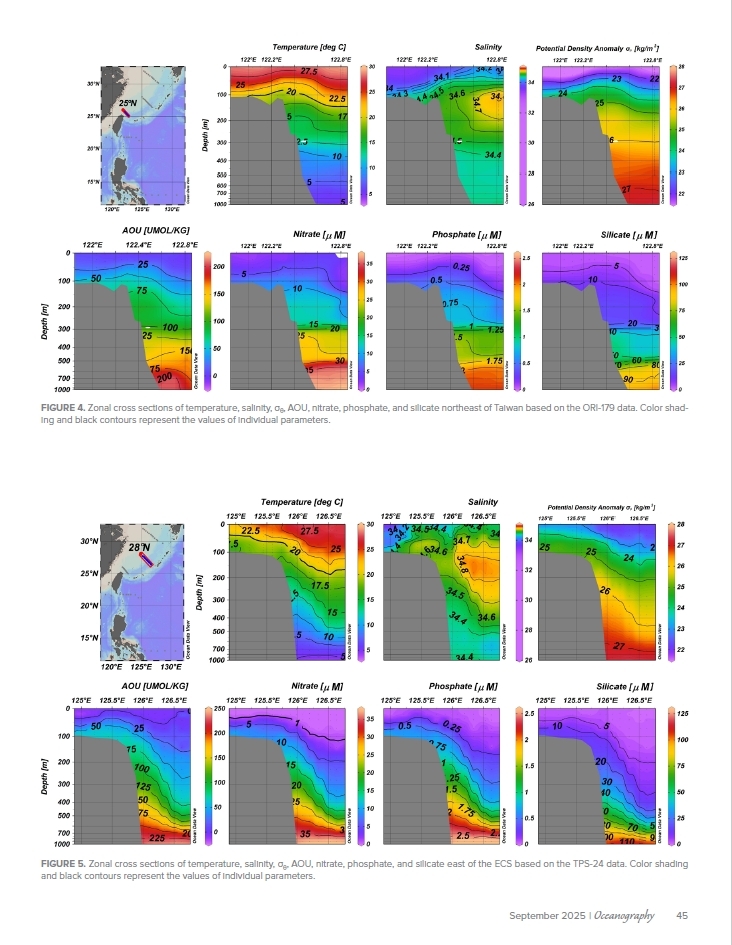
Further investigation by Dr. Ting-Hsuan Huang, Research Fellow at NSYSU's Department of Oceanography, confirmed that common upwelling and internal wave processes in the South China Sea act like the stirring of bubble tea, mixing deep nutrient waters upward and bringing them closer to the surface. These "preconditioned" waters in the South China Sea then flow back into the Kuroshio Current, carrying with them a "nutrient signal" from the South China Sea. As this nutrient-enriched water travels northward along Taiwan's eastern coast, it interacts with the topography and currents at the edge of the East China Sea continental shelf near northeastern Taiwan, bringing nutrients to the surface layer where ample sunlight supports massive phytoplankton growth. Since phytoplankton form the foundation of marine food webs, this process directly influences fish populations and fishery resources. Huang noted that nitrate concentrations at 100 meters depth rise dramatically, from 1 μmol/kg in the southern Kuroshio to 9 μmol/kg near the northern East China Sea, highlighting the critical role of South China Sea waters in nutrient replenishment.
Chen explained that the team reviewed long term records from 2000 to 2020 for context, then used temperature and salinity data from September to October 2000 to map a slice of the ocean from the Philippines to the East China Sea. From this, they estimated the likely nutrient levels in the water. They combined temperature and salinity trends with established formulas to estimate the nutrient concentrations rather than measuring them at every point. This discovery of the "bubble tea effect" provides a comprehensive scientific model for more accurately predicting variations in the East China Sea under seasonal or extreme weather conditions. He noted that although seasons, typhoons and strong winds can all shape the nutrient supply, this study focused on spatial patterns and did not include those time varying effects. With this model, scientists can better evaluate changes in phytoplankton productivity and predict fluctuations in fishery resources, enabling decision-makers and fishermen to plan harvests during optimal seasons or in resource-rich areas, thereby improving efficiency and reducing risks.
The "bubble tea effect," co-authored by Huang and Chen, integrates observational data with model analysis to verify the mechanism of interaction between the Kuroshio and the South China Sea. This marks a major scientific breakthrough and underscores Taiwan's growing influence in the global oceanographic research field. The team noted that this study primarily focuses on spatial distribution patterns and that future research should incorporate seasonal variations with more data for further validation.