
NSYSU Joins MOE–Fulbright Pilot Program for TOEFL Waiver through EMI Courses
2026-02-09
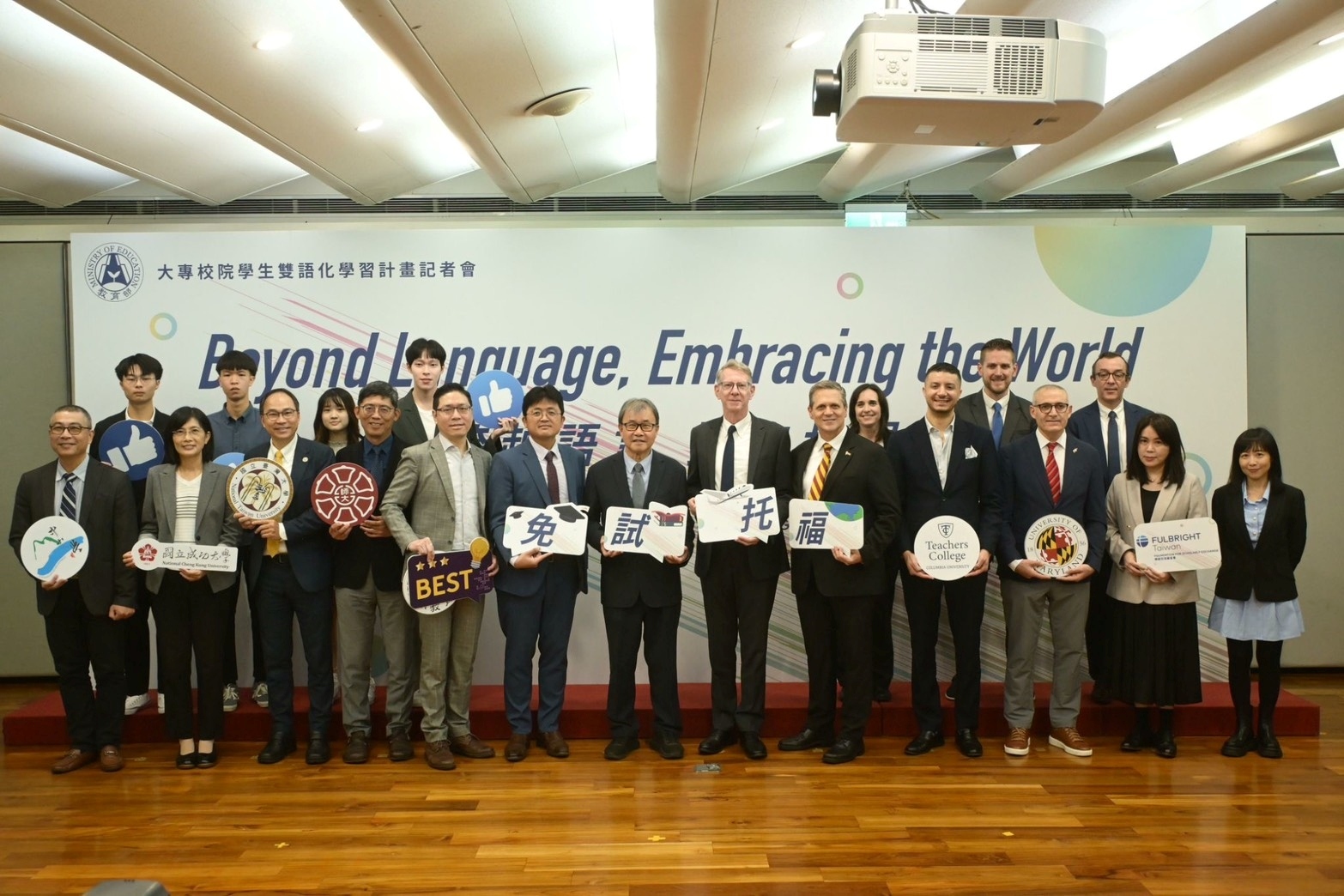
In an era when language learning and international education are rapidly converging, National Sun Yat-sen University (NSYSU) has reached a major milestone. The Ministry of Education (MOE) and Fulbright Taiwan have launched the EMI Test Waiver Partnership Program, allowing undergraduate students who complete a required number of English-Medium Instruction (EMI) courses to apply for graduate programs at partner U.S. universities without submitting TOEFL scores. NSYSU, along with three other benchmark institutions, namely National Cheng Kung University, National Taiwan University, and National Taiwan Normal University, is among the first to participate.
MOE Minister Ying-Yao Cheng stated that the program breaks precedent, as U.S. universities have traditionally required TOEFL scores except in countries where English is an official language. This waiver signals strong confidence in Taiwan's English education quality and highlights the growing global recognition of Taiwan's higher education. For students, EMI coursework now serves as tangible proof of English proficiency, transforming English from a subject of study into a natural medium for learning.
According to Hao Chen, Section Chief at the MOE's Department of Higher Education, four partner U.S. universities—Arizona State University, New York University, Teachers College at Columbia University, and the University of Maryland—have already conducted classroom observations and aligned standards with the benchmark universities in Taiwan. Eight pilot students will engage in short-term exchanges in February, and the program will formally open to applicants in Academic Year 2026. Applicants must still meet other requirements, such as the GRE or GMAT, and enrollment quotas will be jointly set by Taiwanese and U.S. institutions.
This initiative, led by the MOE and Fulbright Taiwan, strengthens ties between benchmark universities in Taiwan and top U.S. institutions, underscoring American recognition of Taiwan's EMI curriculum design, faculty development, and student performance.
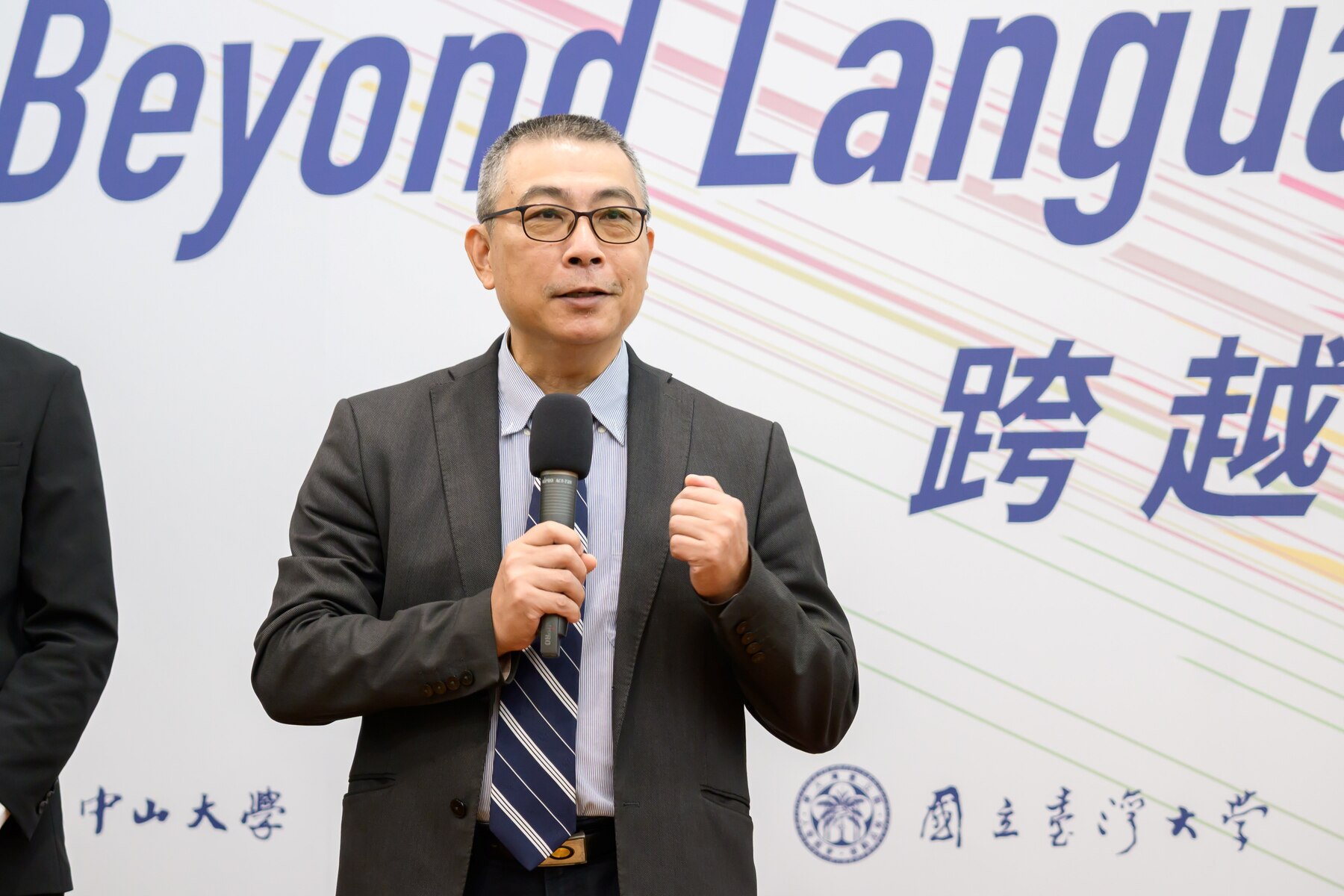
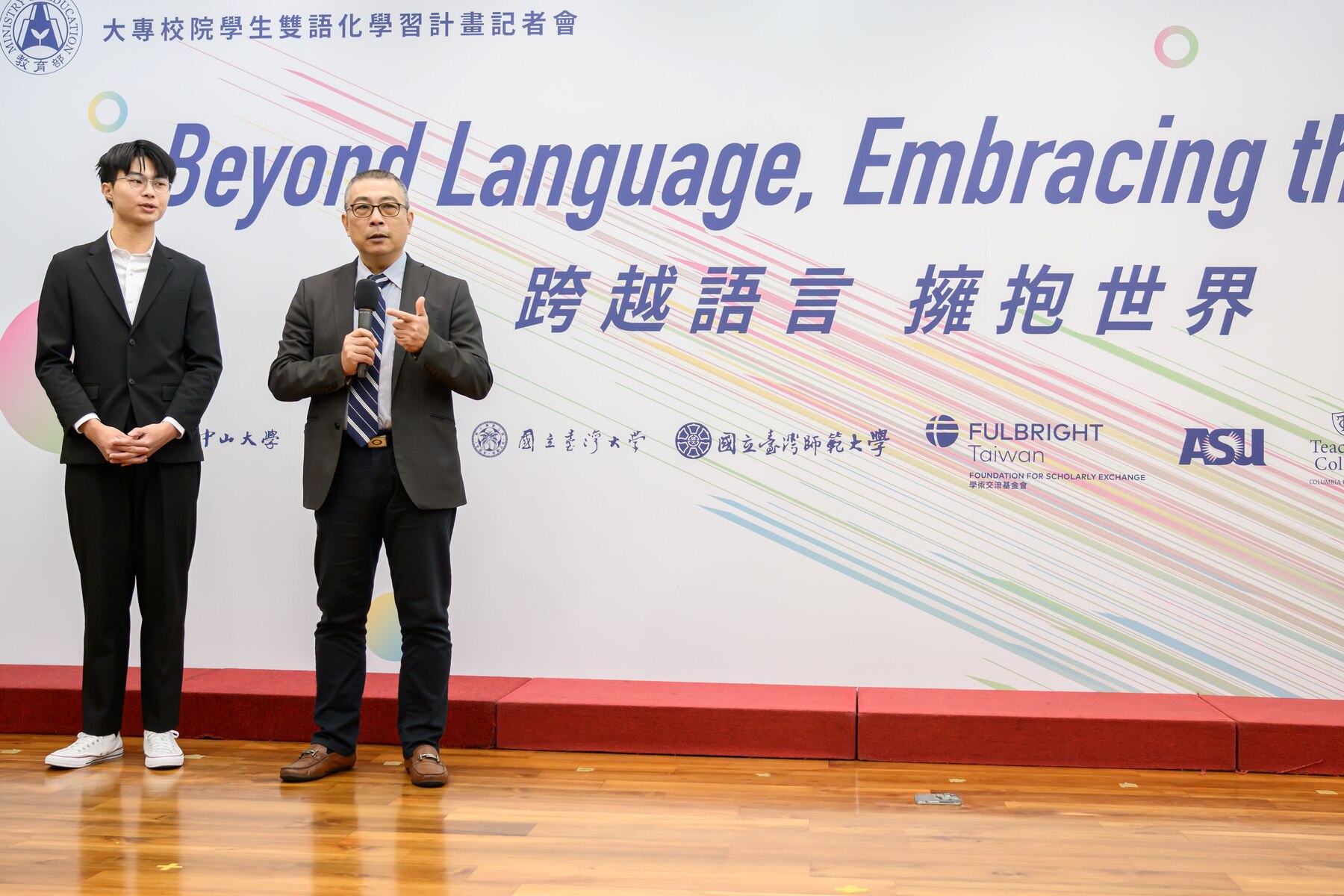
At the press briefing, NSYSU earned particular attention for its progress. Senior Vice President Chih-Wen Kuo noted that, under Minister Cheng's leadership as former NSYSU president, EMI policies were extended across all undergraduate programs. Over the past five years, NSYSU has offered 1,314 EMI courses—about 30% of all offerings—spanning the humanities, social sciences, management, sciences, and engineering. Through professional development workshops and joint material design, the university has cultivated a cohesive EMI ecosystem that now defines its educational landscape.
Vice President for Academic Affairs Shu-chen Sherry Ou highlighted the progress of MOE's Bilingual Education for Students in College (BEST) Program, launched in 2021. Through English discussions, presentations, and intercultural engagement, students develop skills for international mobility. As NSYSU attracts more international faculty and students, the campus continues to evolve into a multilingual, globally connected environment. "This pilot program marks a critical first step toward nationwide TOEFL exemption and underscores Taiwan's growing presence in global higher education," Ou said.
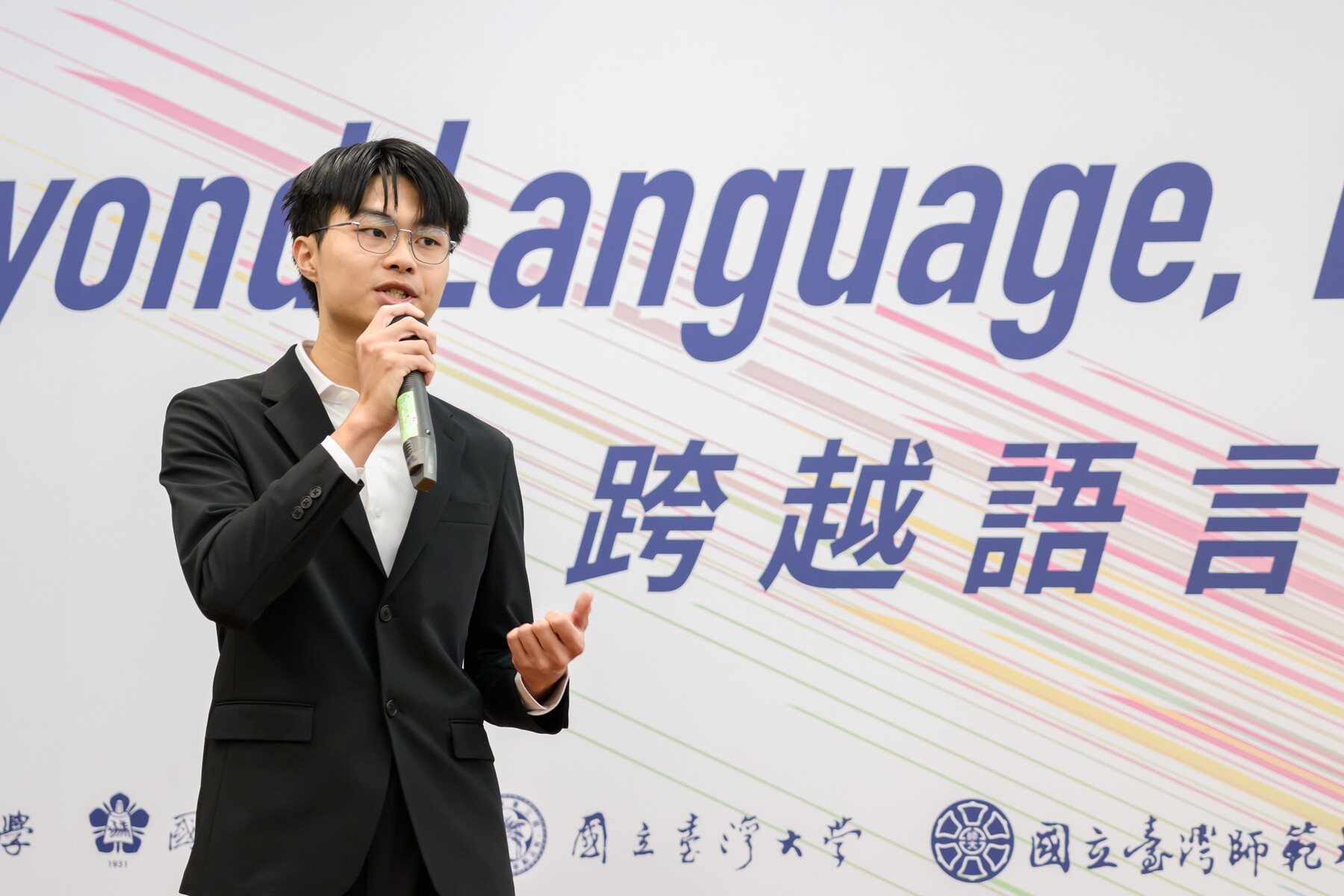
The benefits for students are tangible. Kuan-wen Fu, a senior in Applied Mathematics, shared that his proficiency in English enables him to host international visitors and tutor math in English, leveraging his language skills as a source of income. "I never imagined English could directly generate income," he laughed. Beyond financial gains, EMI has boosted his confidence and inspired him to pursue studies and a career overseas.
Hsin-wei Wu, a student at NTNU, echoed similar outcomes, noting that EMI courses enhanced both his language and disciplinary skills, which led to an exchange program in Germany. For NSYSU students, such cases illustrate EMI's expanding role as a pathway to global engagement.
In an era when language learning and international education are rapidly converging, National Sun Yat-sen University (NSYSU) has reached a major milestone. The Ministry of Education (MOE) and Fulbright Taiwan have launched the EMI Test Waiver Partnership Program, allowing undergraduate students who complete a required number of English-Medium Instruction (EMI) courses to apply for graduate programs at partner U.S. universities without submitting TOEFL scores. NSYSU, along with three other benchmark institutions, namely National Cheng Kung University, National Taiwan University, and National Taiwan Normal University, is among the first to participate.
MOE Minister Ying-Yao Cheng stated that the program breaks precedent, as U.S. universities have traditionally required TOEFL scores except in countries where English is an official language. This waiver signals strong confidence in Taiwan's English education quality and highlights the growing global recognition of Taiwan's higher education. For students, EMI coursework now serves as tangible proof of English proficiency, transforming English from a subject of study into a natural medium for learning.
According to Hao Chen, Section Chief at the MOE's Department of Higher Education, four partner U.S. universities—Arizona State University, New York University, Teachers College at Columbia University, and the University of Maryland—have already conducted classroom observations and aligned standards with the benchmark universities in Taiwan. Eight pilot students will engage in short-term exchanges in February, and the program will formally open to applicants in Academic Year 2026. Applicants must still meet other requirements, such as the GRE or GMAT, and enrollment quotas will be jointly set by Taiwanese and U.S. institutions.
This initiative, led by the MOE and Fulbright Taiwan, strengthens ties between benchmark universities in Taiwan and top U.S. institutions, underscoring American recognition of Taiwan's EMI curriculum design, faculty development, and student performance.
At the press briefing, NSYSU earned particular attention for its progress. Senior Vice President Chih-Wen Kuo noted that, under Minister Cheng's leadership as former NSYSU president, EMI policies were extended across all undergraduate programs. Over the past five years, NSYSU has offered 1,314 EMI courses—about 30% of all offerings—spanning the humanities, social sciences, management, sciences, and engineering. Through professional development workshops and joint material design, the university has cultivated a cohesive EMI ecosystem that now defines its educational landscape.
Vice President for Academic Affairs Shu-chen Sherry Ou highlighted the progress of MOE's Bilingual Education for Students in College (BEST) Program, launched in 2021. Through English discussions, presentations, and intercultural engagement, students develop skills for international mobility. As NSYSU attracts more international faculty and students, the campus continues to evolve into a multilingual, globally connected environment. "This pilot program marks a critical first step toward nationwide TOEFL exemption and underscores Taiwan's growing presence in global higher education," Ou said.
The benefits for students are tangible. Kuan-wen Fu, a senior in Applied Mathematics, shared that his proficiency in English enables him to host international visitors and tutor math in English, leveraging his language skills as a source of income. "I never imagined English could directly generate income," he laughed. Beyond financial gains, EMI has boosted his confidence and inspired him to pursue studies and a career overseas.
Hsin-wei Wu, a student at NTNU, echoed similar outcomes, noting that EMI courses enhanced both his language and disciplinary skills, which led to an exchange program in Germany. For NSYSU students, such cases illustrate EMI's expanding role as a pathway to global engagement.
Click Num:
Share