
APERA-TERA 2025 exploring educational innovation, bringing together 300 scholars from 19 countries at NSYSU
2026-03-02
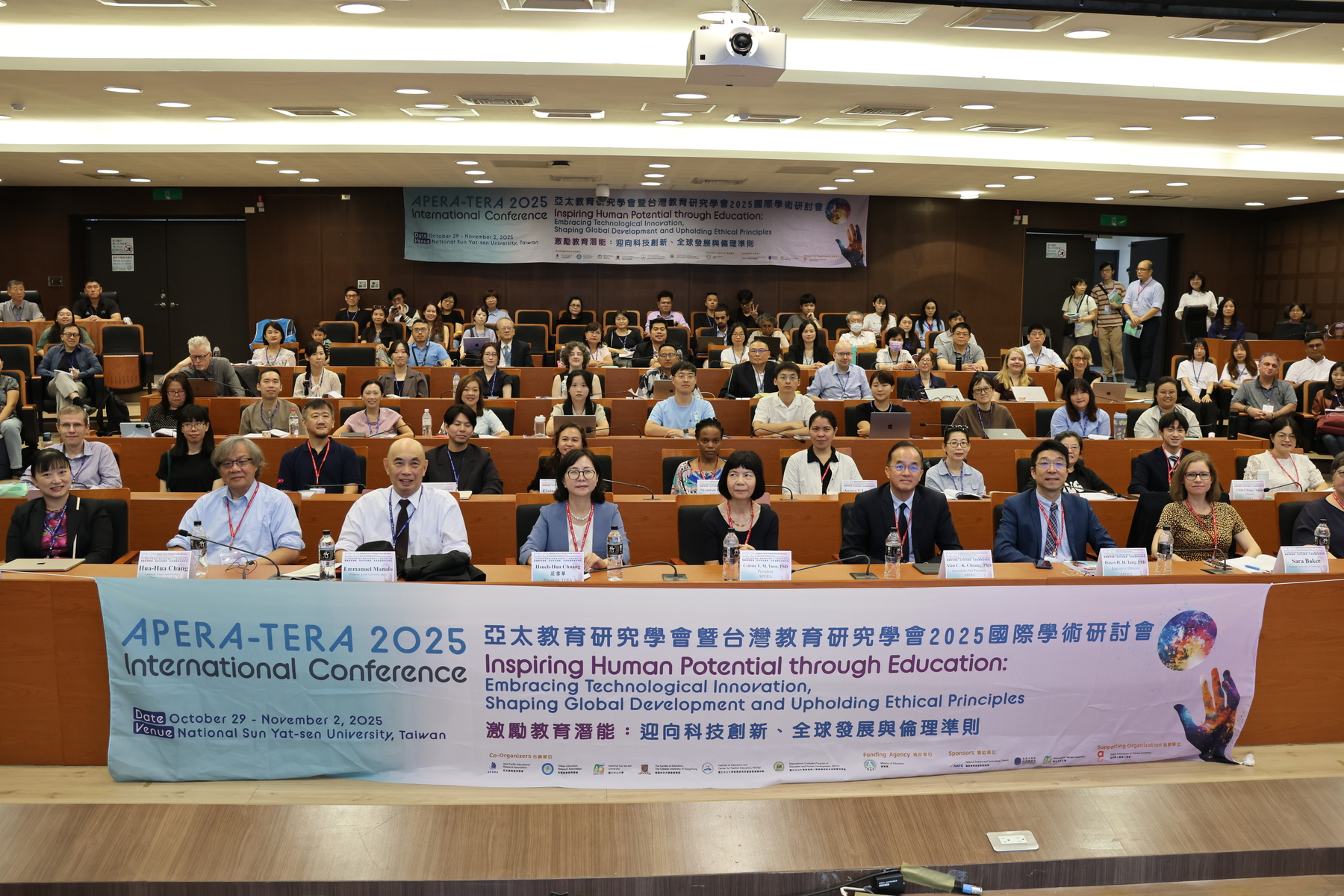
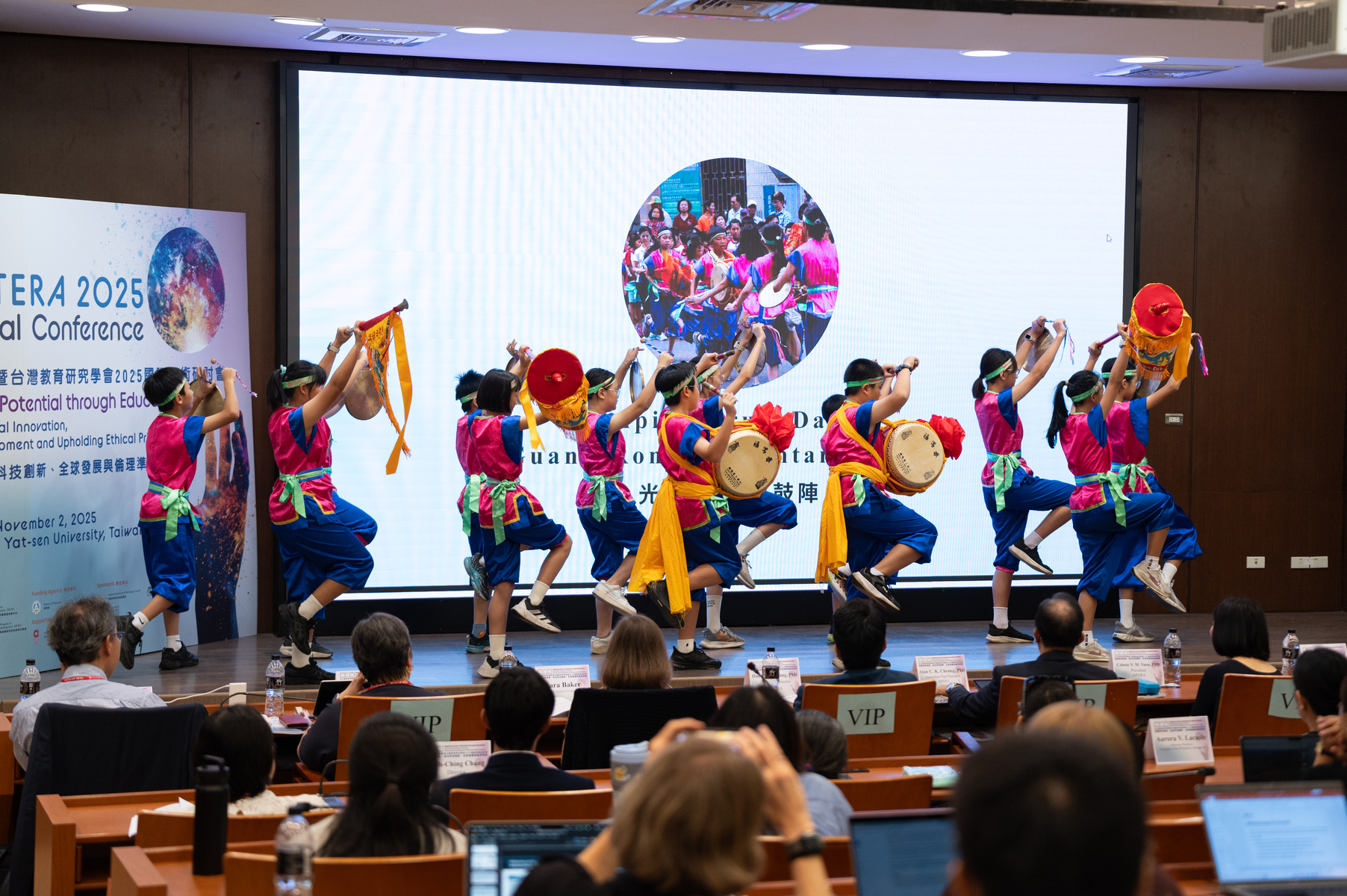
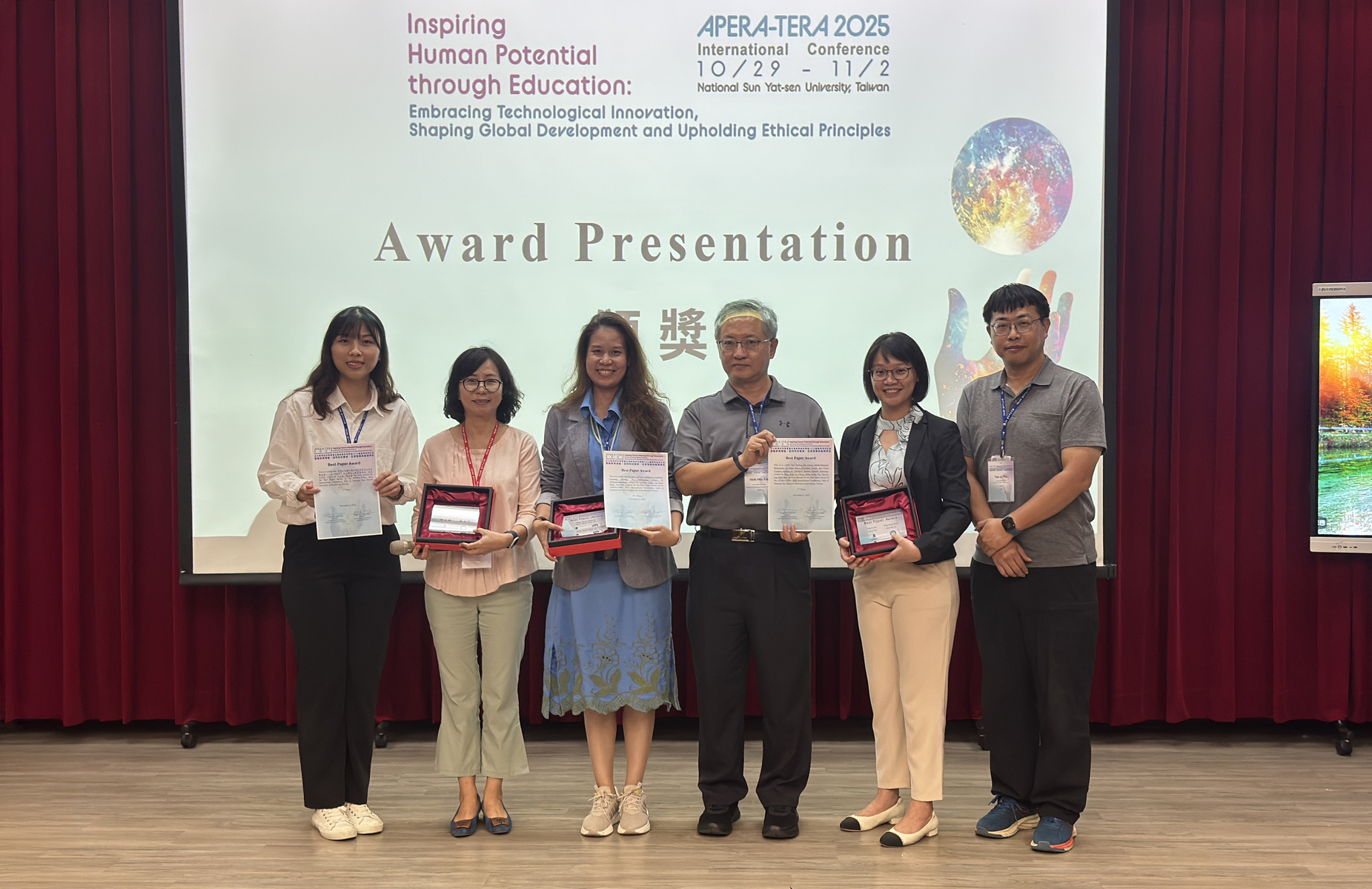
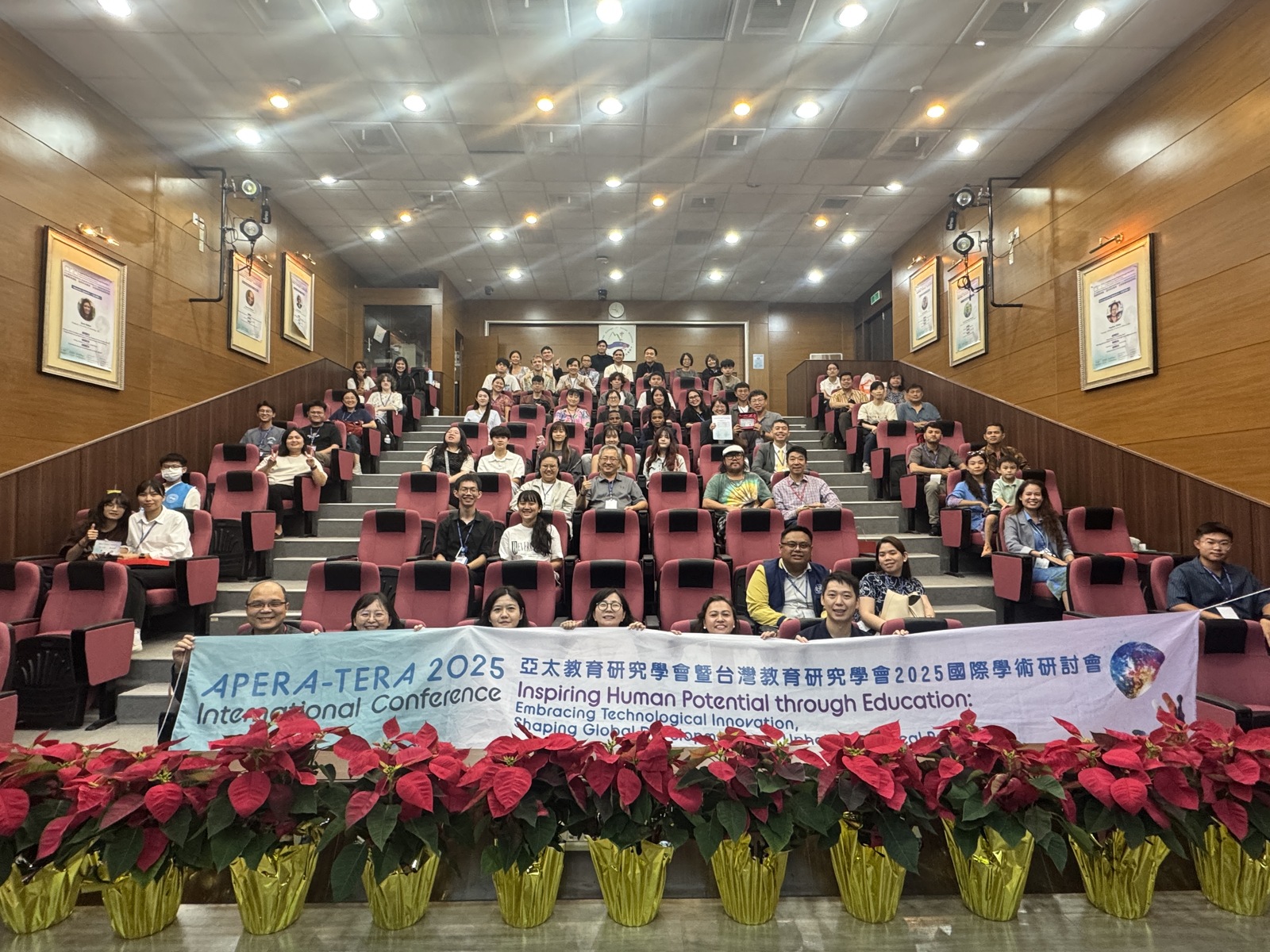
Jointly organized by the Taiwan Education Research Association (TERA), the Asia-Pacific Educational Research Association (APERA), and National Sun Yat-sen University (NSYSU), the APERA-TERA 2025 International Conference was grandly held at NSYSU under the theme "Inspiring Human Potential through Education: Embracing Technological Innovation, Shaping Global Development and Upholding Ethical Principles." The conference responded to contemporary challenges and visions in education, aiming to cultivate future talents with global perspectives and strong local engagement. Topics of paper presentations covered education policy, instructional innovation, learning assessment, and teacher professional development, showcasing the diversity and forward-looking nature of educational research in the Asia-Pacific region while fostering international academic exchange. The five-day event brought together more than 300 scholars and practitioners from 19 countries in Kaohsiung for in-depth cross-national dialogue on education.
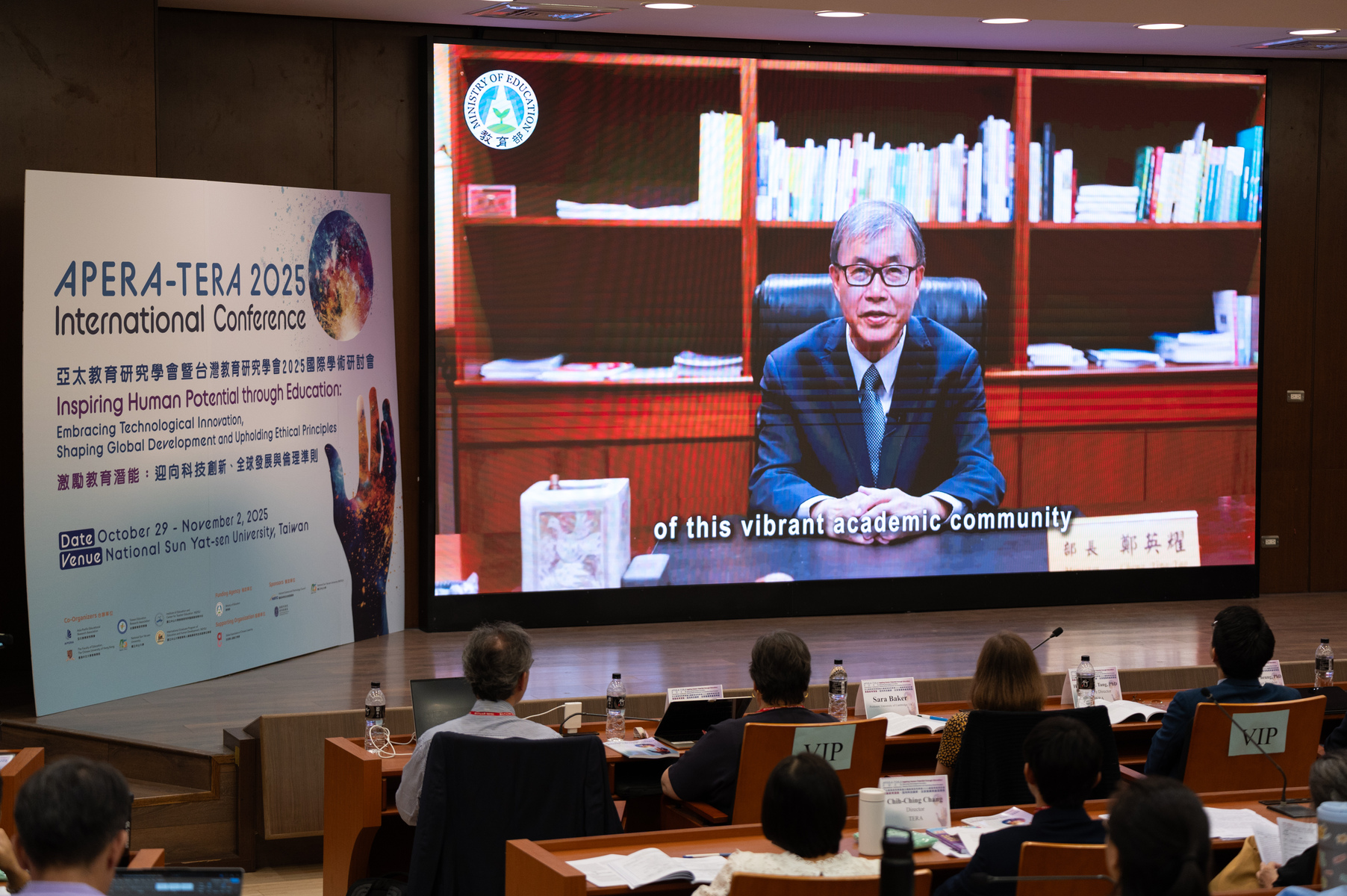
Although Minister of Education Ying-Yao Cheng was unable to attend in person due to official duties, he delivered a recorded message stating, "Education serves as a bridge connecting local communities with the global world. It is a powerful force for unlocking human potential and nurturing values. I sincerely thank TERA and APERA for their thoughtful planning, and National Sun Yat-sen University for its warm hospitality and full support, which made this international conference possible." NSYSU President Chih-Peng Li welcomed renowned scholars from around the world to APERA-TERA 2025, expressing hope that the conference would inspire educational innovation and practice, broaden participants' perspectives, and leave lasting and meaningful impressions.
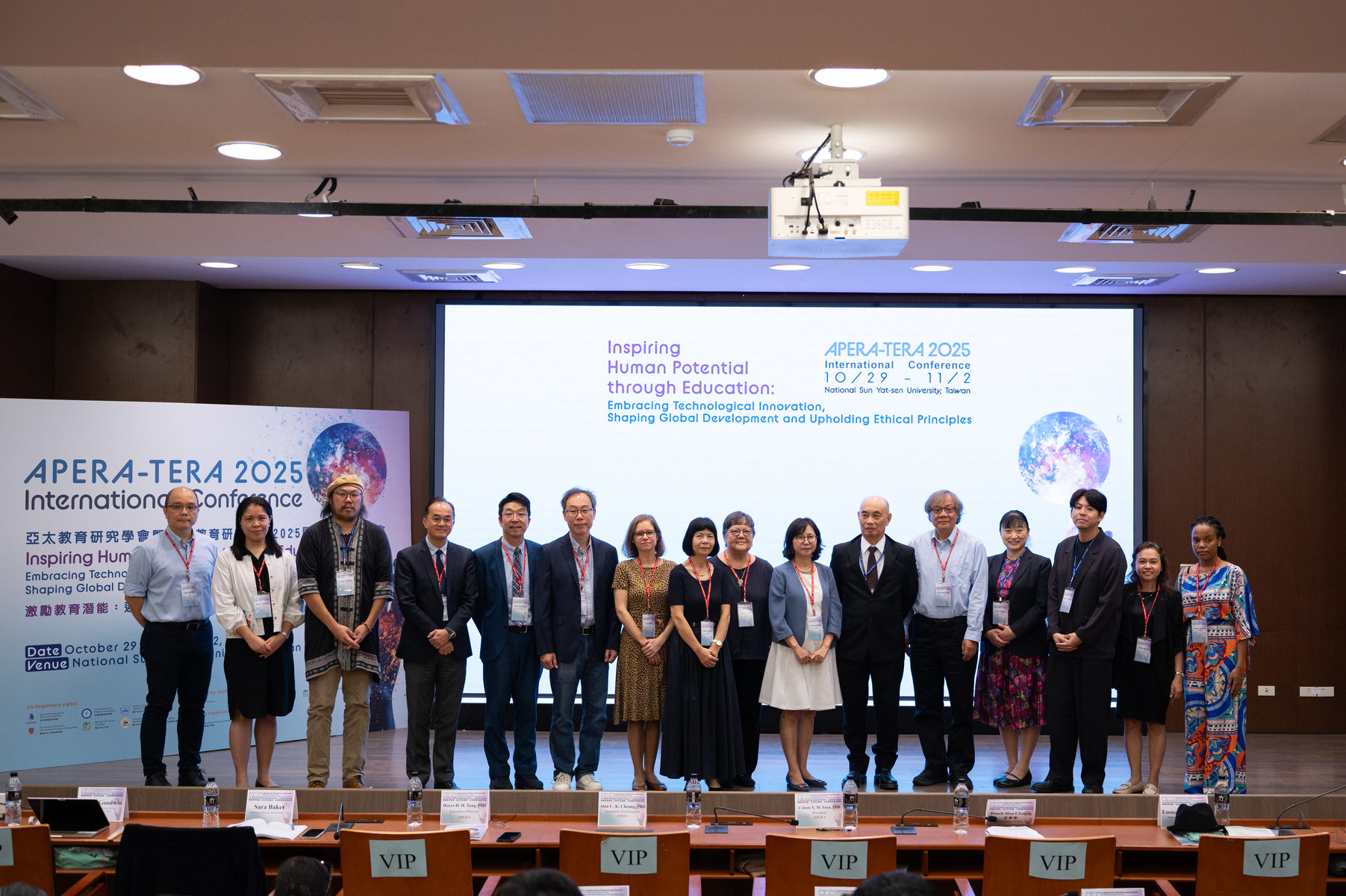
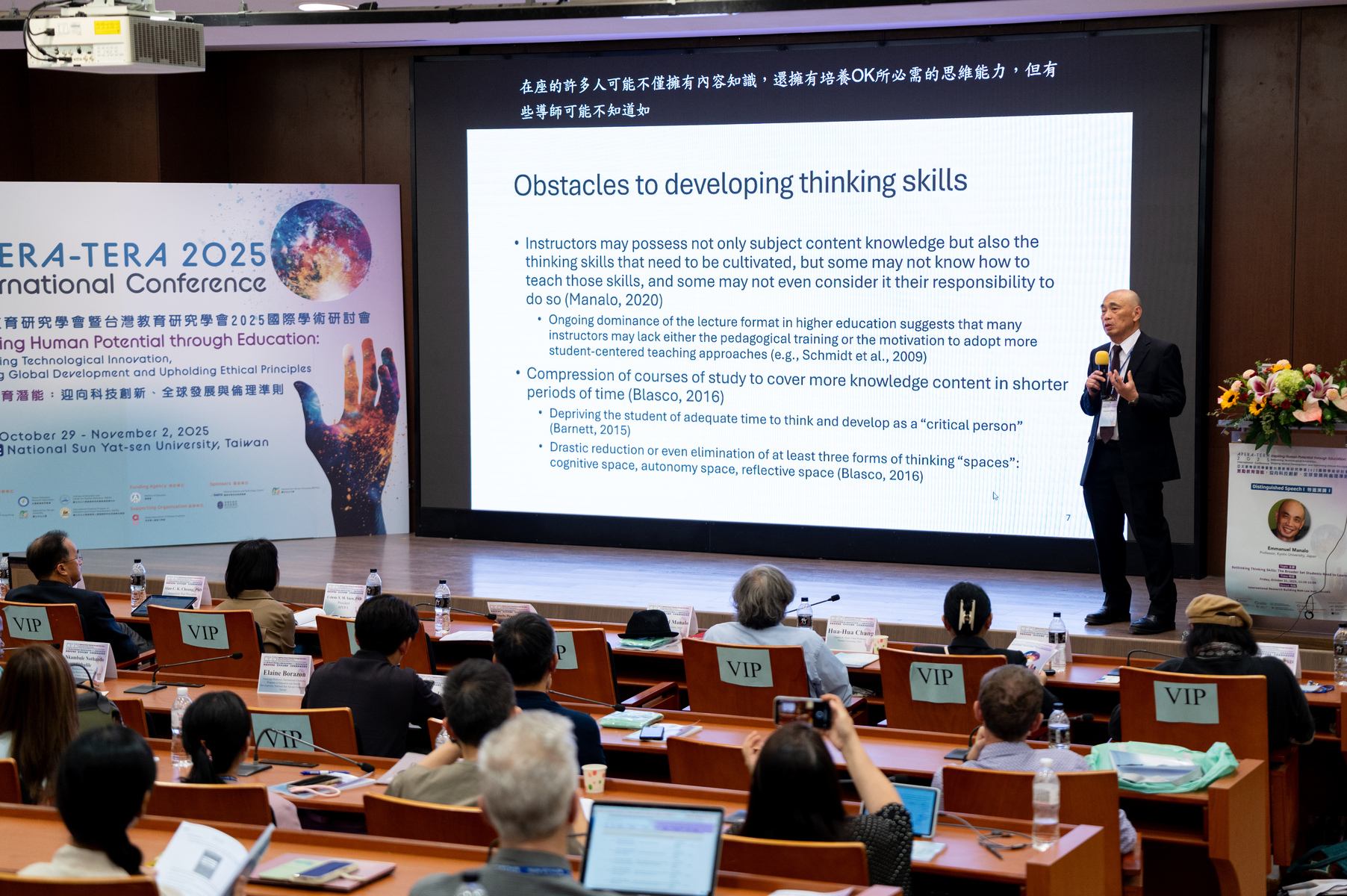
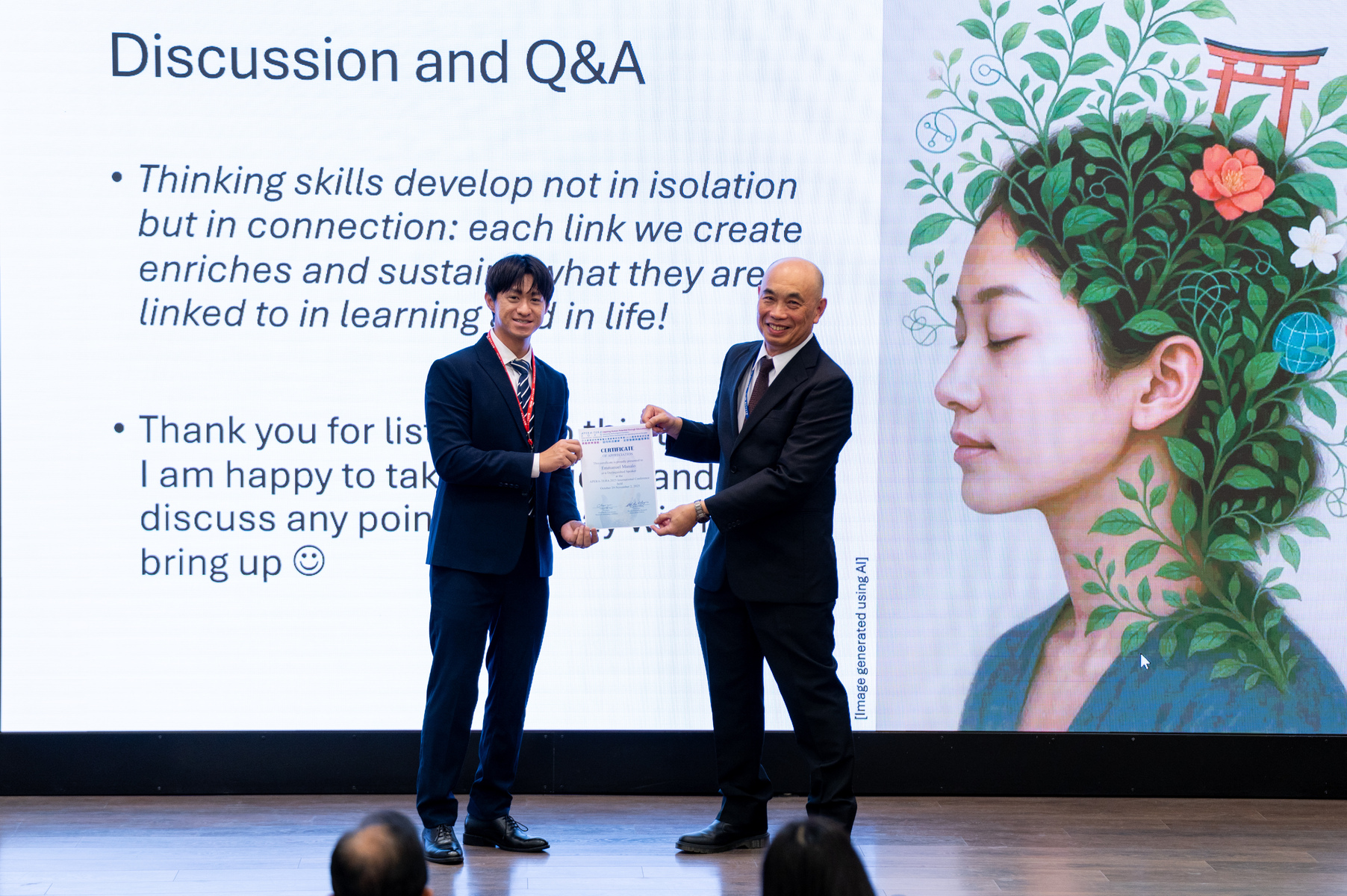
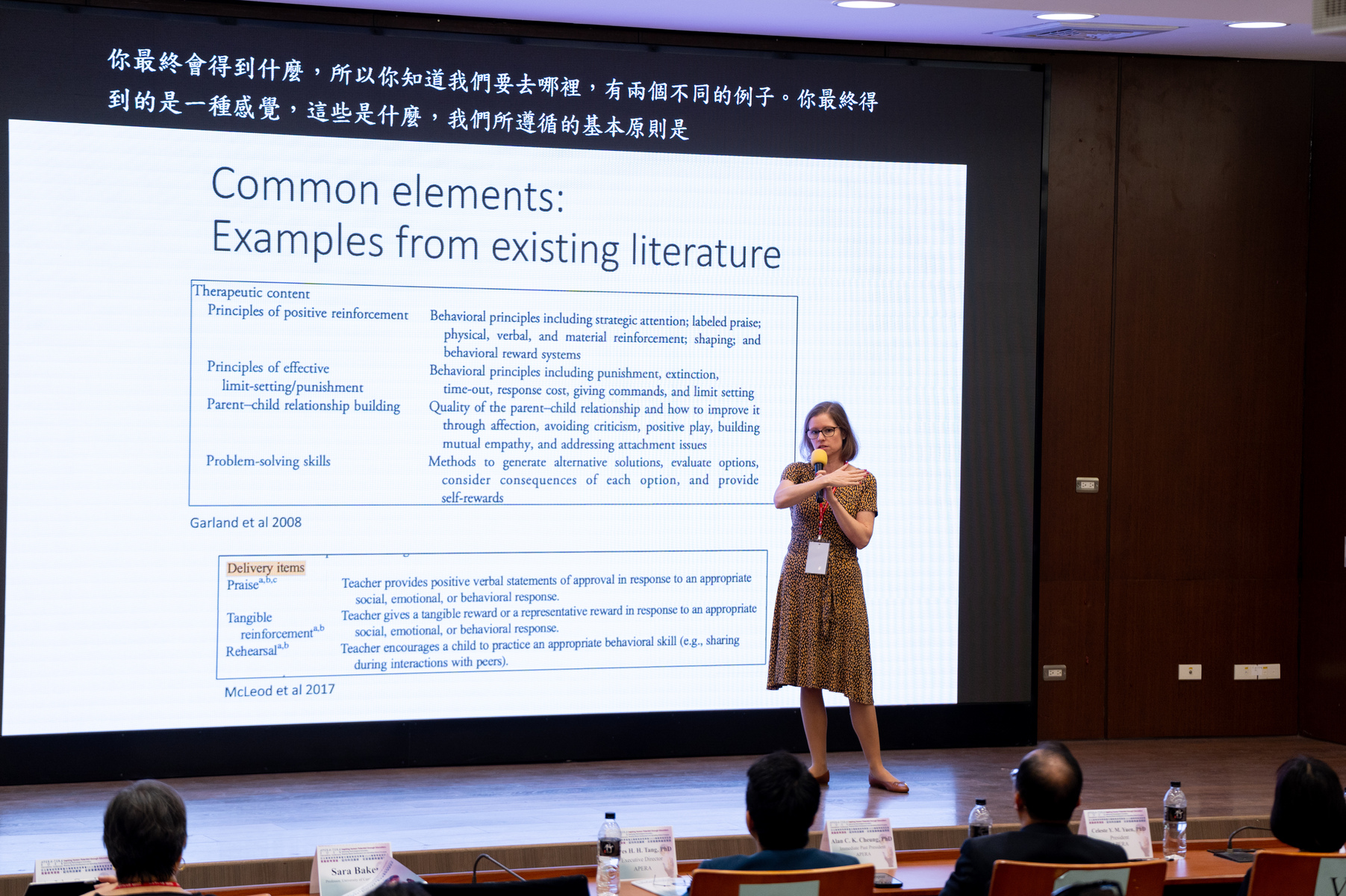
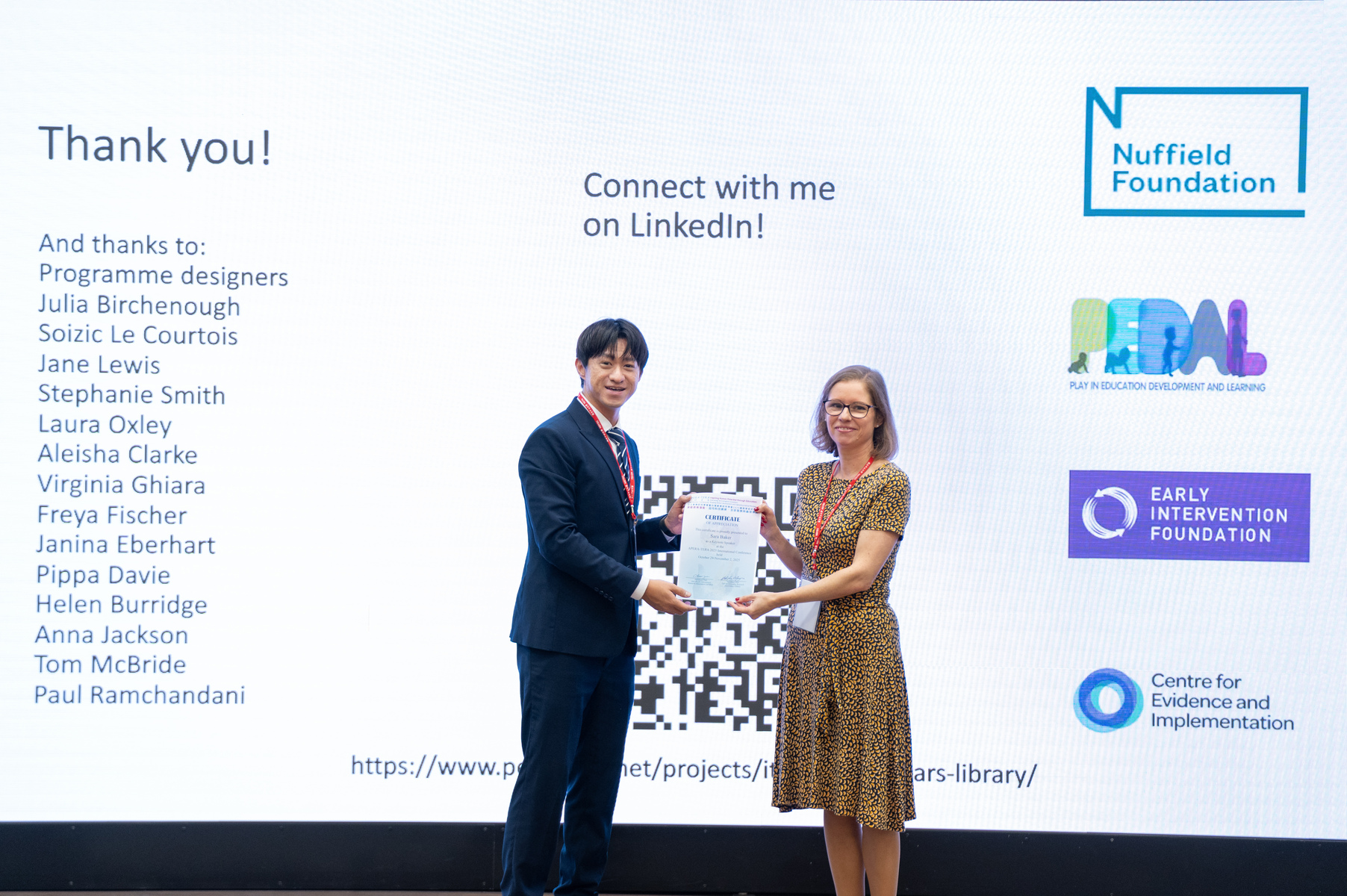
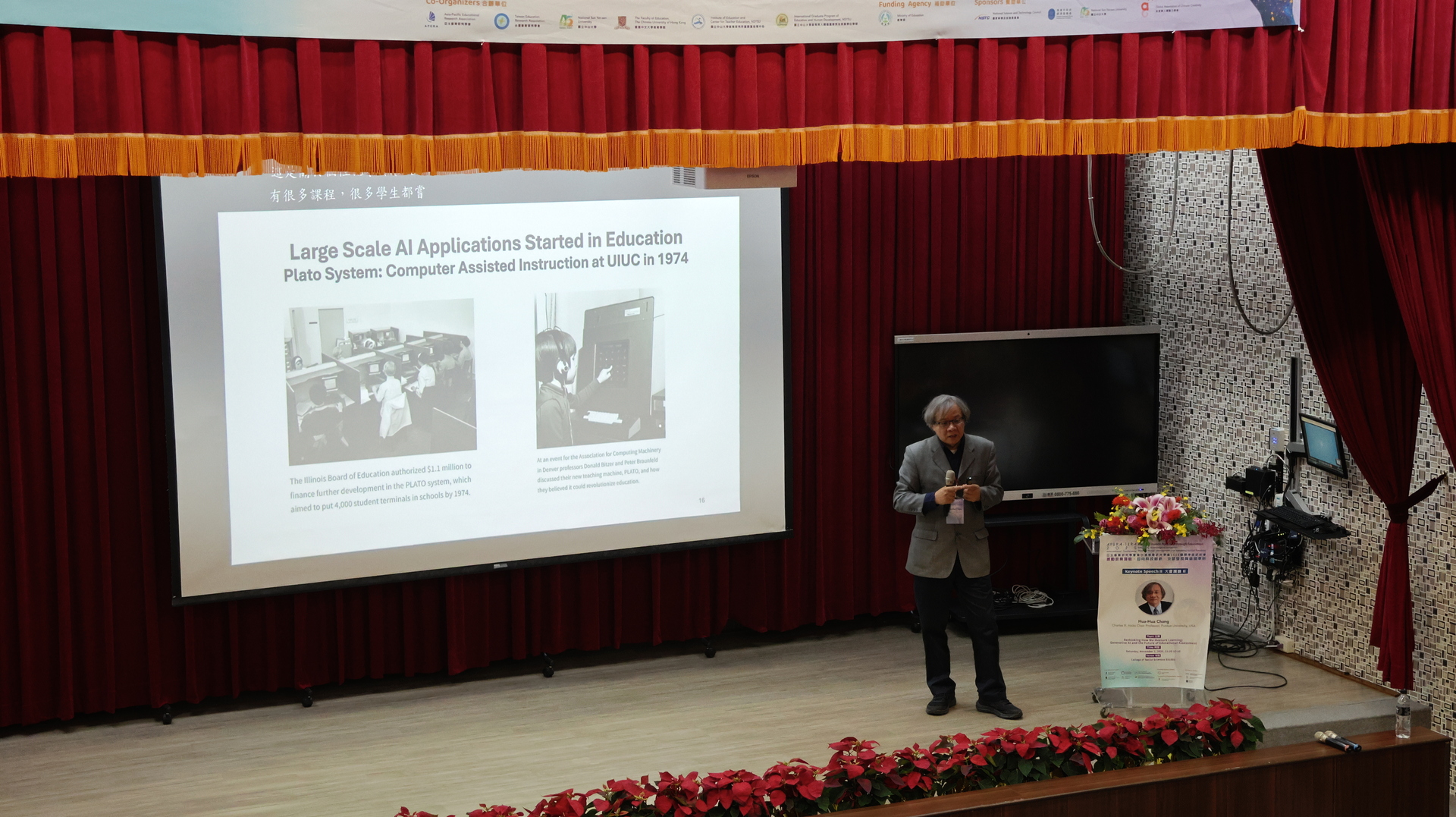
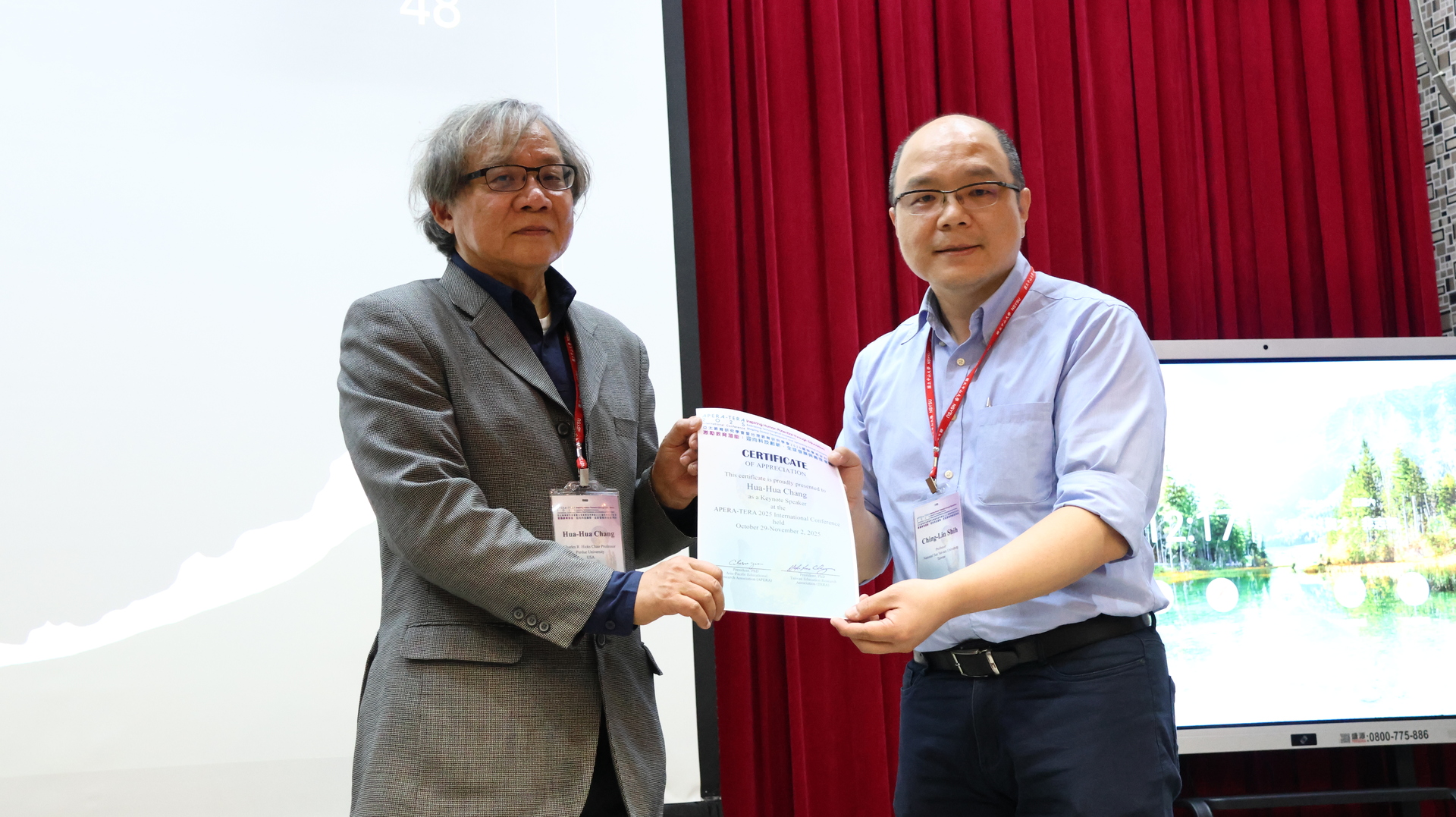
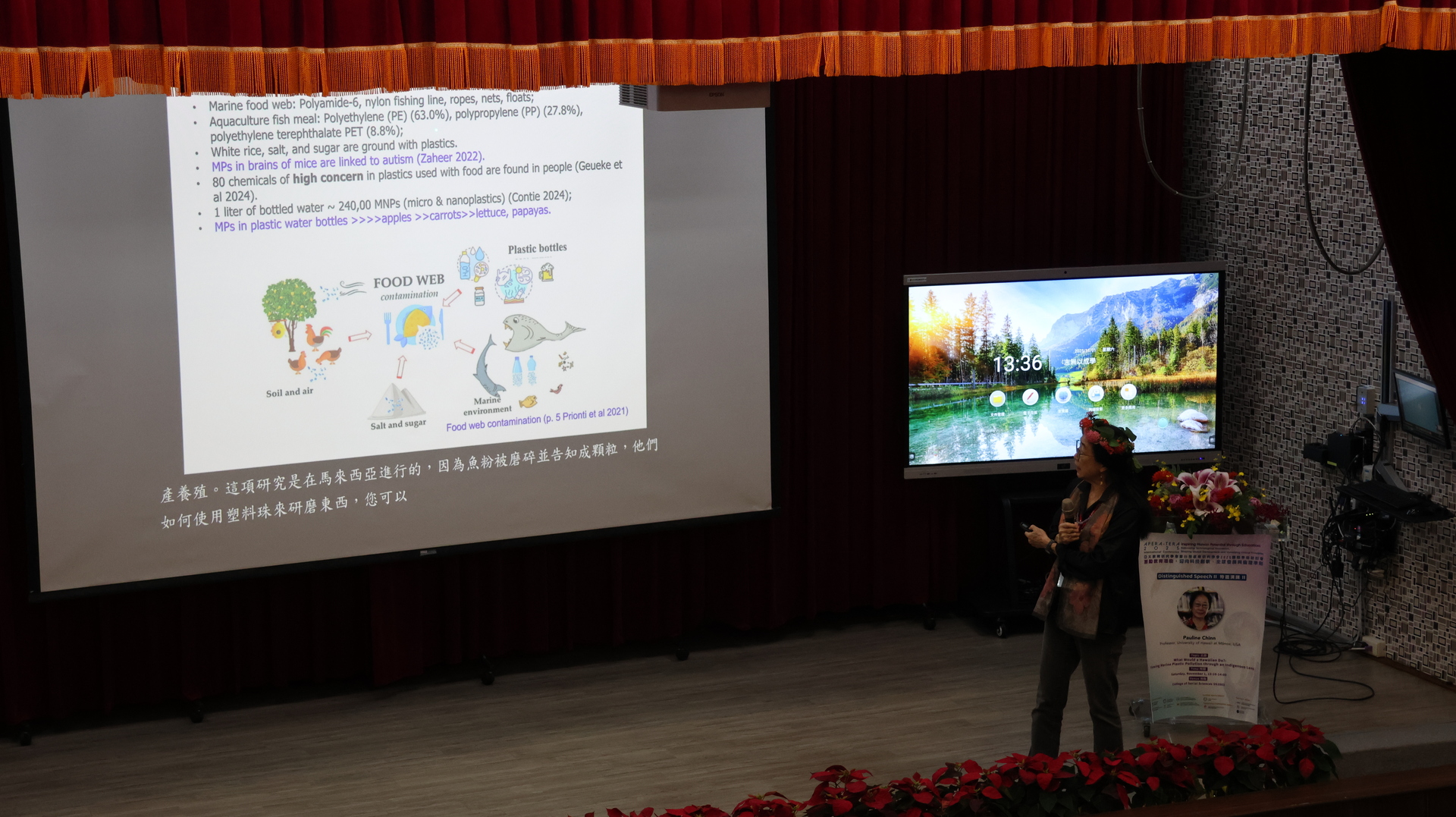
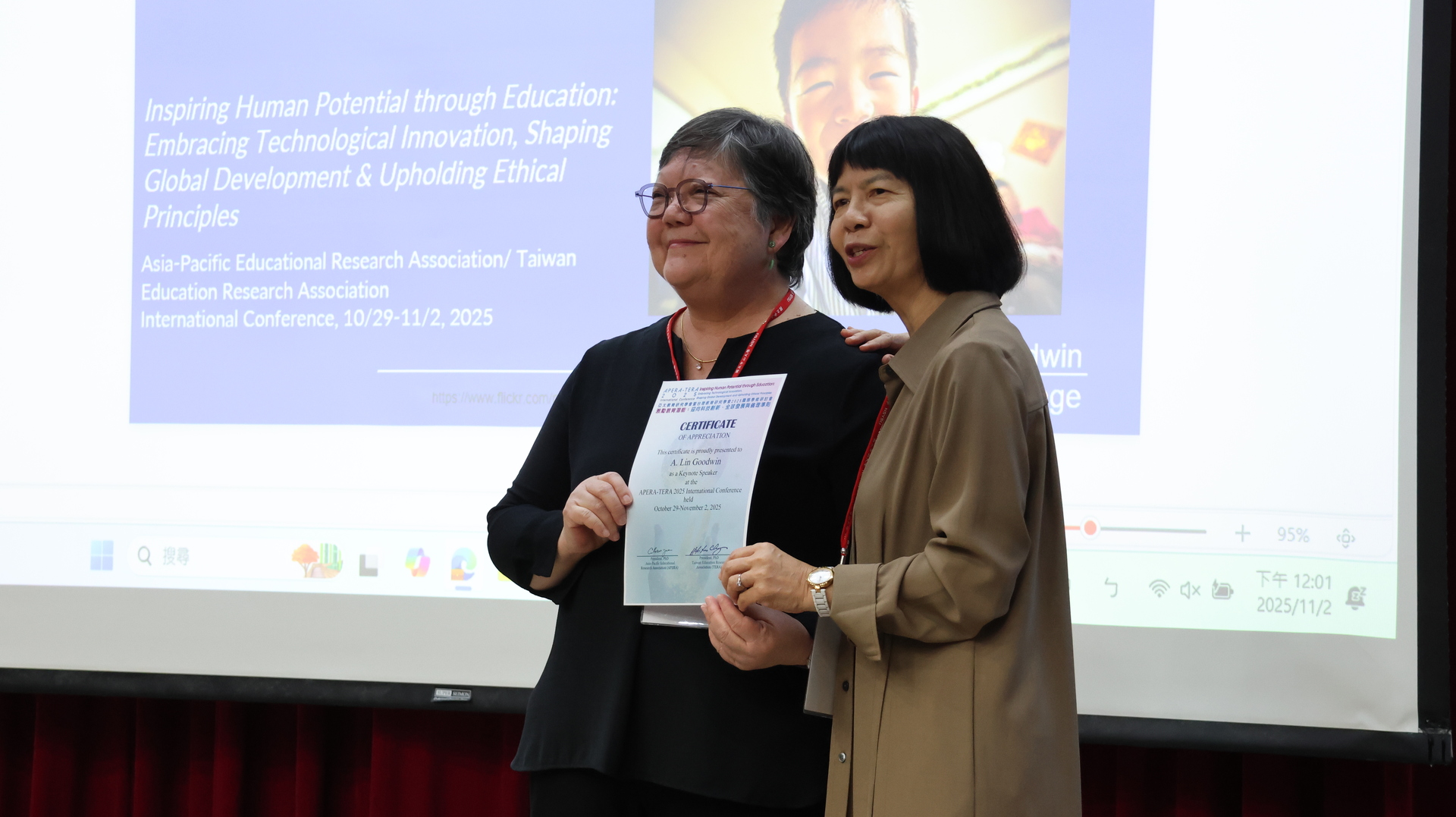
The conference featured keynote speeches by internationally renowned scholars, including Professor Sara Baker of the University of Cambridge (UK); Charles R. Hicks Chair Professor Hua-Hua Chang of Purdue University, who also serves as an Honorary Chair Professor at NSYSU; Professor A. Lin Goodwin of Boston College (USA); Professor Pauline Chinn of the University of Hawaiʻi at Mānoa; and Professor Emmanuel Manalo of Kyoto University (Japan). Their talks addressed educational transformation and sustainability, covering topics such as the challenges and opportunities of generative AI in learning assessment, an Indigenous lens on marine pollution, and joyful learning as a pathway to wellness. Collectively, the speakers emphasized that education must respond to culture, context, and real needs, while rethinking essential student competencies and evidence-based strategies in early education, highlighting innovative directions in educational research and practice.
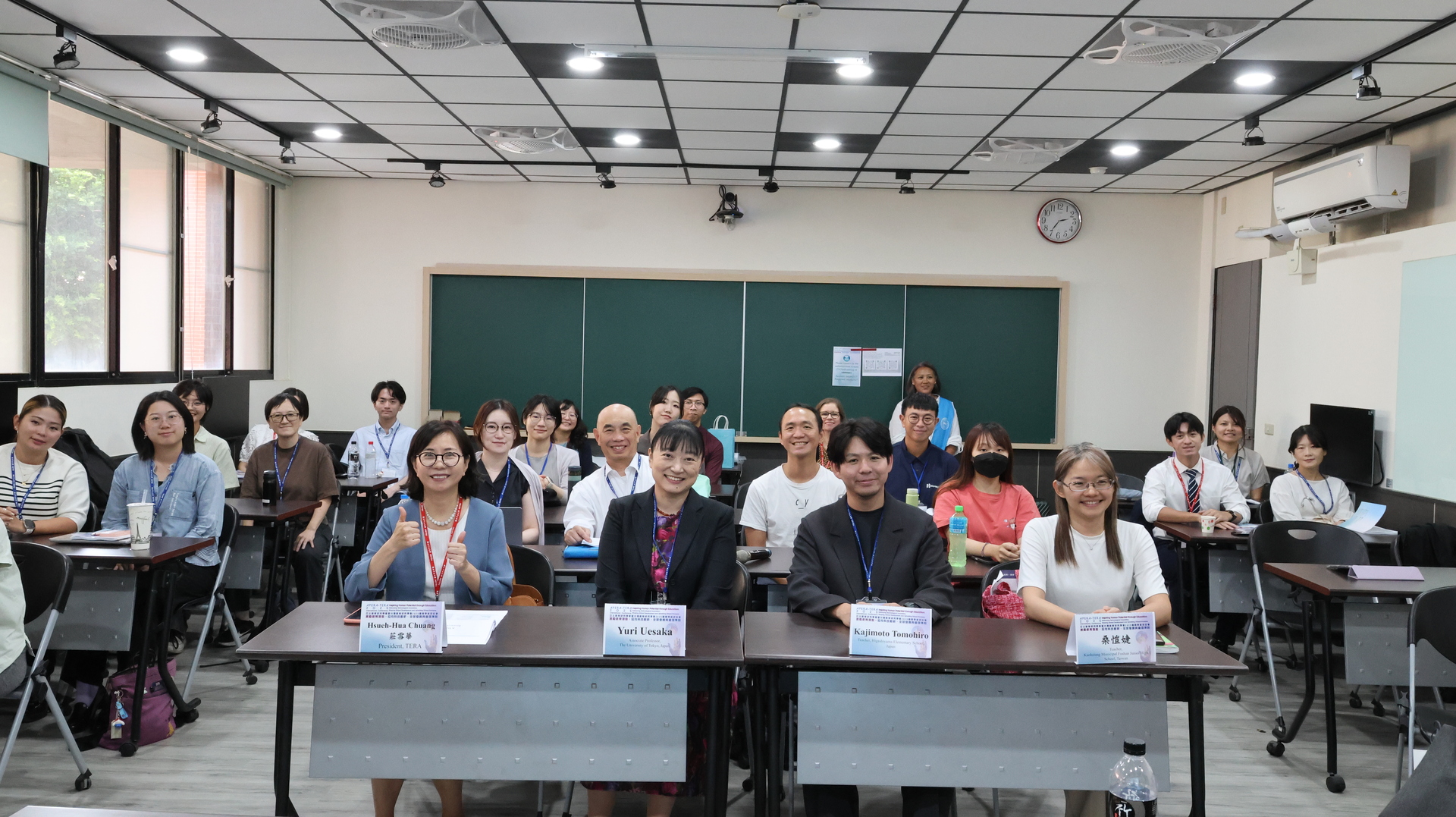
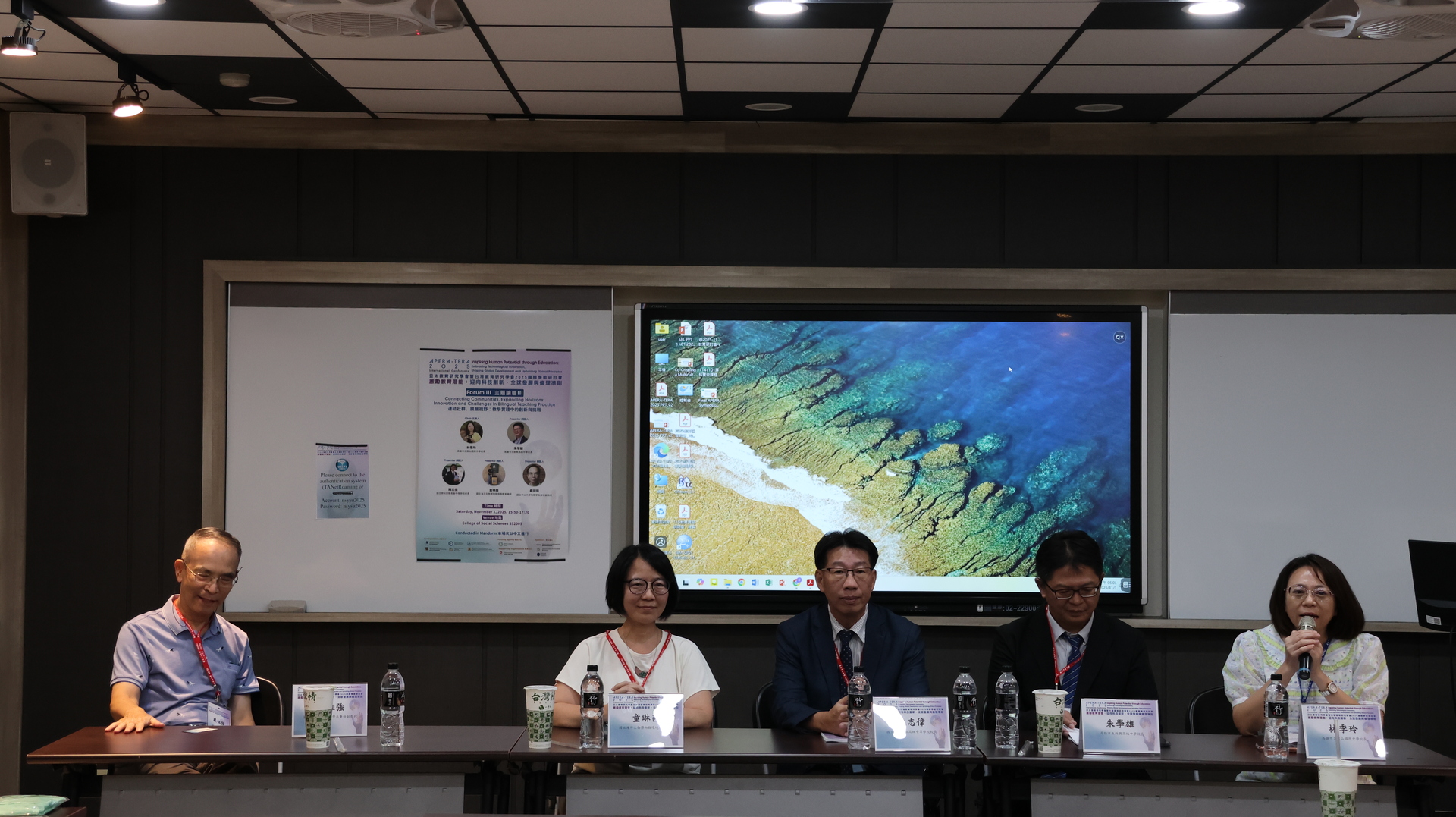
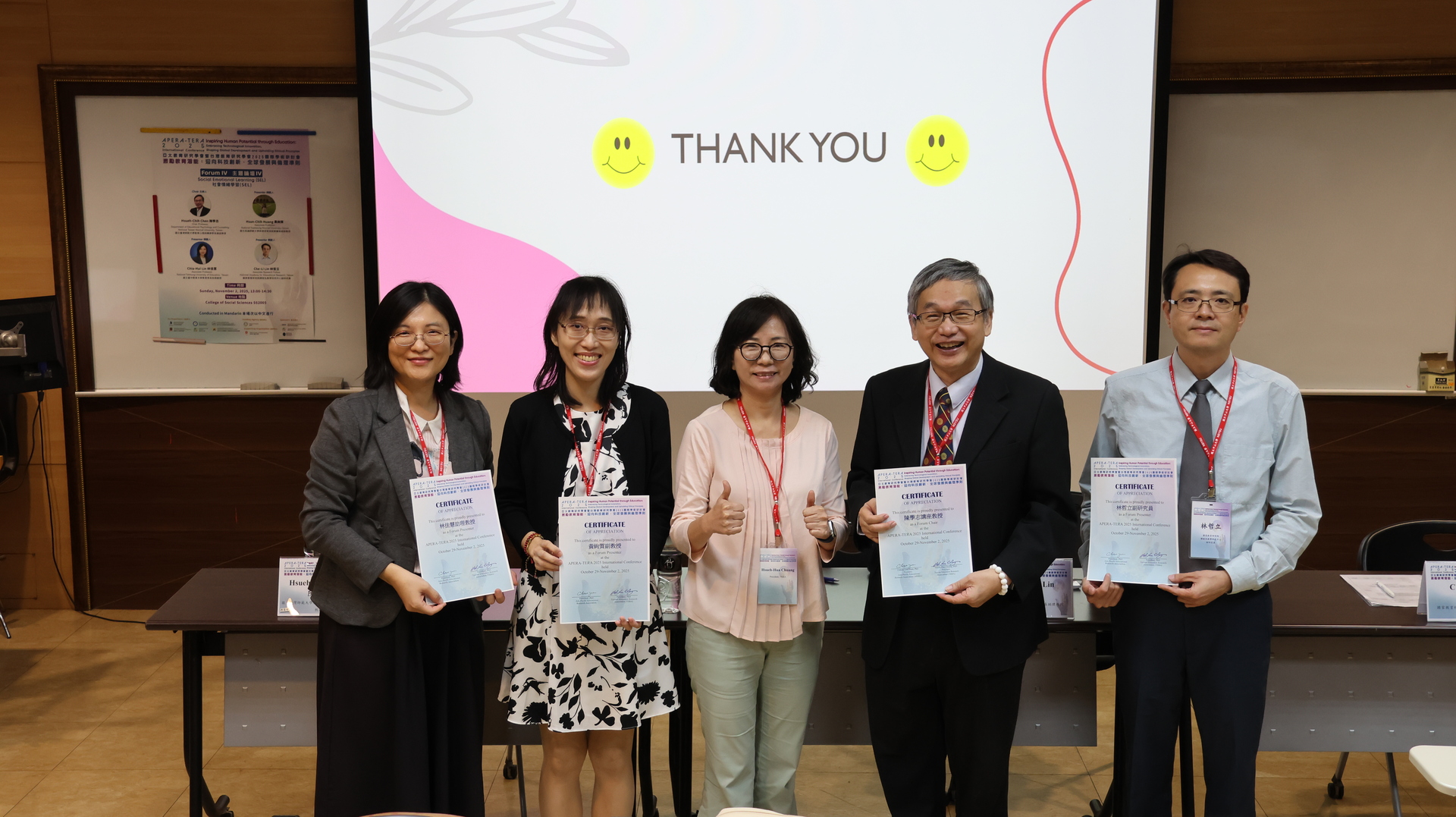
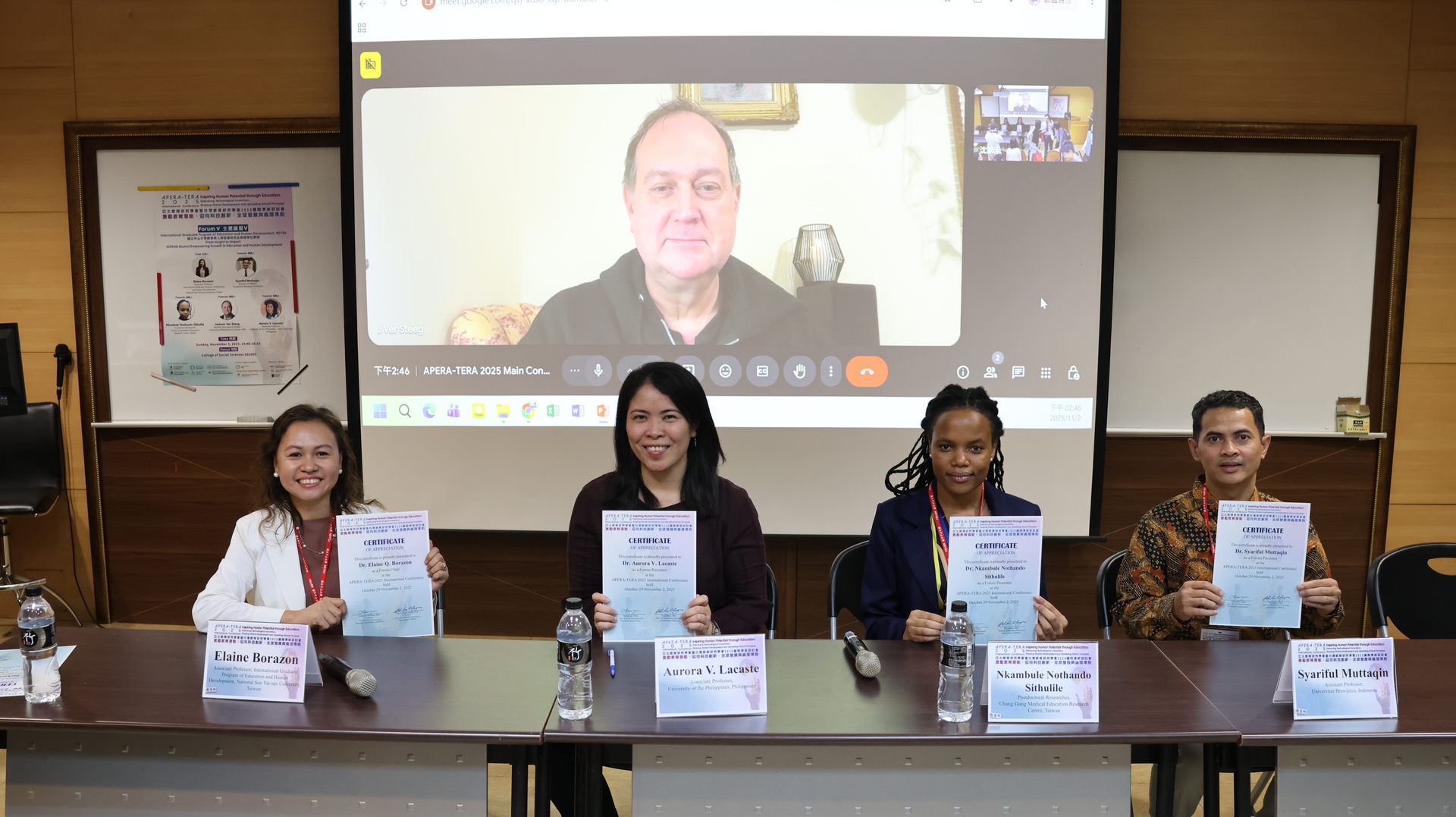
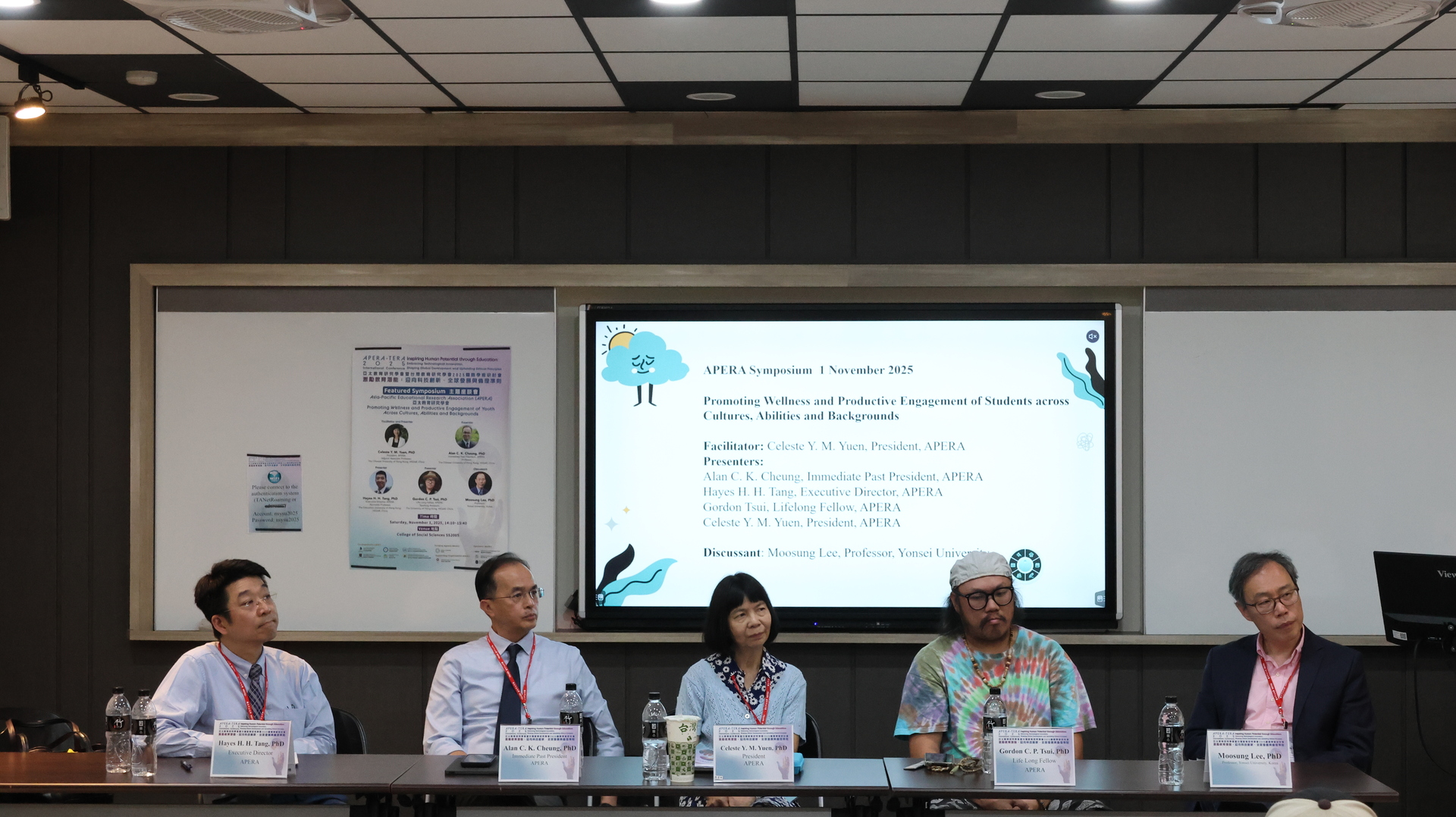
In addition to keynote speeches, the conference included workshops, educational tours, forums, and oral and poster sessions. Workshop topics ranged from "Collaborative Research Methods" and "Introduction to Meta-analysis" to "Qualitative Analysis on Learning Motivation and Work Values of Generation Z." Educational tours were arranged to Kaohsiung Municipal Nanlong Junior High School and Tainan Municipal Simen Experimental Elementary School, where participants gained first-hand insights into food, agriculture, and fisheries education, bilingual curriculum design, and innovative learning environments, followed by discussions with school administrators. Forums addressed themes such as educational innovation, social emotional learning (SEL), creativity and social practice, and the development of English-taught degree programs, facilitating dialogue between policy and practice. Panelists from Taiwan, Japan, Indonesia, and the United States highlighted the diverse perspectives of education across the Asia-Pacific region.
Celeste Y. M. Yuen, President of APERA, described the event as a truly cross-cultural and highly successful conference, noting the rich exchanges and dialogues throughout the preparation process, as well as the friendliness and helpfulness of both participants and staff. Hsueh-Hua Chuang, President of TERA and Associate Dean of the College of Social Sciences at NSYSU, expressed her honor in hosting APERA-TERA 2025 at NSYSU in Kaohsiung. She extended sincere gratitude for the broad support and enthusiastic participation of international scholars, emphasizing that education is not merely about knowledge transmission but a process of unlocking potential and cultivating values. "In the face of rapid technological and social change, we must remain committed to ethical principles so that education can serve as a force connecting the world and creating hope," she said.
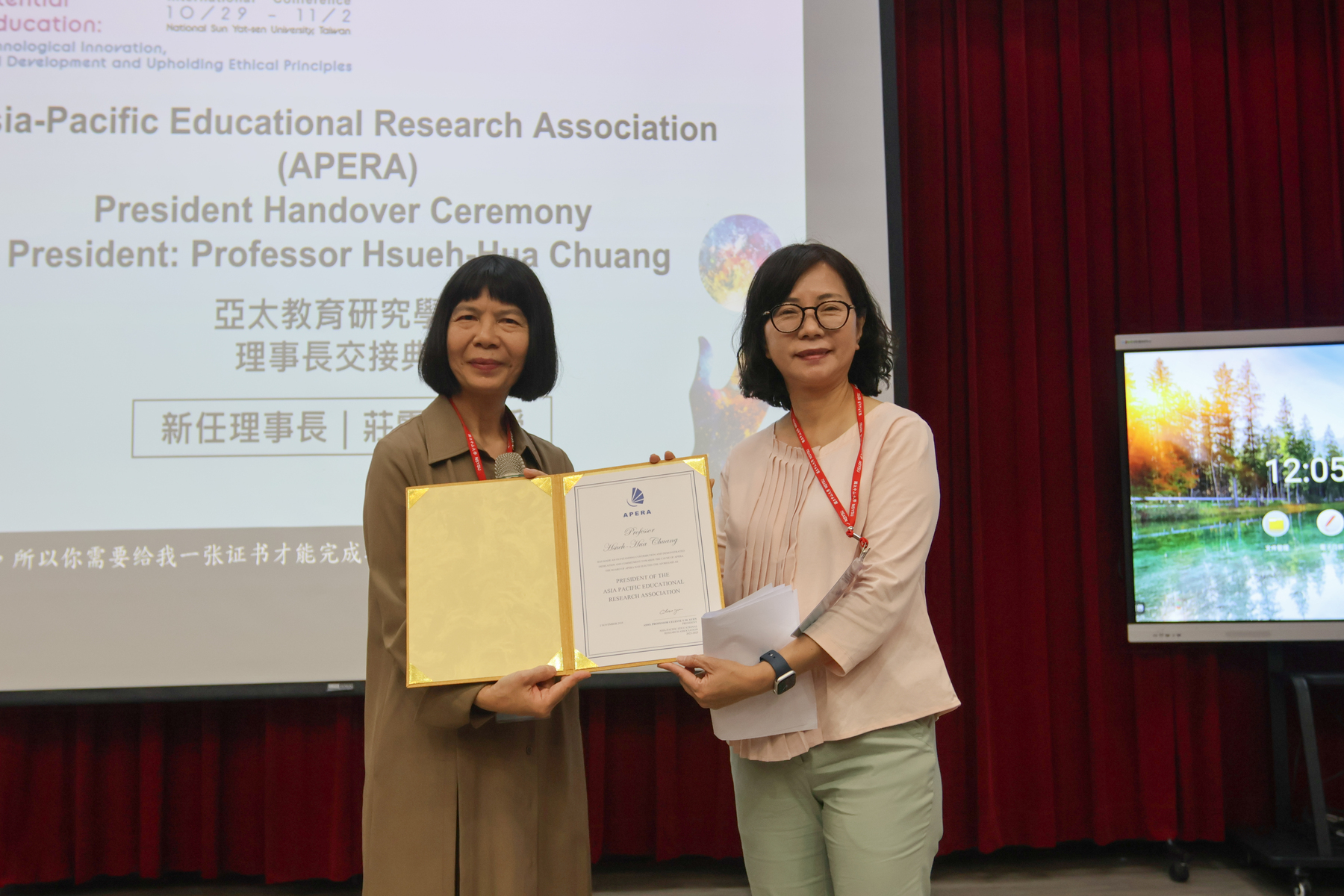
Hsueh-Hua Chuang is a Distinguished Professor at the Institute of Education and Chair of the International Graduate Program of Education and Human Development (IGPEHD) at NSYSU. She has long been dedicated to educational innovation and international exchange, leading multiple international collaboration projects. Her recent election as President of APERA marks a rare achievement for Taiwanese scholars in assuming leadership roles within international educational organizations, further enhancing NSYSU's global academic visibility and influence.
The conference was supported by the Ministry of Education, the National Science and Technology Council, and the Economic Development Bureau of the Kaohsiung City Government, demonstrating the cohesion and international impact of Taiwan's educational research community while injecting new momentum into educational scholarship.
Jointly organized by the Taiwan Education Research Association (TERA), the Asia-Pacific Educational Research Association (APERA), and National Sun Yat-sen University (NSYSU), the APERA-TERA 2025 International Conference was grandly held at NSYSU under the theme "Inspiring Human Potential through Education: Embracing Technological Innovation, Shaping Global Development and Upholding Ethical Principles." The conference responded to contemporary challenges and visions in education, aiming to cultivate future talents with global perspectives and strong local engagement. Topics of paper presentations covered education policy, instructional innovation, learning assessment, and teacher professional development, showcasing the diversity and forward-looking nature of educational research in the Asia-Pacific region while fostering international academic exchange. The five-day event brought together more than 300 scholars and practitioners from 19 countries in Kaohsiung for in-depth cross-national dialogue on education.
Although Minister of Education Ying-Yao Cheng was unable to attend in person due to official duties, he delivered a recorded message stating, "Education serves as a bridge connecting local communities with the global world. It is a powerful force for unlocking human potential and nurturing values. I sincerely thank TERA and APERA for their thoughtful planning, and National Sun Yat-sen University for its warm hospitality and full support, which made this international conference possible." NSYSU President Chih-Peng Li welcomed renowned scholars from around the world to APERA-TERA 2025, expressing hope that the conference would inspire educational innovation and practice, broaden participants' perspectives, and leave lasting and meaningful impressions.
The conference featured keynote speeches by internationally renowned scholars, including Professor Sara Baker of the University of Cambridge (UK); Charles R. Hicks Chair Professor Hua-Hua Chang of Purdue University, who also serves as an Honorary Chair Professor at NSYSU; Professor A. Lin Goodwin of Boston College (USA); Professor Pauline Chinn of the University of Hawaiʻi at Mānoa; and Professor Emmanuel Manalo of Kyoto University (Japan). Their talks addressed educational transformation and sustainability, covering topics such as the challenges and opportunities of generative AI in learning assessment, an Indigenous lens on marine pollution, and joyful learning as a pathway to wellness. Collectively, the speakers emphasized that education must respond to culture, context, and real needs, while rethinking essential student competencies and evidence-based strategies in early education, highlighting innovative directions in educational research and practice.
In addition to keynote speeches, the conference included workshops, educational tours, forums, and oral and poster sessions. Workshop topics ranged from "Collaborative Research Methods" and "Introduction to Meta-analysis" to "Qualitative Analysis on Learning Motivation and Work Values of Generation Z." Educational tours were arranged to Kaohsiung Municipal Nanlong Junior High School and Tainan Municipal Simen Experimental Elementary School, where participants gained first-hand insights into food, agriculture, and fisheries education, bilingual curriculum design, and innovative learning environments, followed by discussions with school administrators. Forums addressed themes such as educational innovation, social emotional learning (SEL), creativity and social practice, and the development of English-taught degree programs, facilitating dialogue between policy and practice. Panelists from Taiwan, Japan, Indonesia, and the United States highlighted the diverse perspectives of education across the Asia-Pacific region.
Celeste Y. M. Yuen, President of APERA, described the event as a truly cross-cultural and highly successful conference, noting the rich exchanges and dialogues throughout the preparation process, as well as the friendliness and helpfulness of both participants and staff. Hsueh-Hua Chuang, President of TERA and Associate Dean of the College of Social Sciences at NSYSU, expressed her honor in hosting APERA-TERA 2025 at NSYSU in Kaohsiung. She extended sincere gratitude for the broad support and enthusiastic participation of international scholars, emphasizing that education is not merely about knowledge transmission but a process of unlocking potential and cultivating values. "In the face of rapid technological and social change, we must remain committed to ethical principles so that education can serve as a force connecting the world and creating hope," she said.
Hsueh-Hua Chuang is a Distinguished Professor at the Institute of Education and Chair of the International Graduate Program of Education and Human Development (IGPEHD) at NSYSU. She has long been dedicated to educational innovation and international exchange, leading multiple international collaboration projects. Her recent election as President of APERA marks a rare achievement for Taiwanese scholars in assuming leadership roles within international educational organizations, further enhancing NSYSU's global academic visibility and influence.
The conference was supported by the Ministry of Education, the National Science and Technology Council, and the Economic Development Bureau of the Kaohsiung City Government, demonstrating the cohesion and international impact of Taiwan's educational research community while injecting new momentum into educational scholarship.
Click Num:
Share