
Digital technologies narrowing income inequality: NSYSU study shows ICT helping disadvantaged groups overcome institutional barriers
2026-04-08
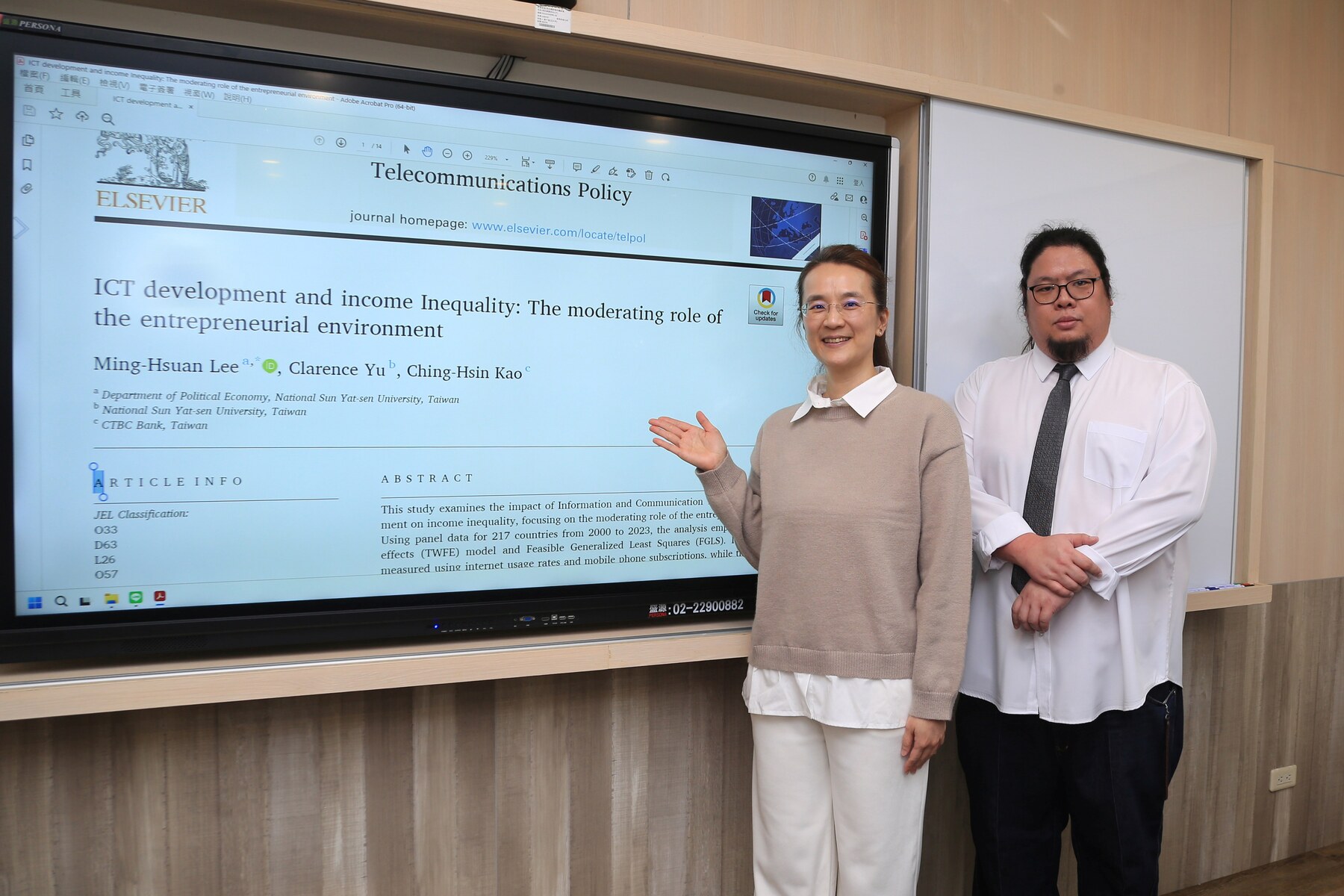
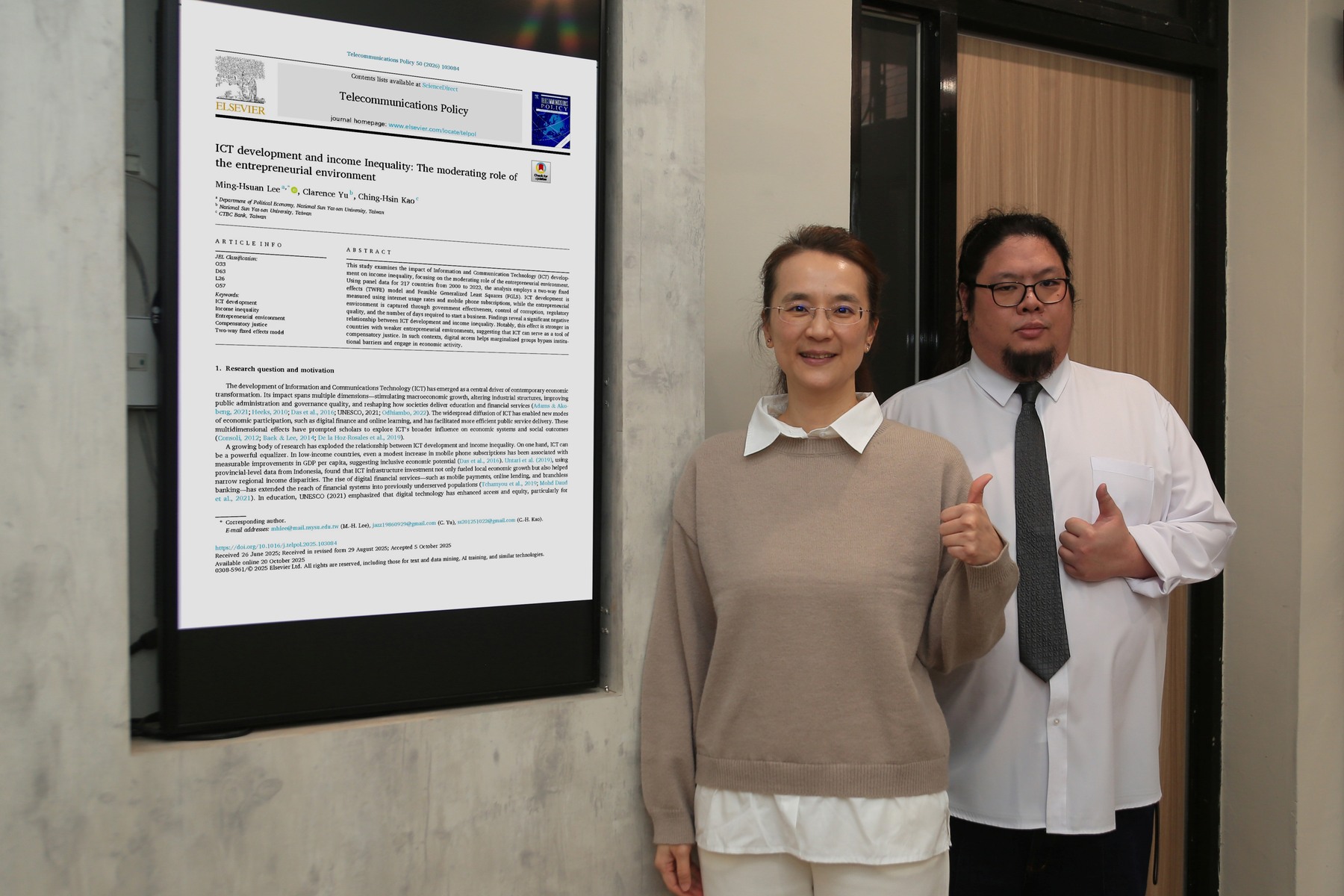
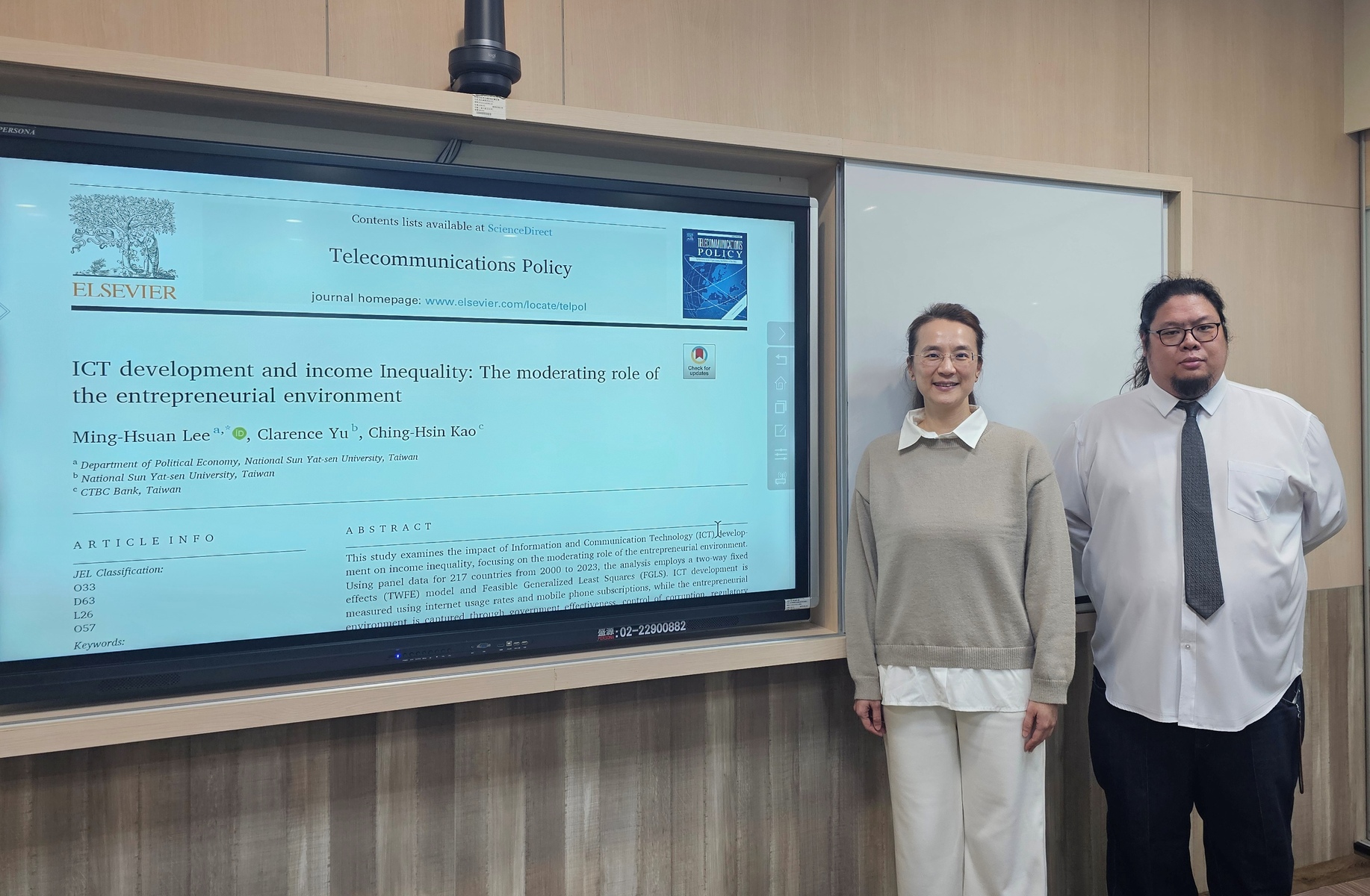
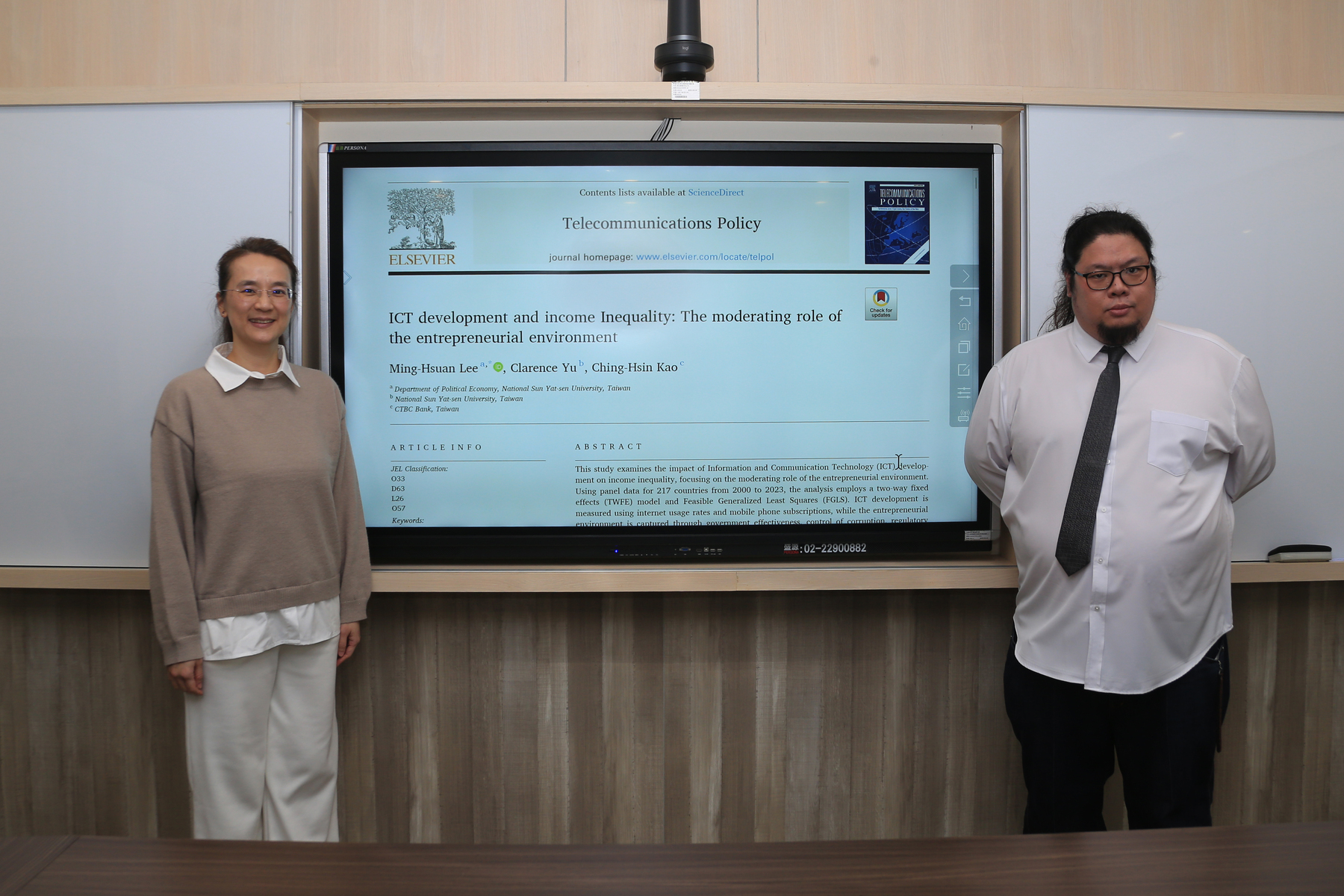
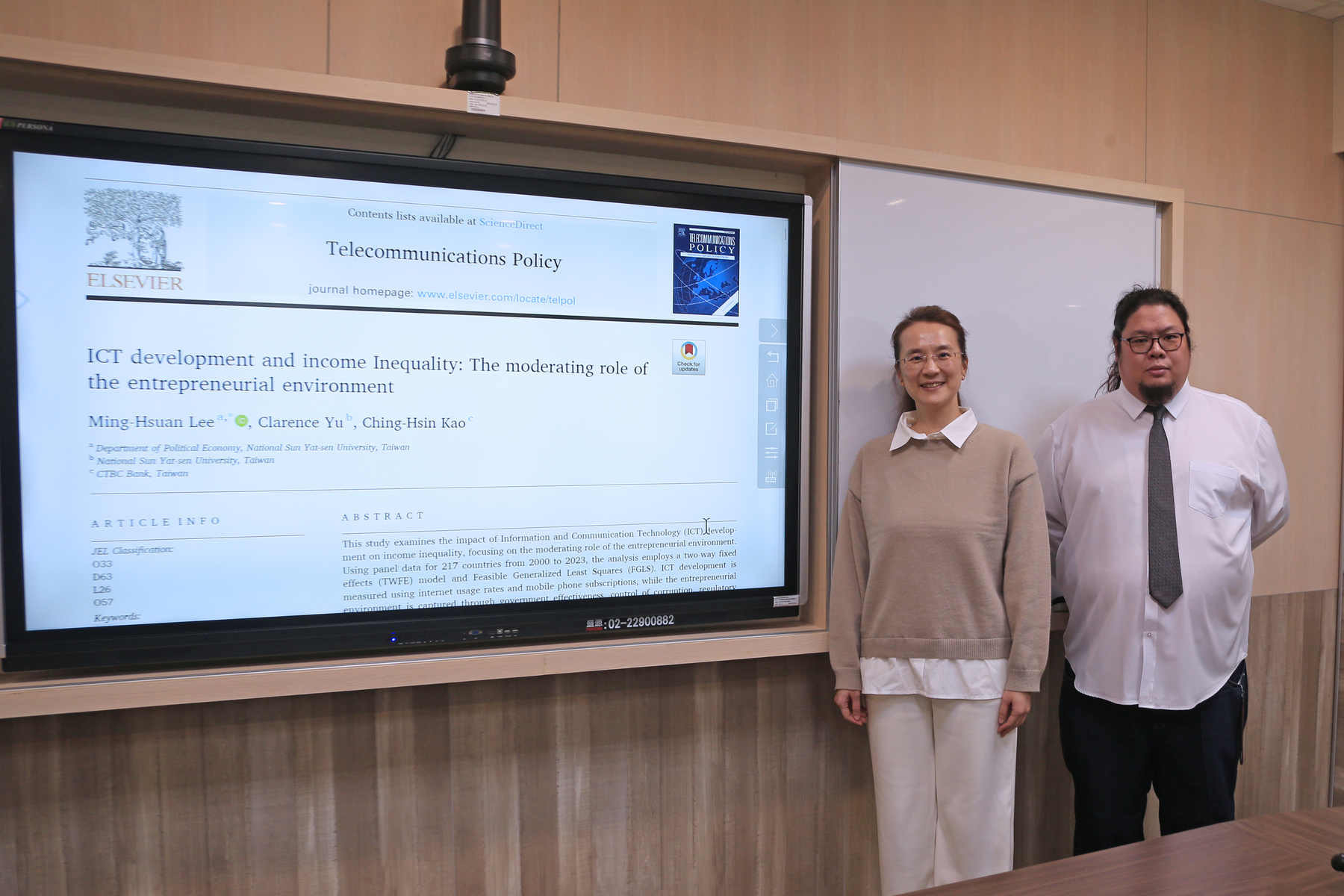
With the rapid global development of information and communication technology (ICT), does digitalization exacerbate or reduce income inequality? Ming-Hsuan Lee, Professor in the Department of Political Economy and Vice President for International Affairs at National Sun Yat-sen University (NSYSU), analyzed long-term cross-national data and found that ICT development helps reduce income inequality, with particularly stronger effects in countries with weaker entrepreneurial environments and institutional conditions. When institutions fail to support economic participation, ICT can serve a compensatory function, helping disadvantaged groups bypass institutional barriers. For instance, e-commerce platforms such as Shopee and Taobao in Asia have lowered market entry barriers, thereby narrowing income inequality. Lee noted that Taiwan could further strengthen digital connectivity in rural, mountainous, and remote areas to expand the positive effects of ICT in reducing income inequality.
The study provides key empirical evidence on the impacts of ICT and has been published in the world-leading journal Telecommunications Policy. The analysis shows that in both high-income and middle- to low-income countries, ICT development is significantly negatively correlated with income inequality, indicating that improved digital access can help mitigate disparities. However, in highly developed entrepreneurial environments—where capital markets function efficiently, government institutions are effective, and regulatory systems foster innovation—the marginal benefits of ICT for low-income groups may be modest, as institutional mechanisms for upward mobility already exist. Conversely, in countries with weak entrepreneurial systems—characterized by limited government effectiveness, bureaucratic delays, corruption, and inefficient regulation—ICT can act as a compensatory tool. Users can reach markets and customers directly via online platforms, mobile payment systems, and social media, creating alternative pathways for economic participation and producing more pronounced reductions in income inequality.
"For example, e-commerce platforms like Shopee and Taobao in Asia, Jumia in several African countries, and Mercado Libre in Latin America allow users to access markets without the burdens of high rent or complex regulatory procedures. Social media enables brands building and marketing at low cost without relying on traditional capital, while remote freelancing and gig platforms create diverse and flexible income streams, opening pathways into non-traditional labor markets for a broader population," Lee explained. In environments lacking traditional support systems, ICT provides what can be described as "compensatory justice," which is particularly important for informal entrepreneurs, freelancers, and microenterprises. ICT can empower disadvantaged groups and play a more disruptive role by unlocking opportunities that institutional constraints would otherwise block.
Lee noted that extending the analytical framework of this cross-national comparative study to domestic contexts could serve as a useful tool for examining disparities in digital development across administrative regions. Overall, Taiwan already has a relatively high internet penetration and a well-developed digital infrastructure. However, some rural, mountainous, or offshore areas may still experience gaps in network quality, stability, and practical application. She suggested that, by building upon Taiwan's existing strengths, future efforts could focus on strengthening digital connectivity and application environments in specific regions. This would help residents more effectively utilize mobile communications, online payment systems, and digital platforms to develop local economic activities, such as online marketing of agricultural products or handicrafts, thereby further expanding ICT's positive impact on reducing income inequality.
Beyond economic activity, the compensatory potential of ICT also extends to education and skill development. Open online learning platforms such as Massive Open Online Courses (MOOCs) and instructional YouTube channels offer disadvantaged groups with learning opportunities that transcend geographic and financial barriers, contributing to human capital accumulation, social mobility, and creating new income sources. Based on the findings, Lee suggests that countries with weaker entrepreneurial environments should consider prioritizing investments in digital infrastructure, promoting digital literacy, expanding access to digital financial tools, and simplifying online business regulations. Such measures can help disadvantaged groups bypass structural barriers and promote more equitable income distribution.
The study is based on panel data from 217 countries spanning the period from 2000 to 2023, obtained from the World Bank database. ICT development is measured using indicators such as the internet usage rate and the number of mobile phone subscriptions. The analysis also incorporates entrepreneurial environment variables—including government effectiveness, control of corruption, regulatory quality, and the number of days required to start a business—to examine in depth the role and impact of ICT development across different countries.
Note:
Telecommunications Policy is a leading international journal. Its 2024 Journal Impact Factor is 6.4, ranking second among 227 journals in the communication category. The co-authors of this study are Clarence Yu and Ching-Hsin Kao.
Journal link: https://doi.org/10.1016/j.telpol.2025.103084