
Taipower invests TWD 100 million to build a microgrid at NSYSU, ensuring up to 48 hours of backup power
2026-09-24
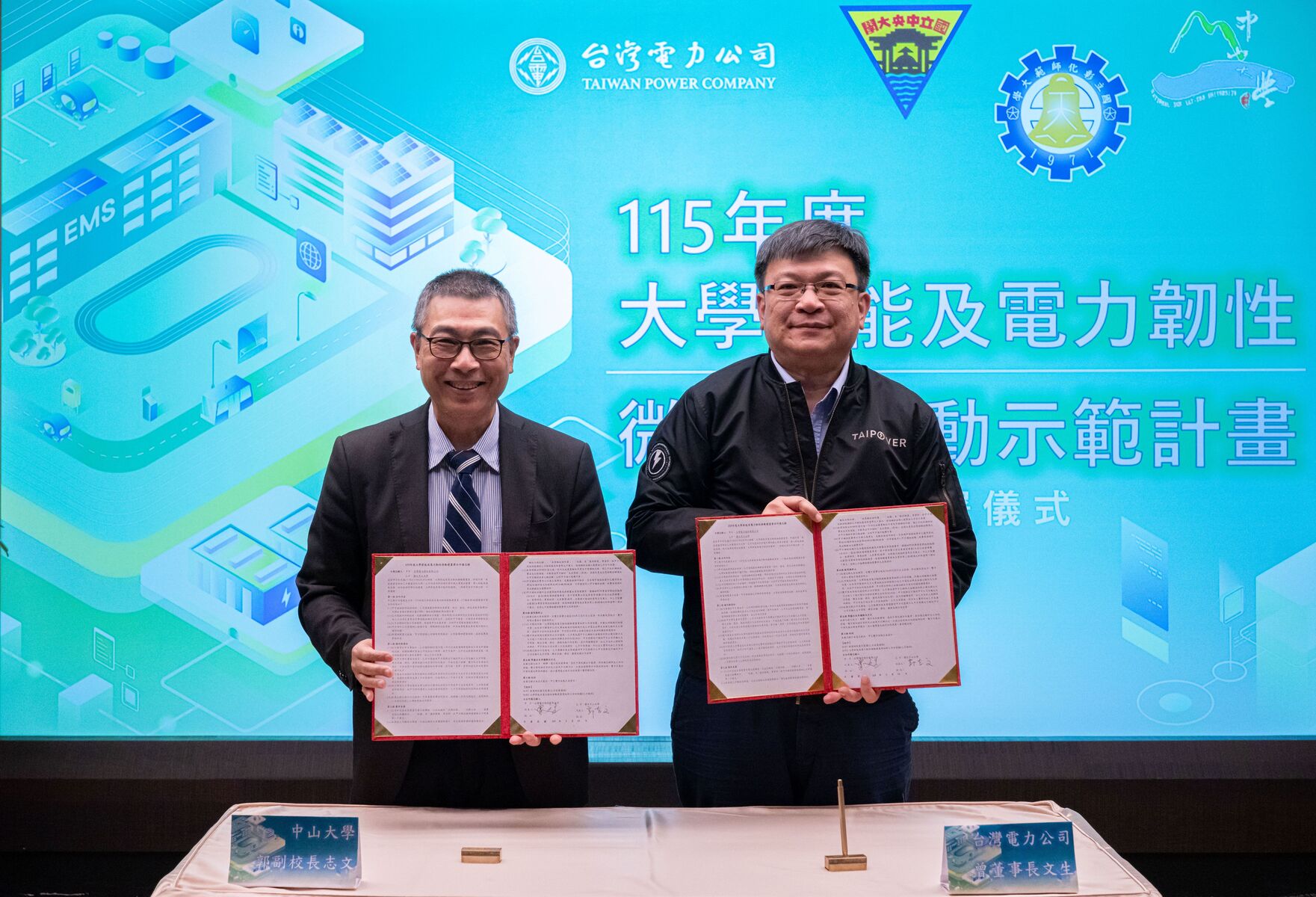
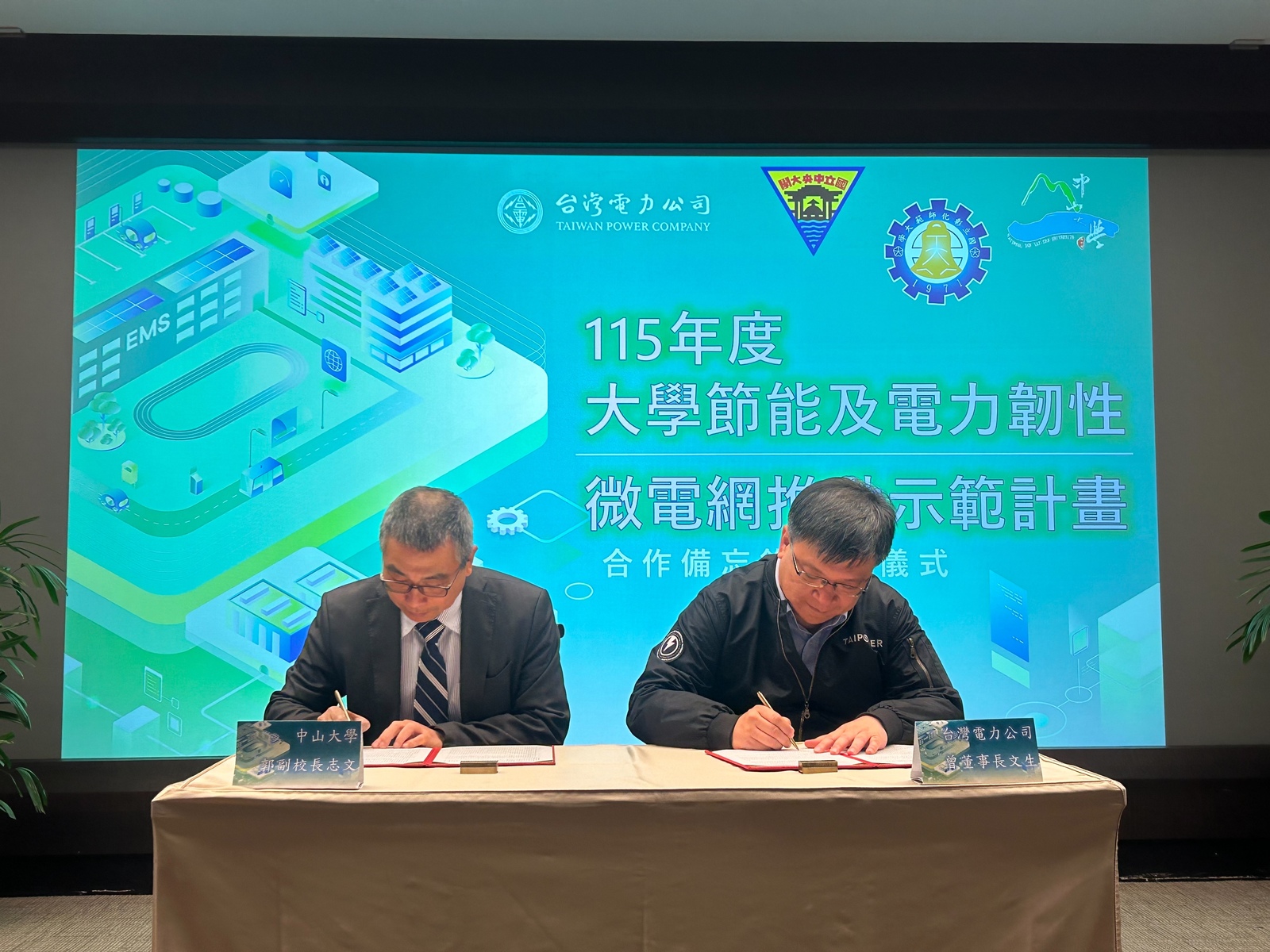
When typhoons, earthquakes, or large-scale grid failures cause power outages, the ability of a campus to maintain normal operations becomes critically important. At National Sun Yat-sen University (NSYSU), even during sudden outages, key disaster-prevention facilities will be able to sustain power supply for at least 48 hours. NSYSU has recently signed a memorandum of understanding with Taiwan Power Company (Taipower) for the University Energy Conservation and Power Resilience Promotion Project (Year 2026), under which Taipower will invest TWD 100 million to establish a campus-wide microgrid system integrating renewable energy, energy storage, and smart energy management. The project will initially be implemented at the Building of International Research as a demonstration site, aiming to develop a smart energy campus that combines energy efficiency, power resilience, and research and teaching functions.
In recent years, global energy conditions have become increasingly volatile, while extreme weather and disasters have become more frequent. Ensuring a stable power supply to critical facilities during outages has therefore become a key issue in energy policy worldwide. Microgrids are regarded as one of the crucial technologies for energy transition and urban disaster resilience. Essentially a scaled-down power system, a microgrid typically operates in connection with the main grid, but can rapidly switch to "island mode" during disruptions, using its own generation and storage systems to maintain a localized power supply and enhance overall resilience.
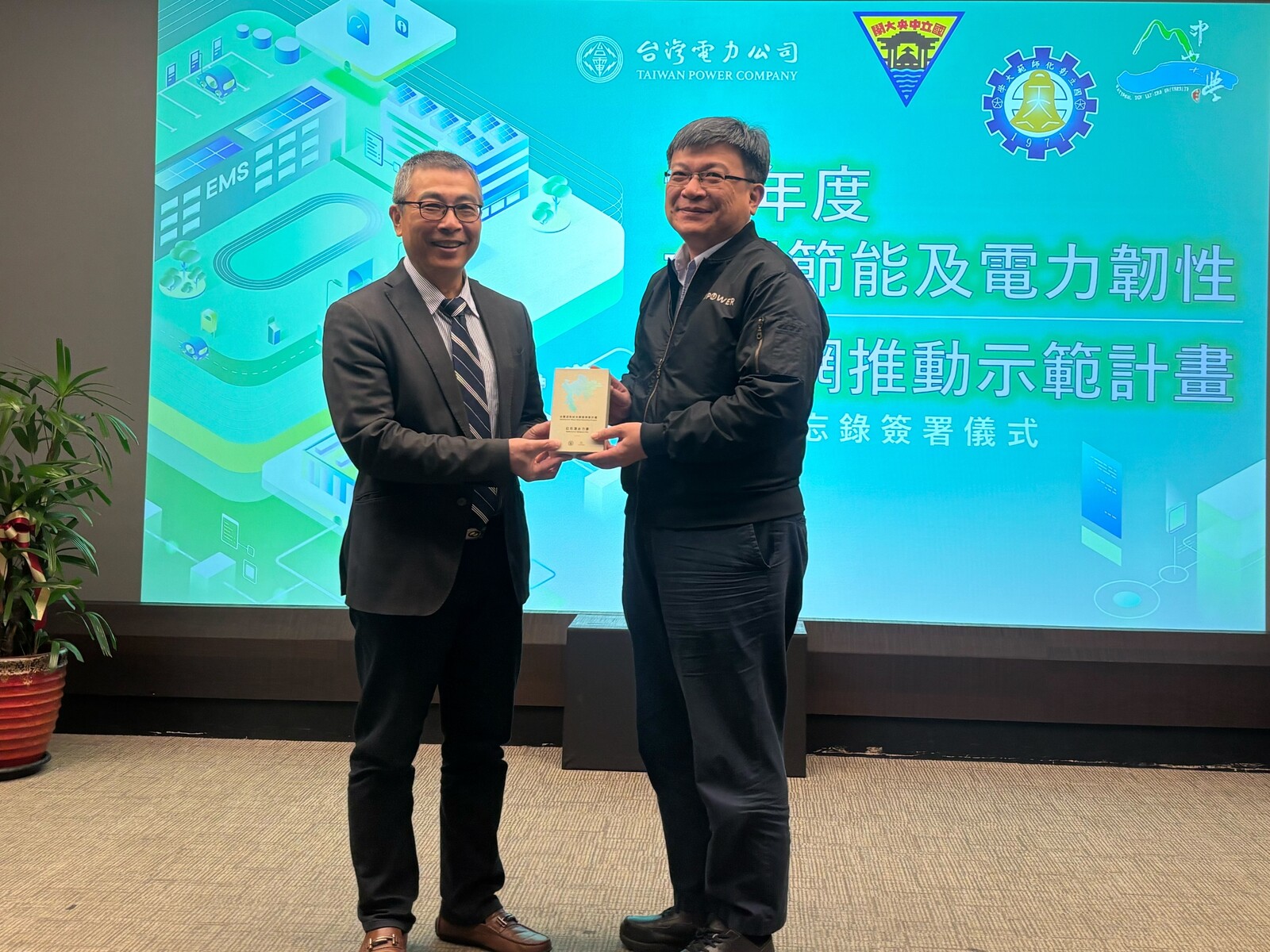
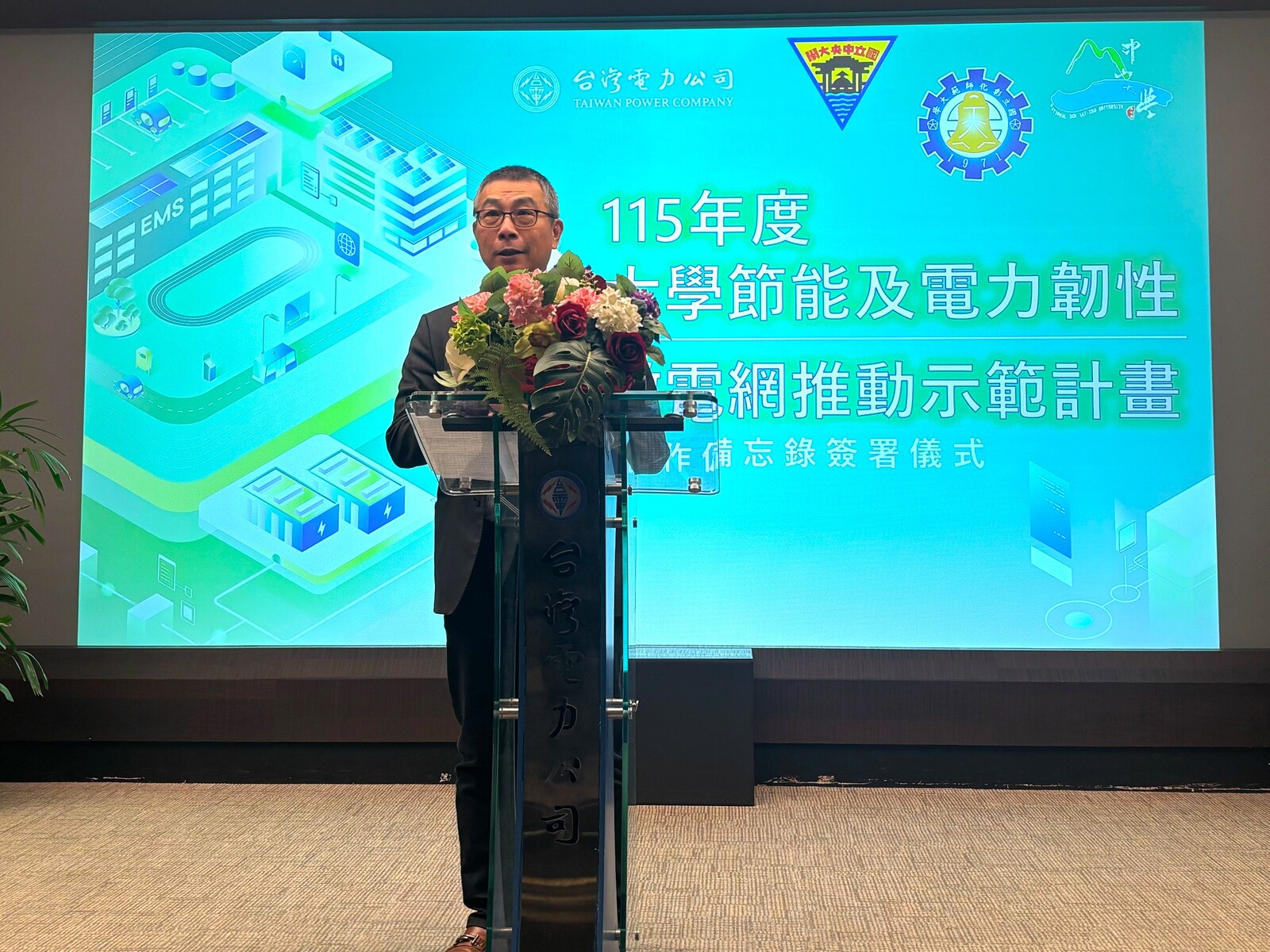
Senior Vice President Chih-wen Kuo noted that Taipower's support in both technology and funding enables the university to build a smart energy campus that integrates efficiency, resilience, and research capabilities. With the Building of International Research as the initial pilot site, the completed microgrid will not only provide stable backup power during disasters or outages but also optimize electricity usage through smart energy management systems, improving efficiency and reducing costs. He expressed appreciation for Taipower's long-term support for higher education and energy innovation, which enables universities to play a more active role in the energy transition while positioning the NSYSU campus as a key demonstration site for energy technology innovation and power education in southern Taiwan.
According to NSYSU's Office of General Affairs, the university has long invested in power technology and green energy development. In recent years, with support from the National Science and Technology Council energy-saving programs and internal funding, more than TWD 250 million has been invested in energy conservation and sustainability initiatives. The campus has installed over 1,000 smart meters, enabling real-time data collection and analysis to help departments monitor electricity usage and adjust consumption during peak and off-peak periods. In addition, solar power systems with a total installed capacity exceeding 1 MWp have been deployed, alongside a campus-wide real-time energy monitoring system and demand response mechanisms to enhance precision and efficiency in energy management.
In terms of power infrastructure, the NSYSU campus can be divided into multiple independent feeder lines, making it well-suited for microgrid development. The pilot implementation at the Building of International Research will operate in grid-connected mode under normal conditions, and automatically switch to island mode during outages, prioritizing power supply to critical facilities. With energy storage systems, the microgrid can sustain power for at least 4 hours at night without solar generation, and even longer during the daytime when combined with solar power.
During natural disasters or other force majeure events, the system can further switch to a "disaster-response microgrid" mode, reducing the supply scope and prioritizing emergency facilities. If only essential emergency centers are maintained and the load is controlled below 250 kW, the combination of energy storage and solar power can support disaster-response electricity needs for more than 48 hours.
In recent years, NSYSU has actively advanced research in green technologies and sustainable environments, including offshore wind power, Kuroshio current energy, green hydrogen catalysis, green mobility, and smart aquaculture. Over a decade, the campus has achieved an overall energy-saving improvement of approximately 10%. The university noted that once the microgrid is completed, it will not only strengthen campus energy management and disaster resilience but also serve as a key teaching and research platform for smart grids and energy technologies, gradually transforming NSYSU into a model smart energy campus.
When typhoons, earthquakes, or large-scale grid failures cause power outages, the ability of a campus to maintain normal operations becomes critically important. At National Sun Yat-sen University (NSYSU), even during sudden outages, key disaster-prevention facilities will be able to sustain power supply for at least 48 hours. NSYSU has recently signed a memorandum of understanding with Taiwan Power Company (Taipower) for the University Energy Conservation and Power Resilience Promotion Project (Year 2026), under which Taipower will invest TWD 100 million to establish a campus-wide microgrid system integrating renewable energy, energy storage, and smart energy management. The project will initially be implemented at the Building of International Research as a demonstration site, aiming to develop a smart energy campus that combines energy efficiency, power resilience, and research and teaching functions.
In recent years, global energy conditions have become increasingly volatile, while extreme weather and disasters have become more frequent. Ensuring a stable power supply to critical facilities during outages has therefore become a key issue in energy policy worldwide. Microgrids are regarded as one of the crucial technologies for energy transition and urban disaster resilience. Essentially a scaled-down power system, a microgrid typically operates in connection with the main grid, but can rapidly switch to "island mode" during disruptions, using its own generation and storage systems to maintain a localized power supply and enhance overall resilience.
Senior Vice President Chih-wen Kuo noted that Taipower's support in both technology and funding enables the university to build a smart energy campus that integrates efficiency, resilience, and research capabilities. With the Building of International Research as the initial pilot site, the completed microgrid will not only provide stable backup power during disasters or outages but also optimize electricity usage through smart energy management systems, improving efficiency and reducing costs. He expressed appreciation for Taipower's long-term support for higher education and energy innovation, which enables universities to play a more active role in the energy transition while positioning the NSYSU campus as a key demonstration site for energy technology innovation and power education in southern Taiwan.
According to NSYSU's Office of General Affairs, the university has long invested in power technology and green energy development. In recent years, with support from the National Science and Technology Council energy-saving programs and internal funding, more than TWD 250 million has been invested in energy conservation and sustainability initiatives. The campus has installed over 1,000 smart meters, enabling real-time data collection and analysis to help departments monitor electricity usage and adjust consumption during peak and off-peak periods. In addition, solar power systems with a total installed capacity exceeding 1 MWp have been deployed, alongside a campus-wide real-time energy monitoring system and demand response mechanisms to enhance precision and efficiency in energy management.
In terms of power infrastructure, the NSYSU campus can be divided into multiple independent feeder lines, making it well-suited for microgrid development. The pilot implementation at the Building of International Research will operate in grid-connected mode under normal conditions, and automatically switch to island mode during outages, prioritizing power supply to critical facilities. With energy storage systems, the microgrid can sustain power for at least 4 hours at night without solar generation, and even longer during the daytime when combined with solar power.
During natural disasters or other force majeure events, the system can further switch to a "disaster-response microgrid" mode, reducing the supply scope and prioritizing emergency facilities. If only essential emergency centers are maintained and the load is controlled below 250 kW, the combination of energy storage and solar power can support disaster-response electricity needs for more than 48 hours.
In recent years, NSYSU has actively advanced research in green technologies and sustainable environments, including offshore wind power, Kuroshio current energy, green hydrogen catalysis, green mobility, and smart aquaculture. Over a decade, the campus has achieved an overall energy-saving improvement of approximately 10%. The university noted that once the microgrid is completed, it will not only strengthen campus energy management and disaster resilience but also serve as a key teaching and research platform for smart grids and energy technologies, gradually transforming NSYSU into a model smart energy campus.
Click Num:
Share