
NSYSU achieves a breakthrough in large-scale single-crystalline metal foil manufacturing toward commercialization, publishing in the renowned international journal
2026-10-15
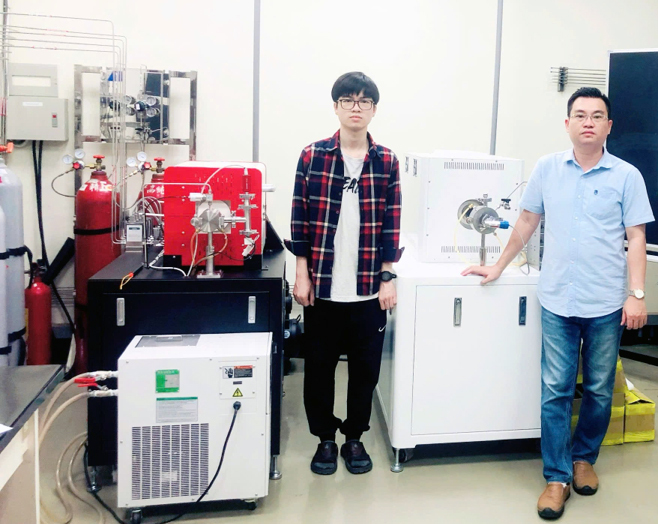
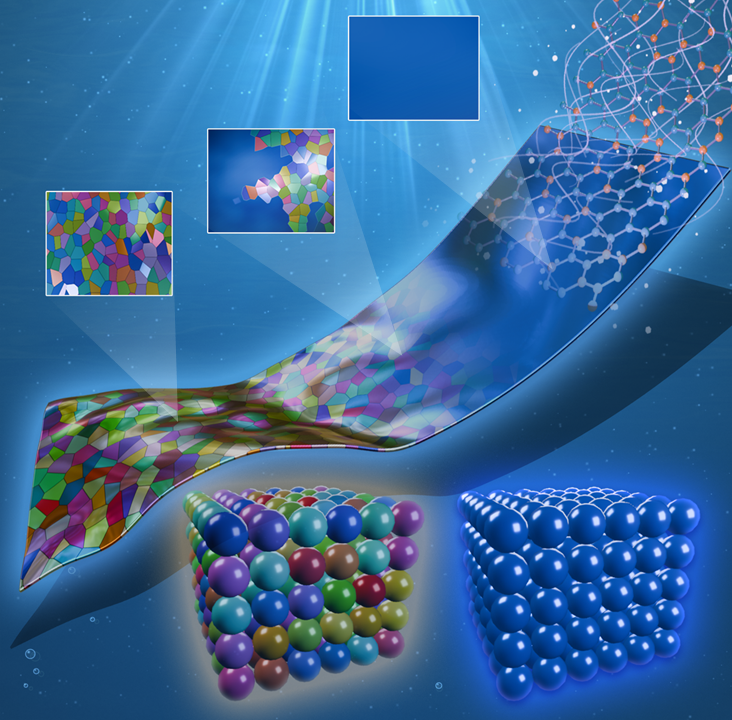
National Sun Yat-sen University (NSYSU) has achieved a significant breakthrough in advanced materials manufacturing. A research team led by Associate Professor Phuong V. Pham of the Department of Physics has developed a simple and potentially scalable strategy for manufacturing large-area single-crystalline metal foils. The study, titled "Directional Manufacturing of Defect-Mitigation and Large-Scale Single-Crystalline Metal Foils via Gas Flow Optimization Toward Commercialization," has been published in the prestigious international journal Nano Letters.
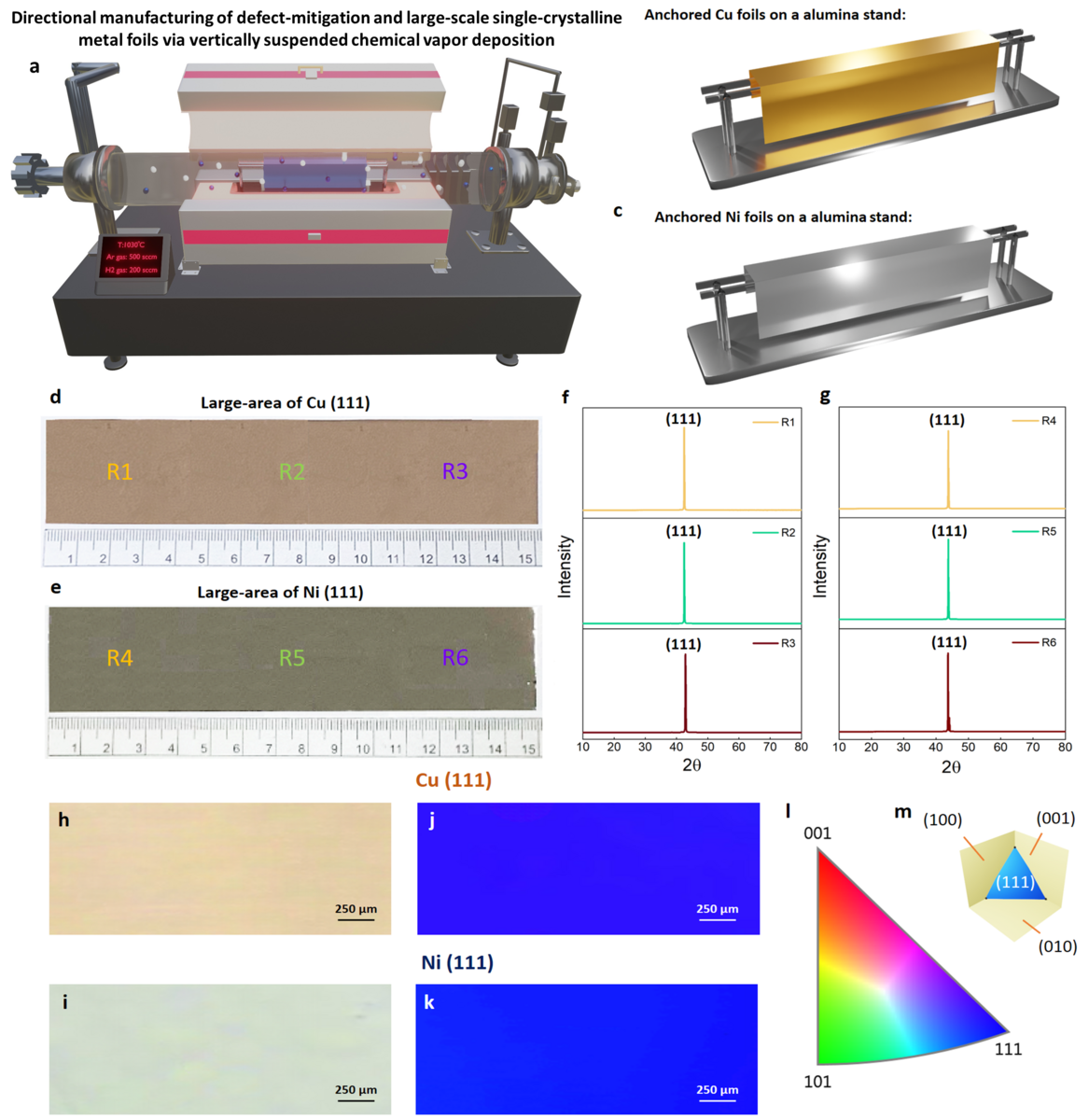
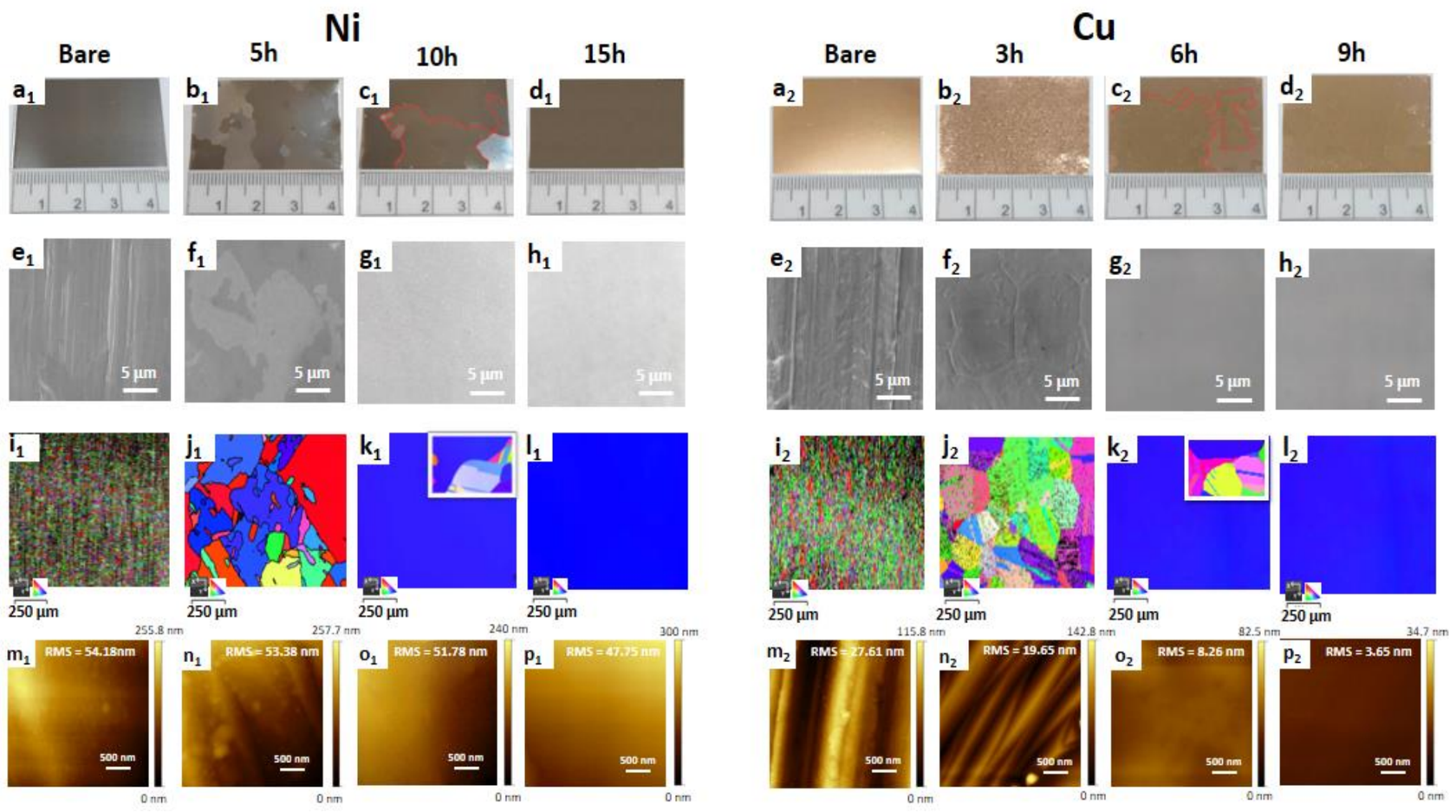
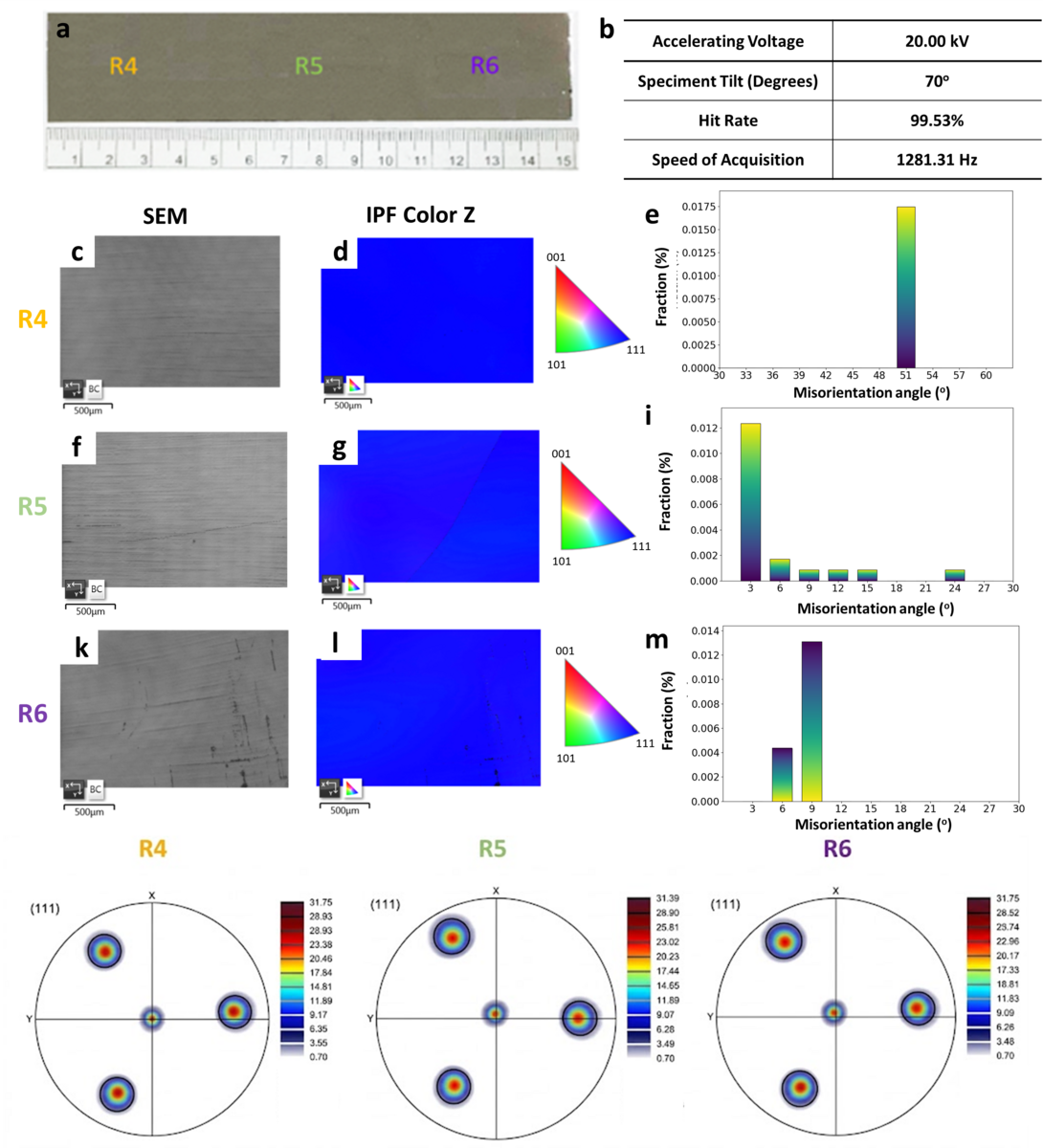
The research introduces a new approach that transforms commercially available polycrystalline copper (Cu) and nickel (Ni) foils into large-area single-crystalline Cu(111) and Ni(111) foils. Unlike conventional single-crystal growth methods that can require sophisticated equipment, expensive substrates, or complicated processing, the NSYSU approach uses vertically suspended metal foils in a chemical vapor deposition (CVD) system and carefully controlled high-temperature annealing in a hydrogen-containing atmosphere. A major achievement of the study is the fabrication of approximately 5 × 15 cm² single-crystalline Cu(111) and Ni(111) foils. X-ray diffraction (XRD), electron backscatter diffraction (EBSD), optical microscopy, and atomic force microscopy (AFM) confirmed highly uniform (111) crystallographic orientation across the investigated surfaces. The vertically suspended configuration also reduced surface roughness, with the Cu foil reaching an RMS roughness of approximately 3.65 nm after crystallographic transformation.
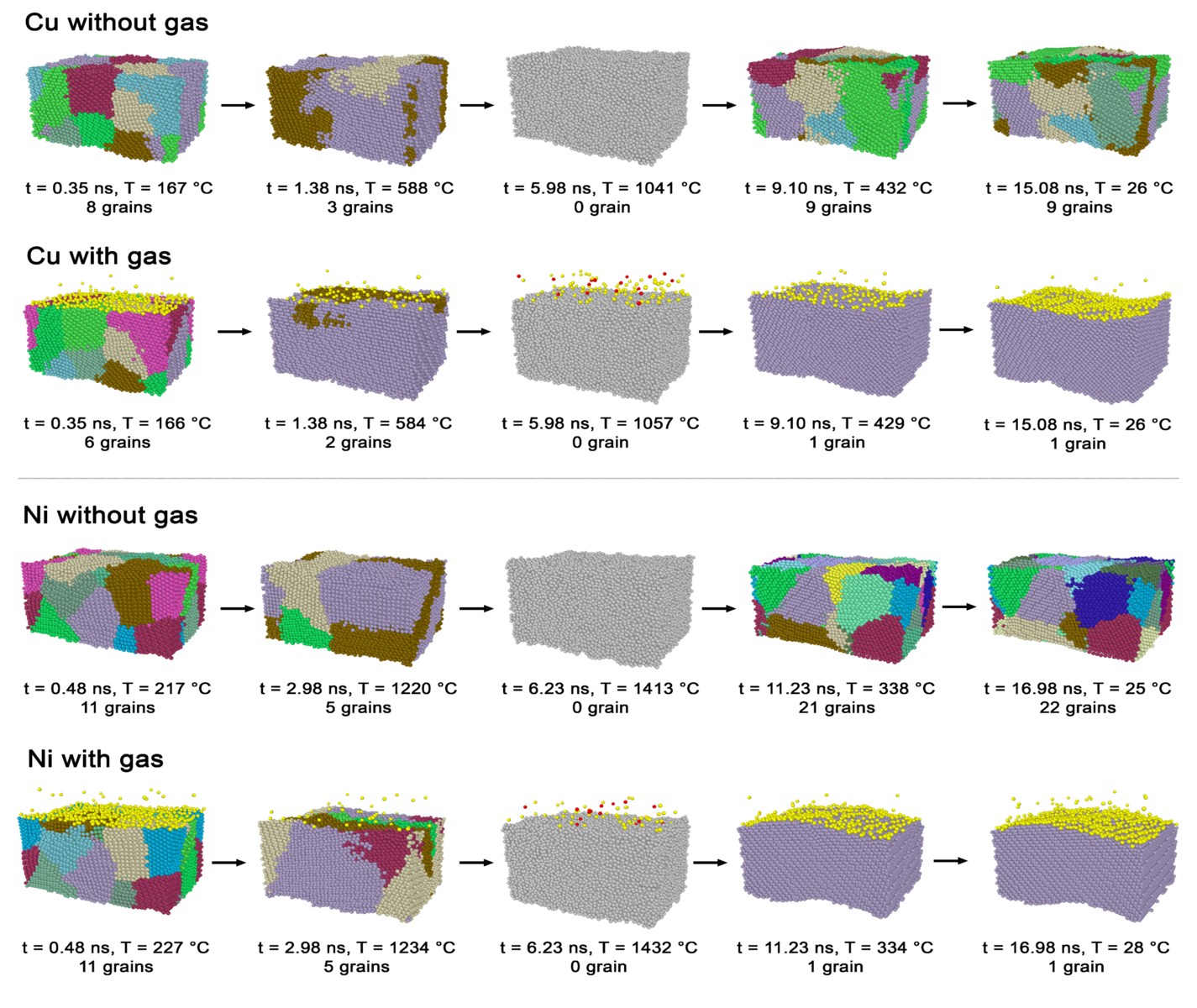
Associate Professor Phuong V. Pham explained that the key innovation is the controlled interaction among hydrogen, atomic diffusion, grain-boundary evolution, and surface-energy minimization. Increasing hydrogen concentration promotes atomic mobility and grain growth, facilitating the transformation from a polycrystalline structure into a uniform (111)-oriented single-crystalline surface. Molecular dynamics simulations further provided atomic-scale insights into the gas-assisted crystalline reorganization observed experimentally.
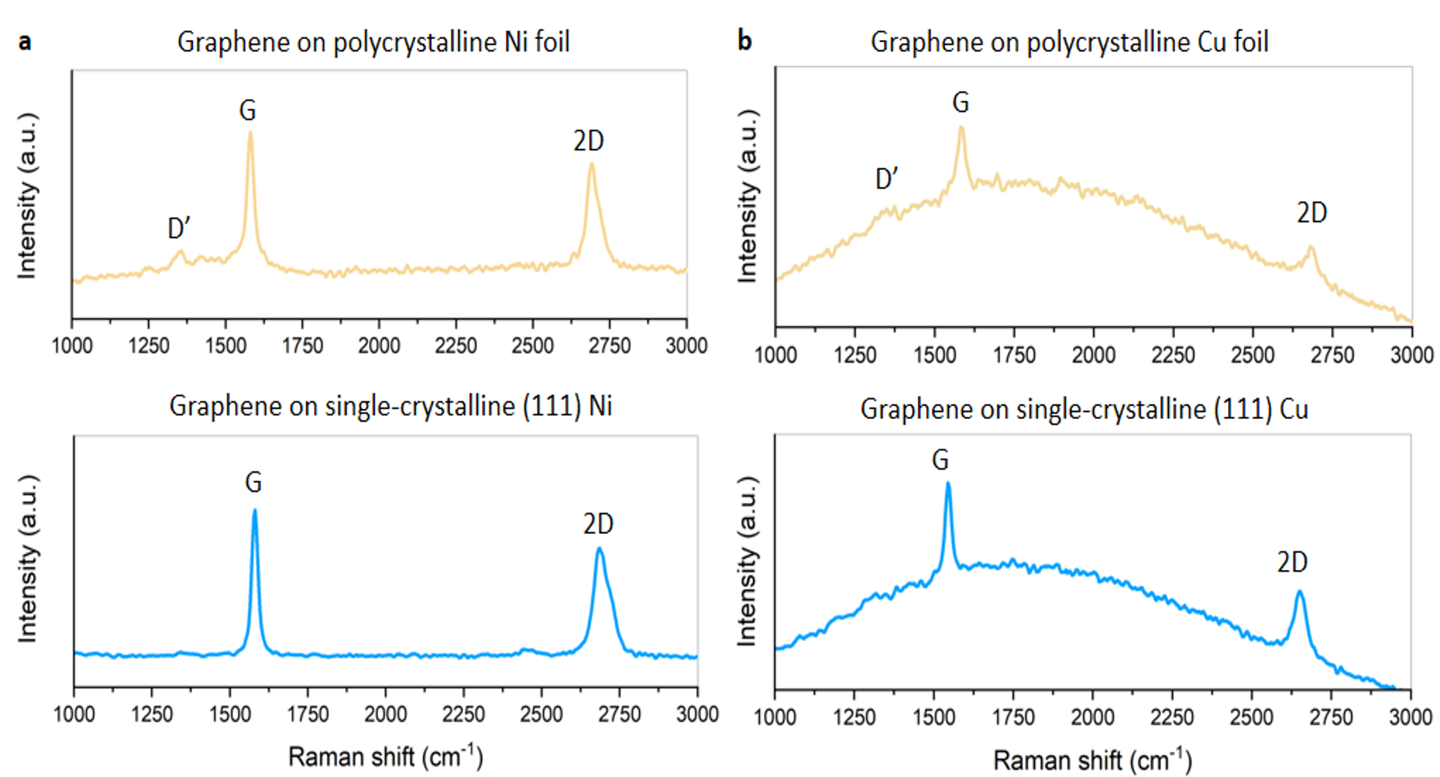
The significance of this work extends to the development of graphene and other two-dimensional (2D) materials. Single-crystalline Cu(111) and Ni(111) provide highly uniform surfaces that can reduce defects associated with grain boundaries and crystallographic mismatch during graphene growth. The resulting high-quality substrates could support future applications in advanced semiconductors, flexible electronics, optoelectronics, sensors, and emerging quantum technologies. The research also provides a foundation for exploring other metals, including Co, Pt, and Pd, using related principles. Future work will focus on optimizing gas-flow conditions, increasing foil dimensions, expanding the range of single-crystalline metals, and integrating these substrates with large-scale 2D-material growth and advanced device architectures.
This achievement highlights NSYSU's continuing efforts to connect fundamental materials physics, scalable manufacturing, and next-generation semiconductor technologies, strengthening the university's international research impact in 2D materials and advanced materials engineering.
Members of the multinational research team also include prospective master student, The-Hung Mai and Shi-Hui Liu from the Department of Physics, and the Department of Materials and Optoelectronic Science, NSYSU, and the outstanding scientists include Profs. Chien-Cheng Kuo, Hung-Duen Yang (Department of Physics, NSYSU, Taiwan), Prof. Wei-Lung Tseng, Dr. Santhoshkumar S. (Department of Chemistry, NSYSU, Taiwan), Prof. Liuwen Chang (Department of Materials and Optoelectronic Science, NSYSU, Taiwan), Prof. Chung-Li Dong, Dr. Arvind Chandrasekar (Physics, Tamkang University, Taiwan), Prof. Trung Nguyen-Thoi, Dr. Ho Huynh Thi, Dr. Vu Van Tuan (Institute for Computational Science and Artificial Intelligence, Van Lang University, Vietnam).
Nano Letters is the world's top authoritative journal, and its 2025 Journal Impact Factor is 9.1. According to the Journal Impact Factor, it ranks 41st among 191 journals (Top 21%) in the category of Chemistry, Physical. According to the Journal Citation Indicator, it ranks 35th among 251 (Top 14%) in the category of Chemistry, Multidisciplinary.