
NSYSU School of Banking and Finance advances sustainable finance learning in Germany
2026-10-22
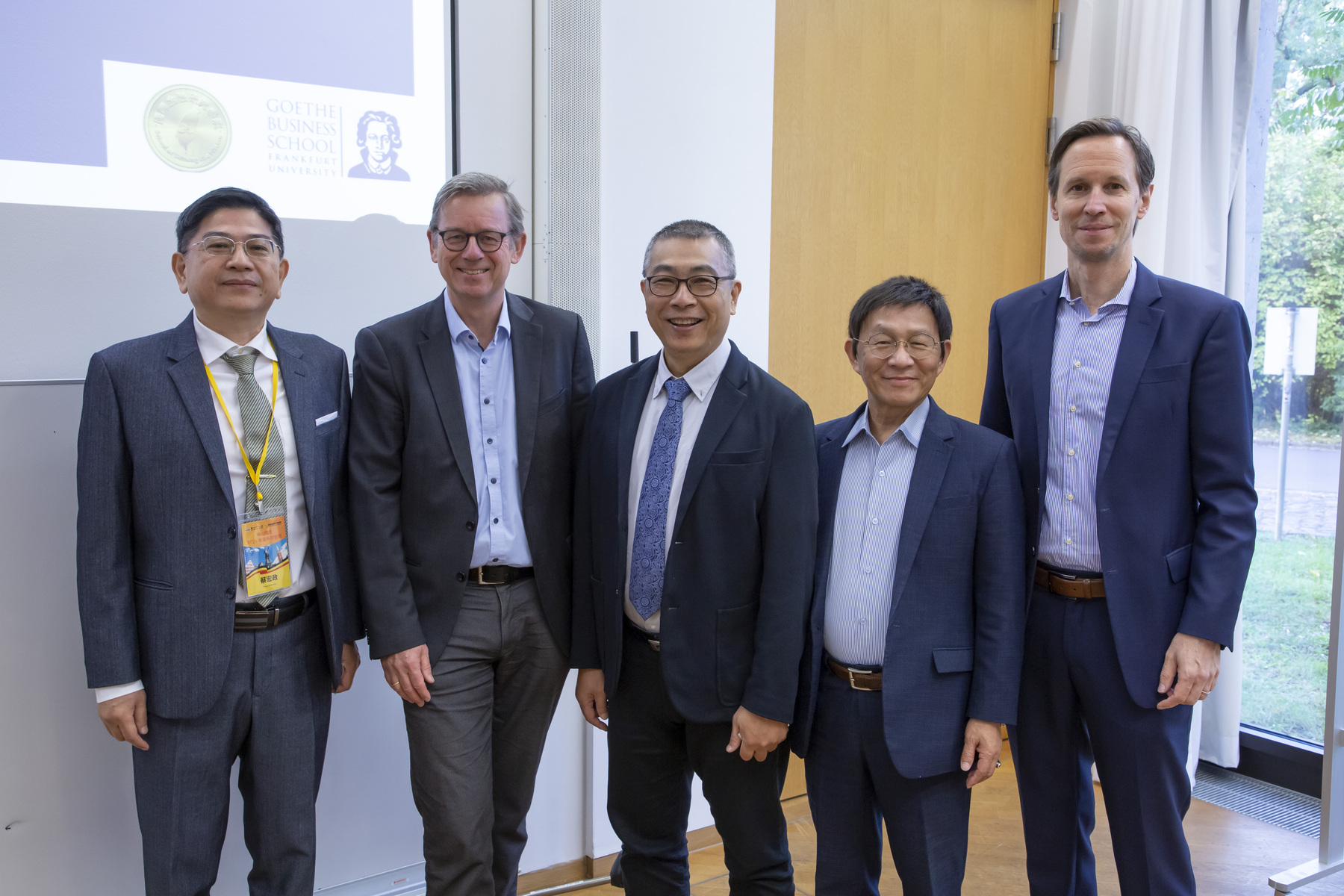
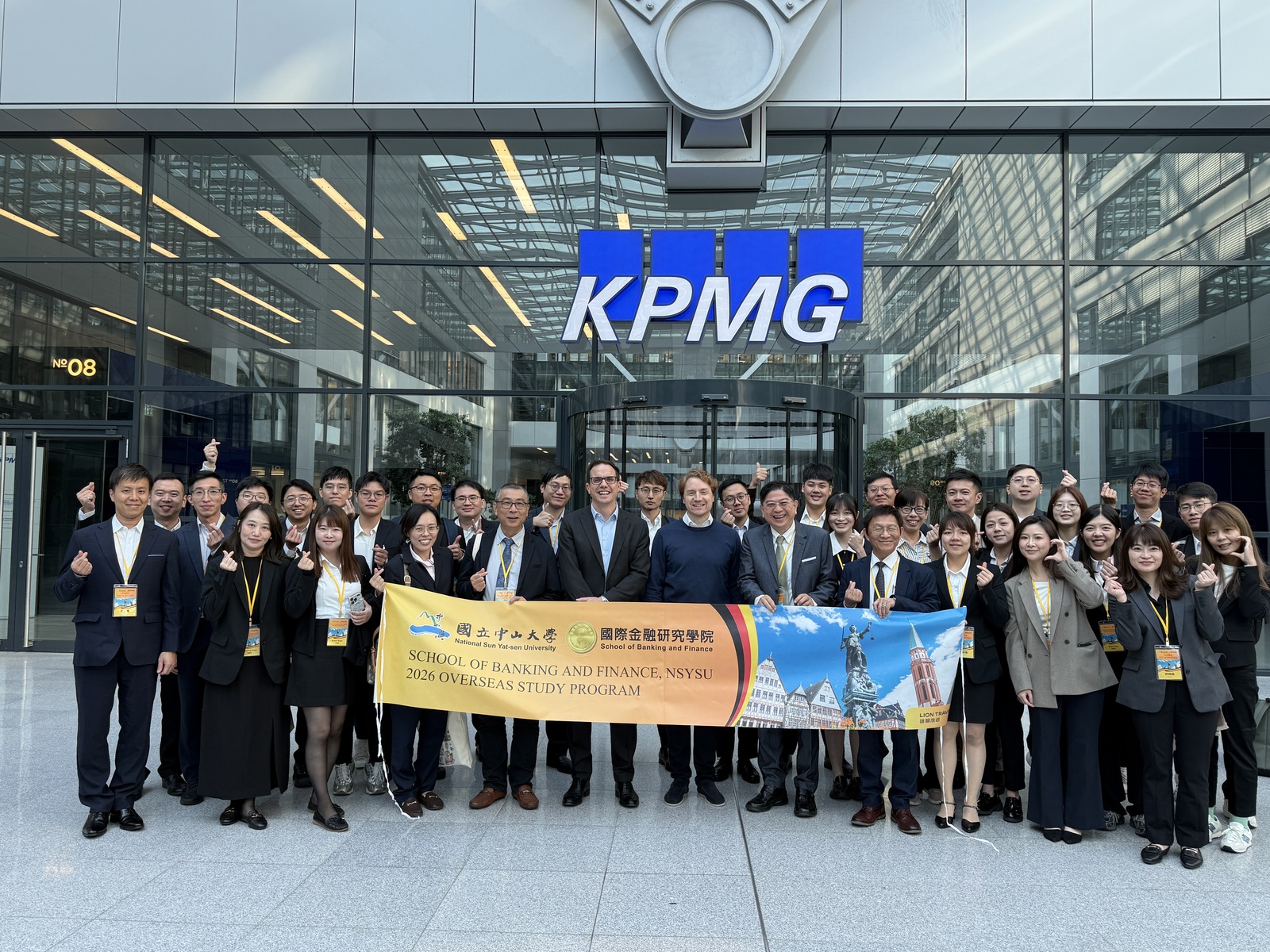
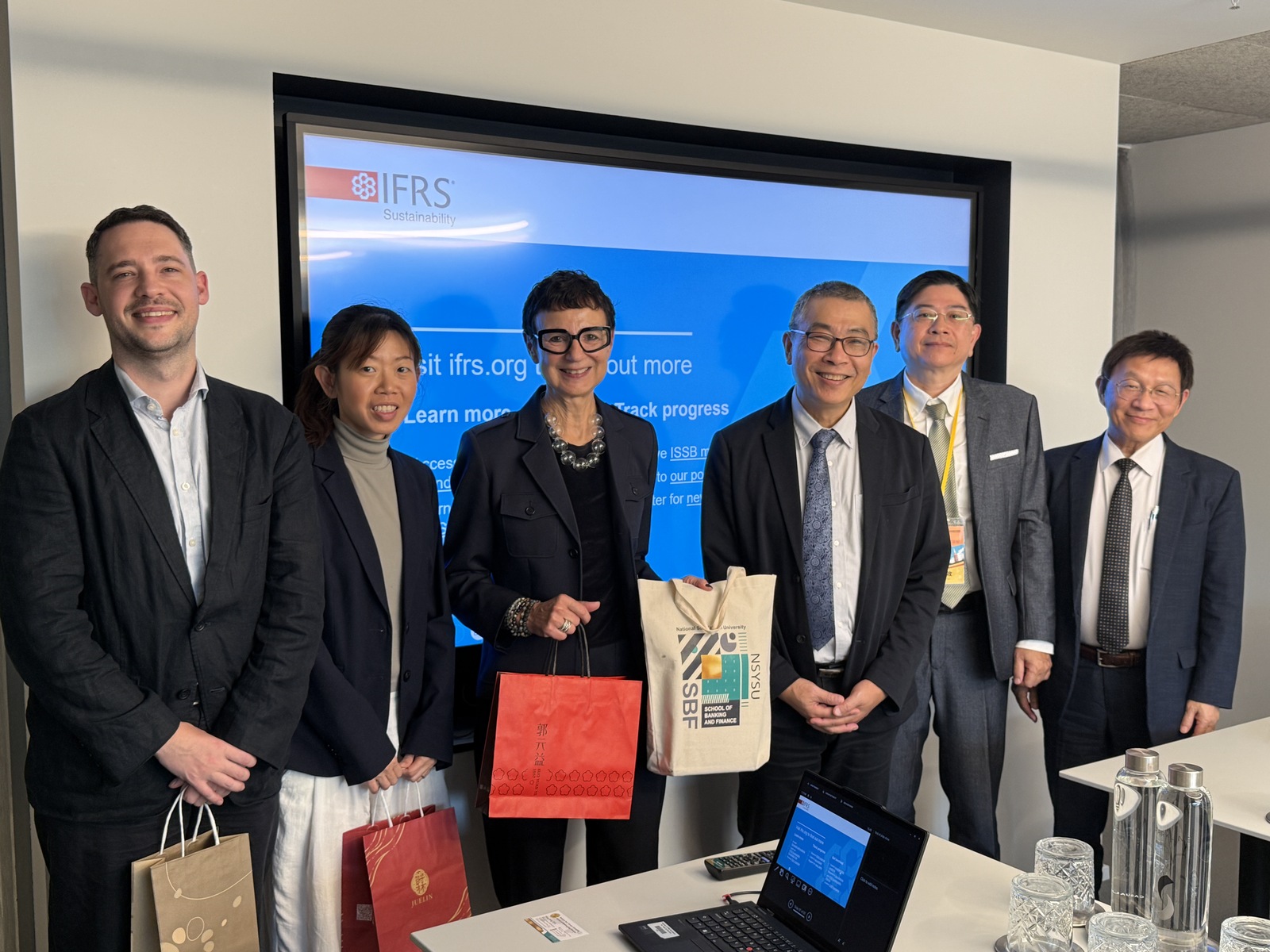
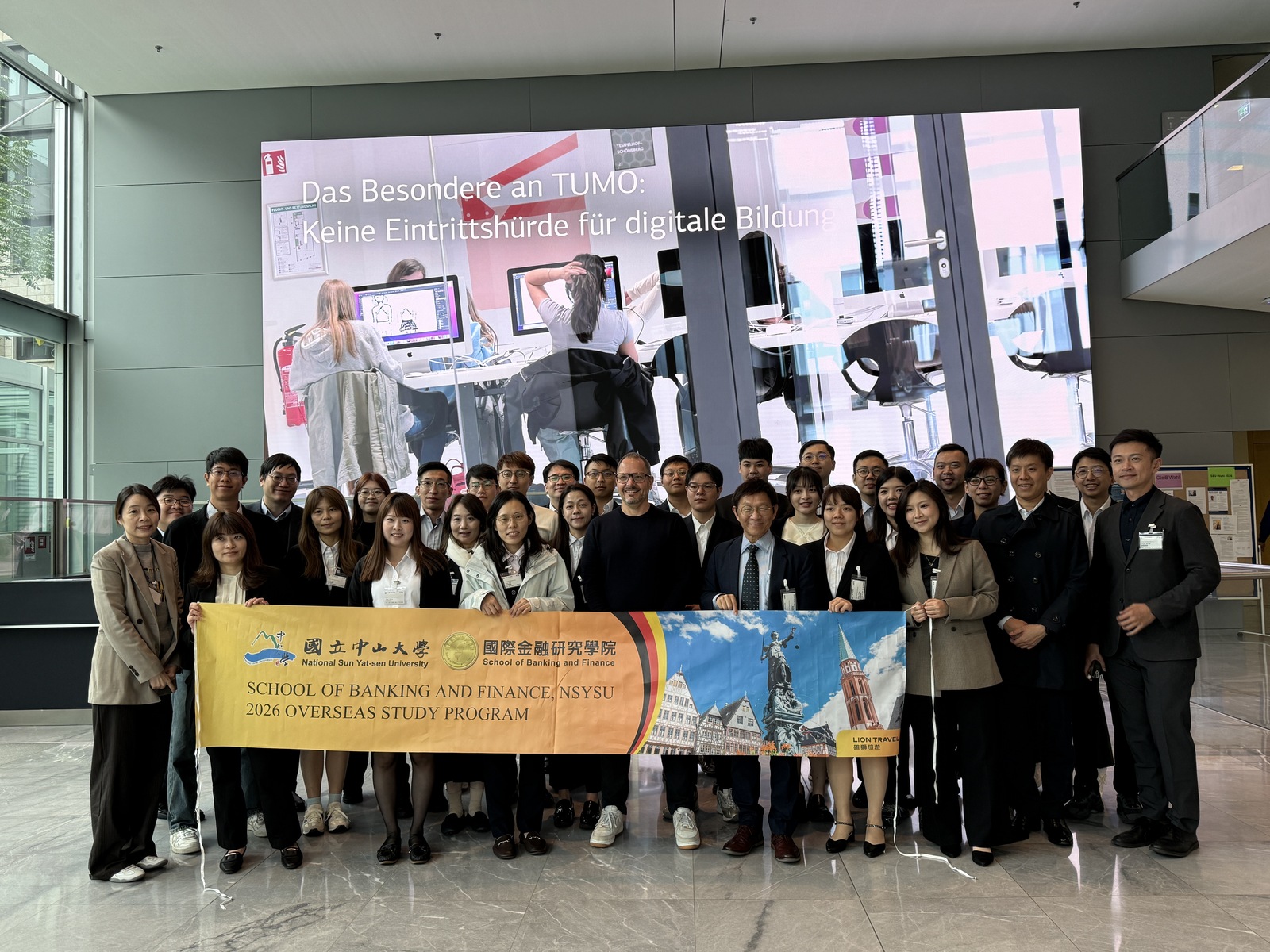
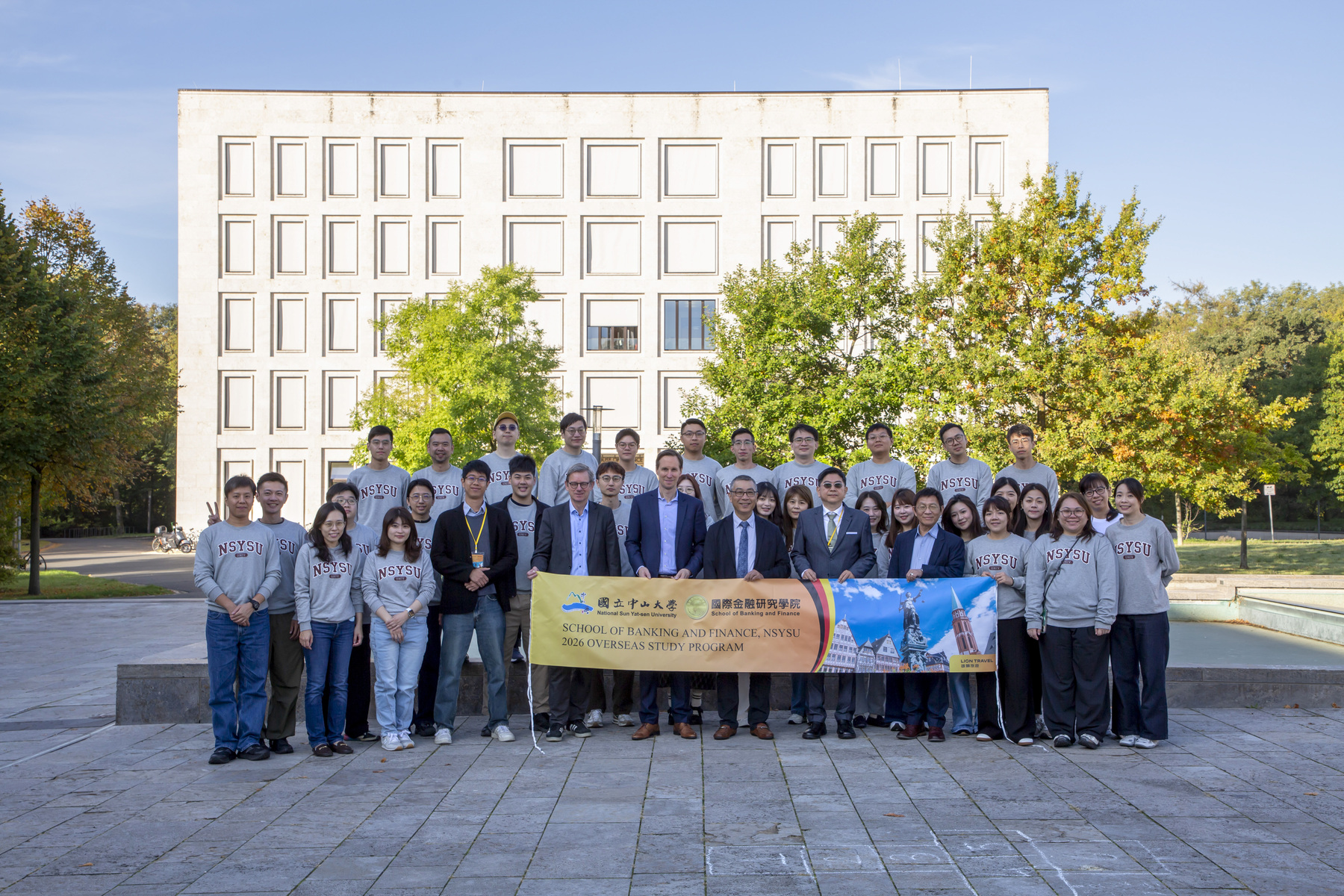
(Provided by the School of Banking and Finance) The School of Banking and Finance (SBF) at National Sun Yat-sen University (NSYSU) brought 35 participants to Frankfurt, Germany, from October 5 to 9, 2026, for a study program connecting sustainable finance frameworks with corporate practice and measurable impact. Courses at Goethe Business School and exchanges with KPMG, the International Sustainability Standards Board (ISSB), and KfW linked sustainability disclosure, capital allocation, and development outcomes.
SBF Dean Chih-Wen Kuo emphasized that international learning helps students connect academic knowledge with practice and develop analytical and problem-solving skills. The program encouraged participants to consider how European experience could inform Taiwan's financial development.
All company visits were arranged by Professor Niven Huang, a visiting professor at SBF and Managing Director of KPMG Sustainability Consulting Co., Ltd., Taiwan. His professional network enabled direct dialogue with practitioners, complementing Goethe Business School courses on ESG economics, ESG investing, and transition finance.
A central theme was how credible information supports financial decisions. KPMG addressed sustainability reporting processes and the evolution of ESG strategies from risk management to business opportunities and corporate transformation. The ISSB exchange connected these practices with IFRS S1 and IFRS S2, highlighting how comparable, industry-relevant disclosures strengthen investor confidence.
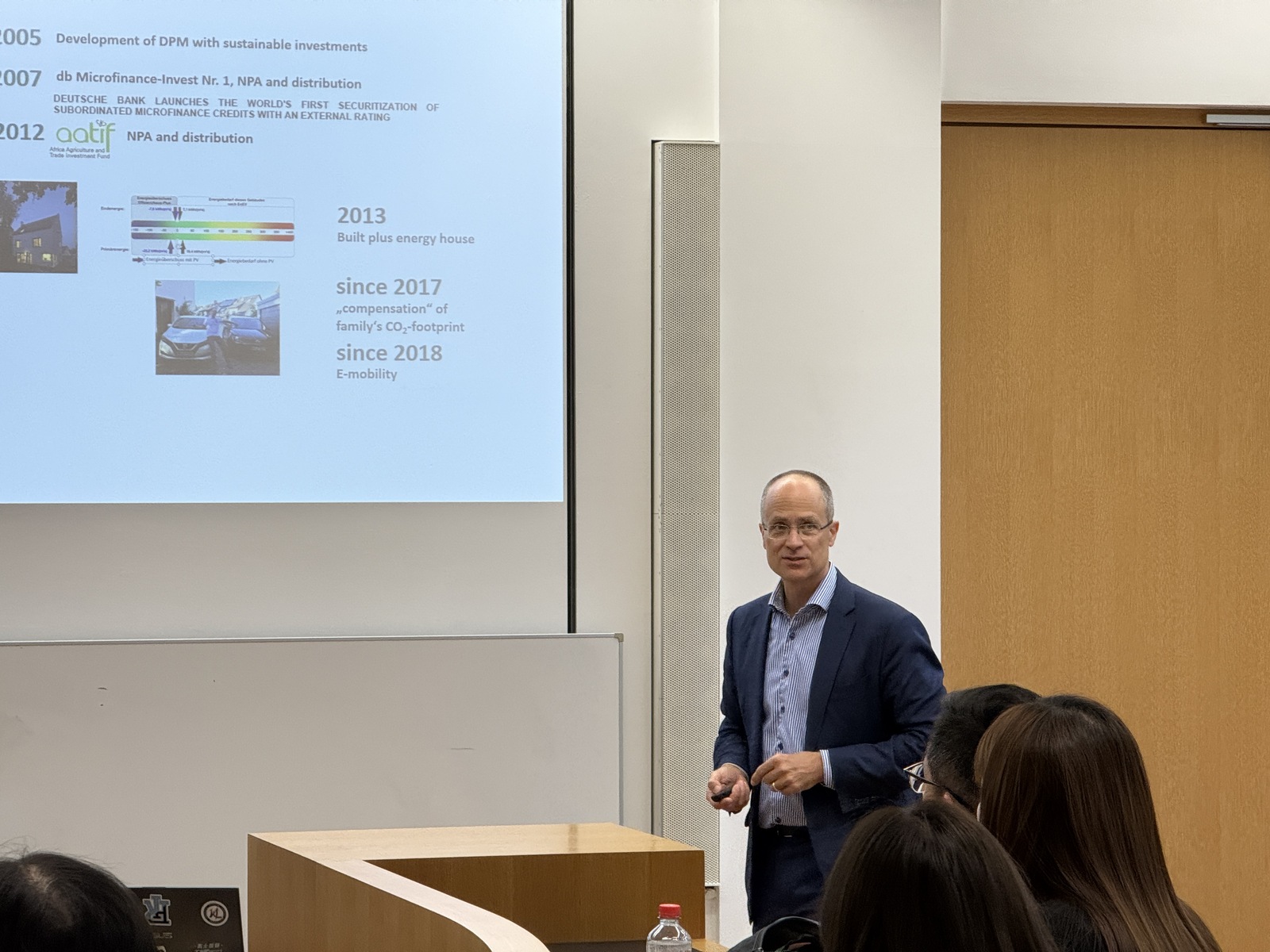
The program then linked information to investment outcomes. KfW introduced its financing approach and impact measurement framework, implemented over five years using ten selected indicators. Steffen Klawitter's presentation on impact investing further addressed intentionality, measurable outcomes, and blended finance, showing how public and private capital can support development objectives.
"Theory of Change is now taking center stage," Professor Huang observed. He emphasized the need to explain how resources and activities produce outcomes and lasting change—a perspective connecting disclosure, financing, and impact assessment throughout the program.
A field visit to the Scheck-in Center Frankfurt-Ostend extended this discussion to sustainable consumption. Participants examined food labeling and certifications, including MSC, ASC, and Bio, considering how transparent product information supports consumer decisions and market trust.
Preparatory research, English-language group presentations, and instructor feedback reinforced the thematic learning. By connecting standards, implementation, and impact, SBF strengthened participants' international perspectives and their capacity to apply sustainable finance knowledge in research and professional practice.
(Edited by Public Affairs Division)
Click Num:
Share